


 Jul 28, 2026
 dali plywood
 386
386
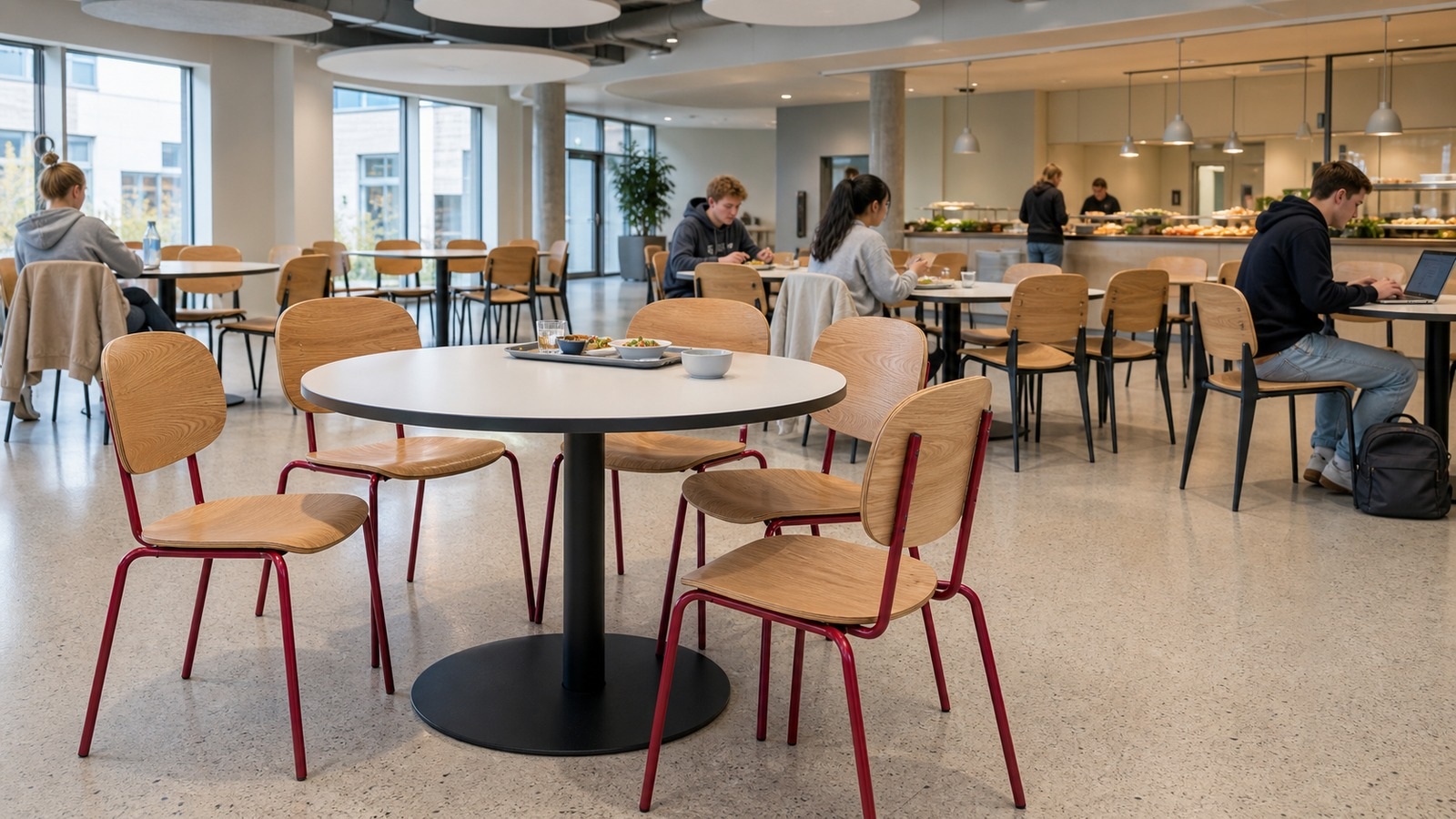
A student cafeteria is one of the hardest-working interiors on a campus. The chairs may be moved hundreds of times each week, cleaned between meal periods and used by students carrying trays, backpacks and laptops. During the lunch rush, the space must support fast circulation and high seat turnover. Between meals, the same room may become a place for group assignments, informal meetings or quiet study.
This change is visible across Europe, North America and other education markets. Universities are renovating dining halls as flexible campus hubs rather than treating them as single-purpose food rooms. For buyers, that makes the selection of plywood cafeteria chairs a practical planning decision: the chair must work with the table layout, cleaning routine, accessibility route, acoustic strategy and expected length of use.
Bent plywood and metal-frame seating can provide a useful balance. Exposed wood surfaces bring visual warmth to large dining rooms, while controlled plywood curves can support the back and seat without creating unnecessary bulk. Steel-frame options give buyers several approaches to weight, floor contact, color and maintenance. Upholstered versions can then be introduced selectively where students are likely to sit for longer.
Several 2026 campus projects show how the brief is expanding. The University of Pennsylvania describes a renovated 350-seat dining cafe with more places for students to study, connect and recharge. The University of Leeds has been improving eating areas with accessible seating and spaces to meet, eat and relax. The University of York is also developing a flexible social hub with improved seating.
In the United States, high-volume service remains equally important. A 2026 dining-hall renovation at Cedarville University was planned around more than 4,000 daily transactions and multiple food concepts. This combination of high throughput and longer dwell time means one chair type is rarely ideal for the entire room.
A more effective furniture plan divides the cafeteria into use zones:
Fast dining zones: easy-to-clean chairs around two- and four-person tables, with clear circulation between rows.
Shared study tables: supportive seating for meals, laptops and group work.
Quiet perimeter seating: slightly more comfortable chairs for longer use near windows or walls.
Accessible locations: planned clearances, stable frames and tables that support a range of users.
Event layouts: chairs selected around the room's actual storage and reconfiguration requirements.
European university dining spaces often combine natural materials, restrained color and flexible layouts. A plywood seat or back can soften a large interior filled with hard floors, ceilings and service counters. Colored metal frames can also support campus wayfinding or distinguish dining zones without requiring a different chair structure for every area.
For education procurement, appearance is only the first filter. Public and institutional buyers increasingly ask for durable construction, repairability, traceable materials and clear documentation. Helsinki's broad education-furniture procurement activity and European green public-procurement guidance both point toward lifecycle thinking: products should be specified for repeat use, maintenance and responsible purchasing, not only for the opening-day photograph.
A practical European cafeteria specification should therefore define the plywood surface, edge treatment, frame coating, glides, cleaning agents, replacement-part plan and delivery schedule. If stacking or nesting is required, it must be confirmed with the actual chair and frame design rather than assumed from appearance.
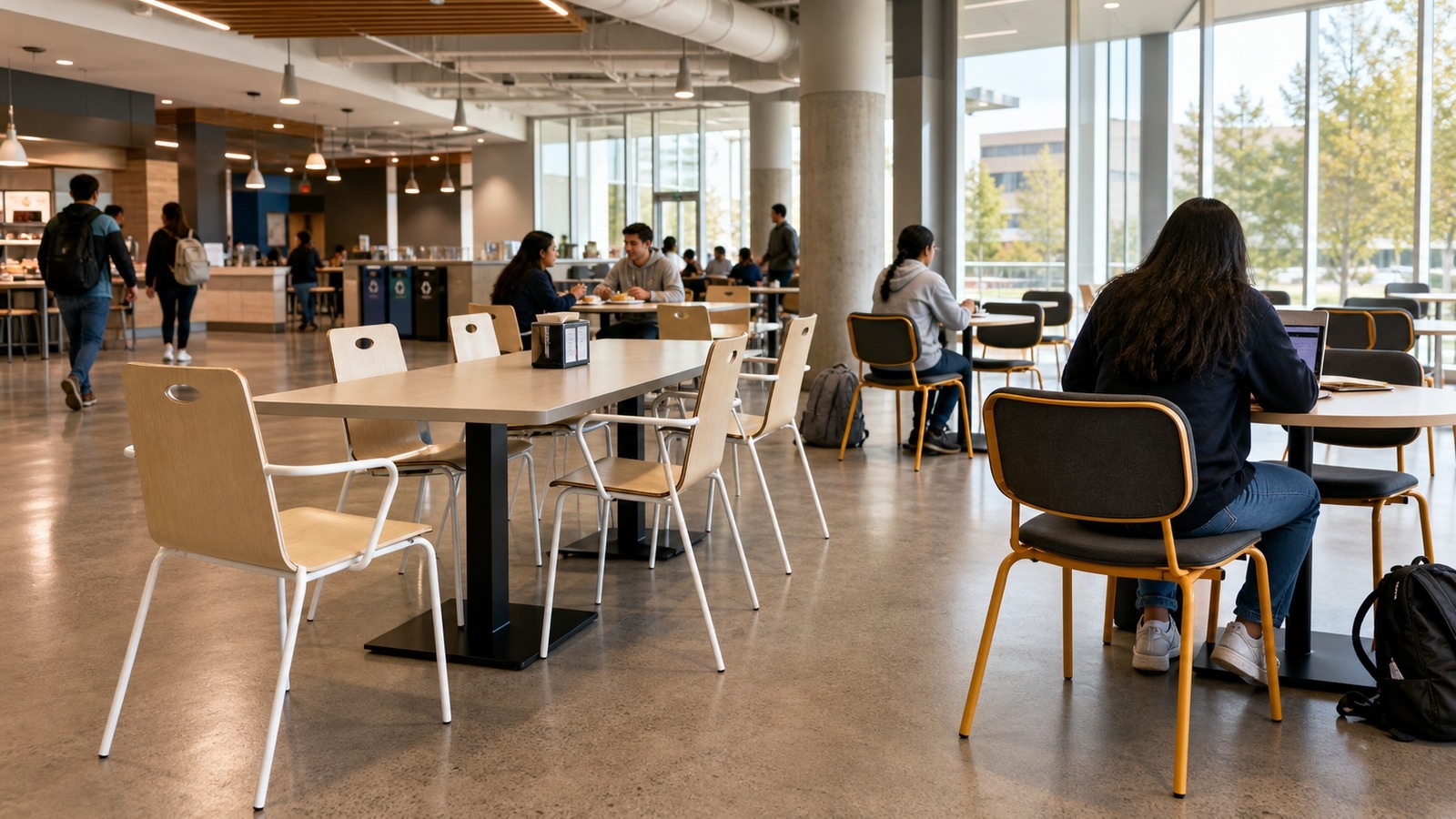
North American college dining halls frequently combine a main food-service floor with student-union functions. Large central tables may handle meal peaks, while perimeter seating supports coffee, study and social use throughout the day. A useful chair program can mix exposed plywood models in the high-turnover area with upholstered plywood combinations in lower-density zones.
Armchairs can be valuable at selected tables, but they need enough clearance and should not reduce aisle width. Armless chairs are easier to place in denser layouts. A handle opening in a plywood back can help staff reposition a chair, while separate plywood seats and backs can give the furniture designer more freedom to change proportions or finishes.
For the finished chair, buyers should review stability, seat height, back angle, frame weld quality, fasteners, floor glides and resistance to the cleaning system used by the operator. The required structural or surface tests depend on the destination market, tender and final product specification.
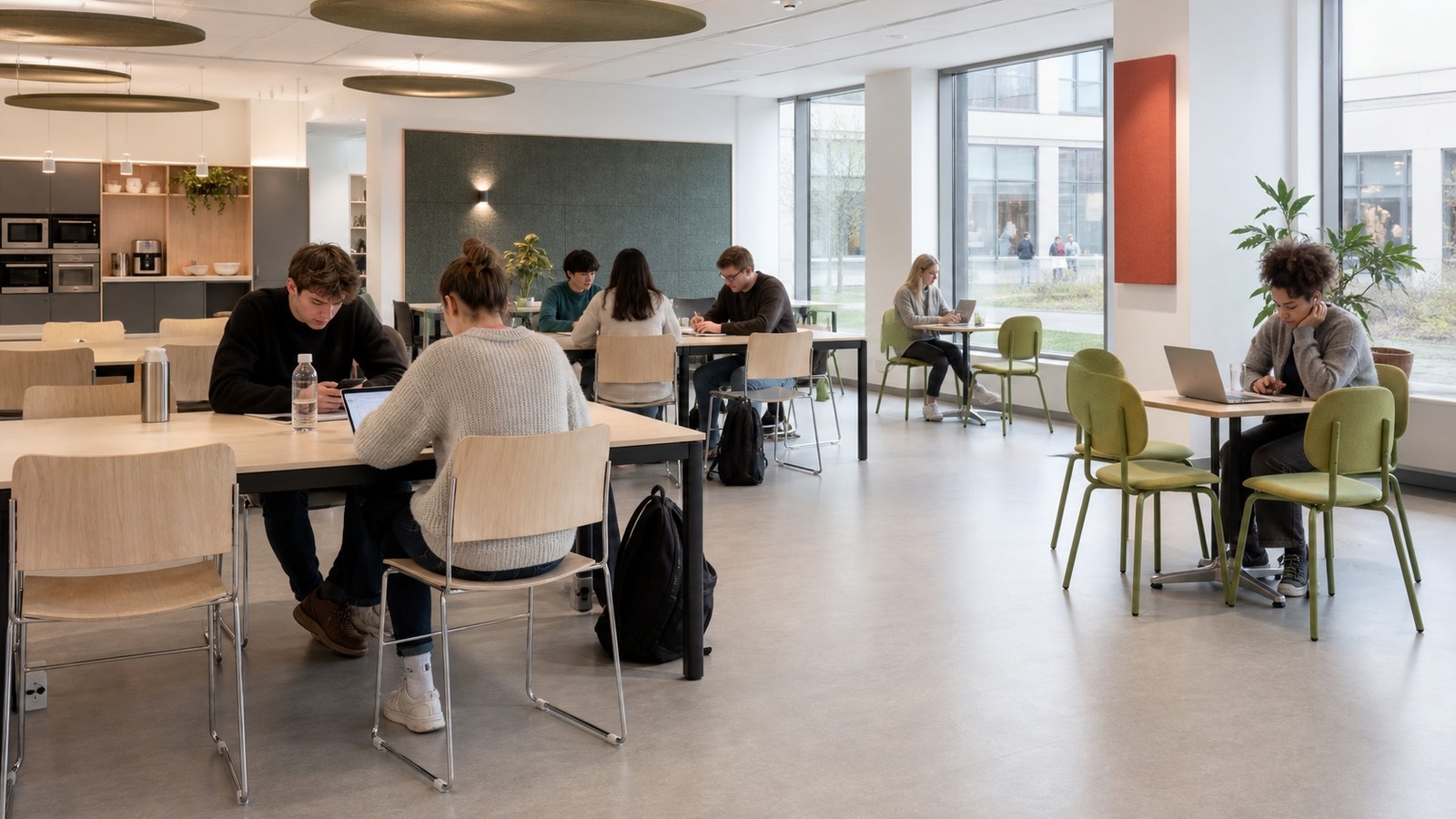
In an eat-study-relax environment, students may remain at a table well after finishing a meal. The seating plan can respond by combining firm, cleanable plywood chairs at shared tables with upholstered chairs at quieter two-person tables. The room still reads as one interior when the chairs share a related frame color, veneer tone or back shape.
Sled-base chairs can provide a distinct visual direction for shared tables, while four-leg models offer another familiar contract-furniture option. Neither is automatically better: the correct choice depends on the floor, movement pattern, storage plan, table base and maintenance preference. Small details such as replaceable glides and accessible fasteners can matter more over several years than decorative features.
Color also has an operational role. Natural oak tones make a large cafeteria feel warmer. Deep red, olive, black or white frames can identify different areas and coordinate with school branding. Upholstery should be reserved for locations where added comfort justifies the additional cleaning and replacement requirements.
The chair models below show several practical combinations for student restaurants, university cafeterias and school canteens. They include one-piece and separate plywood structures, four-leg and sled-base metal frames, arm and armless formats, exposed wood surfaces and upholstered options.
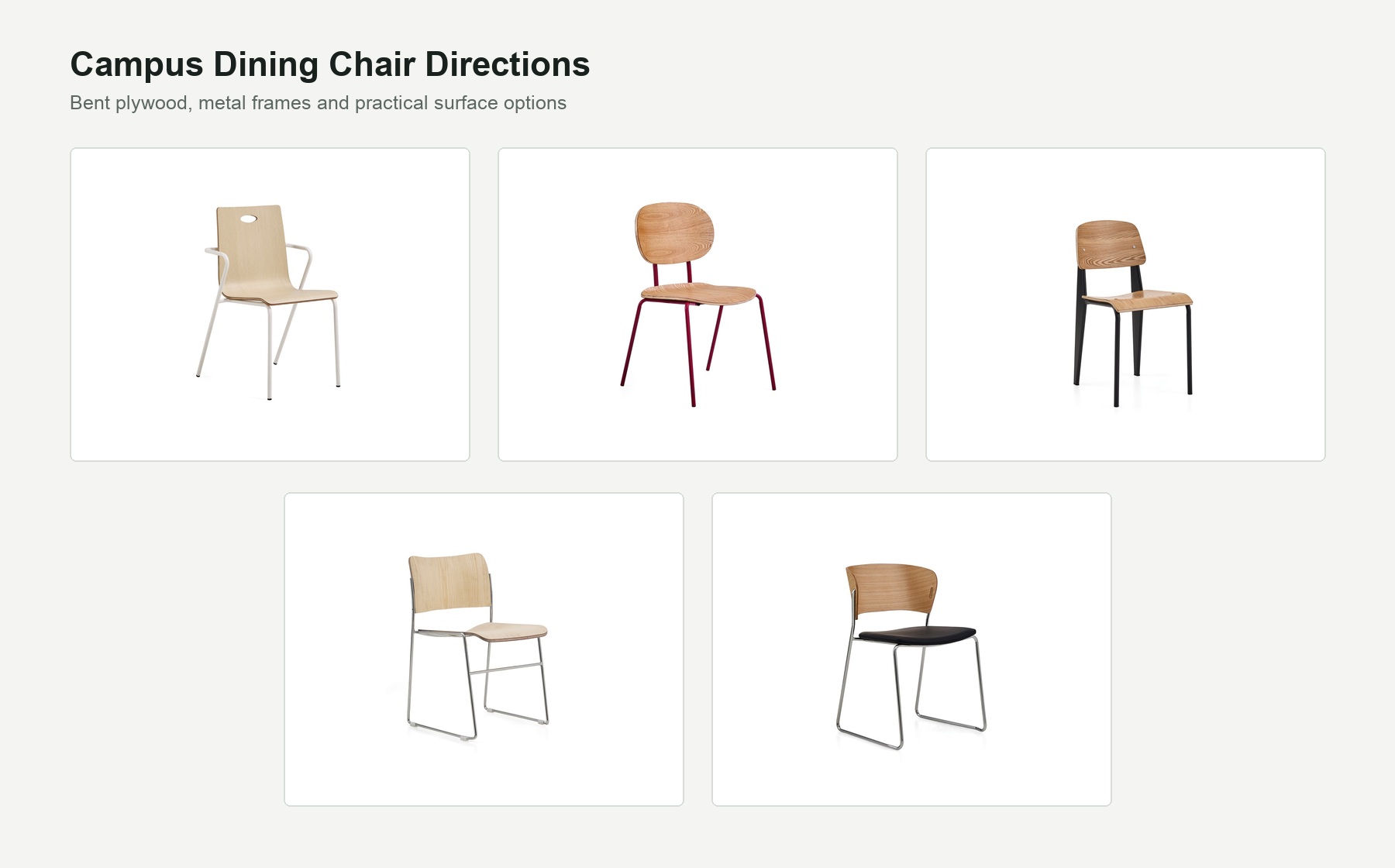
The exposed plywood models are useful starting points for high-traffic dining areas where buyers want a warm material expression and straightforward surface care. Frame colors, veneer selection, dimensions, edge details and connection points can be discussed according to the project. The white armchair offers a more open hospitality character, while the red, black and chrome-frame directions can suit compact dining or shared study tables.
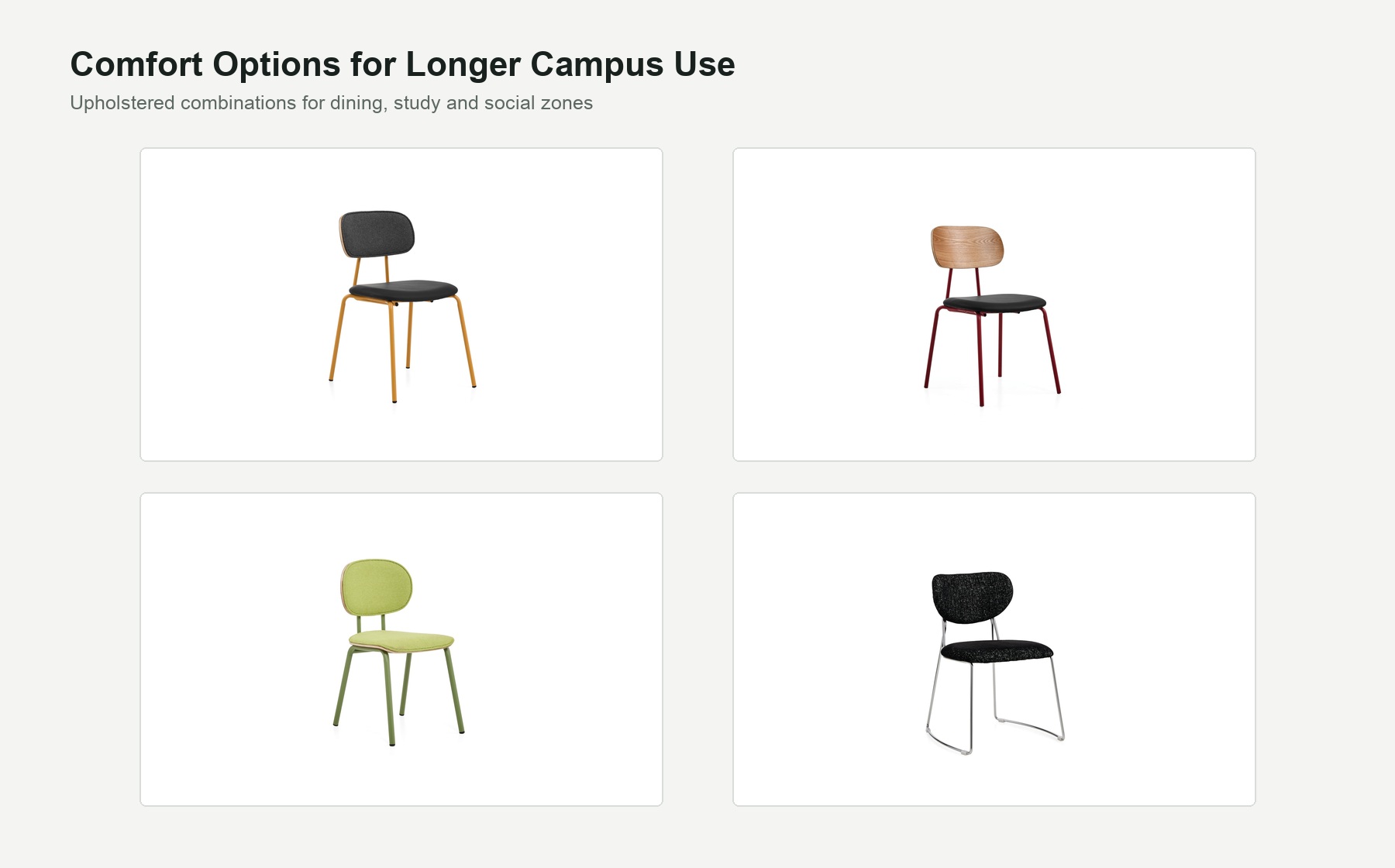
Upholstered combinations can be used selectively in student lounges, quiet dining corners, faculty areas or mixed-use social spaces. They add comfort and color while retaining a plywood structure beneath or around the upholstery. Buyers should define the fabric or synthetic leather, foam specification, seam position, cleaning method and replacement expectation before sampling.
A successful order starts with the operating brief. Before selecting a model or developing a custom mold, procurement teams should answer seven questions:
How many seats are needed at the lunch peak? This determines table density, aisle width and the balance between arm and armless chairs.
How long will students normally remain? Fast dining, group work and quiet study require different levels of support and upholstery.
How will the room be cleaned? Confirm the surface finish, upholstery, gaps, glides and compatibility with the operator's cleaning products.
Will the furniture be moved or stored? Review chair weight, handling points and the actual stacking or nesting requirement.
Which tests and documents apply? The answer varies by country, tender, institution and finished chair construction.
How will replacements be handled? Record the approved veneer tone, coating color, hardware and reference sample for repeat supply.
Is a standard model enough? A custom plywood mold may be worthwhile when the project needs a distinctive back profile, handhold, seat curve or frame interface.
DALI can begin with a buyer's 2D drawing, 3D file, target dimensions, reference chair, physical sample or performance brief. The technical review covers plywood thickness, curvature, veneer direction, visible edges, drilling, upholstery allowance and frame connection. Where an existing mold is suitable, it can provide a faster and lower-cost starting point. Where the geometry is distinctive, a new mold can be developed with controlled tooling cost.
The sampling stage should verify more than appearance. The plywood component must fit the metal or wooden frame, leave the correct upholstery allowance and maintain the approved posture. After the reference sample is confirmed, production checks can focus on dimensions, surface quality, color, machining and packaging.
DALI supports custom plywood components and suitable finished-chair projects, with low starting quantities available for appropriate structures. Samples can be discussed before production, and buyers are welcome to visit the factory to review molds, processes, chair samples and quality-control points.
Education projects in Europe and North America can include requirements for timber sourcing, formaldehyde emissions, structural performance, coatings, upholstery and fire behavior. These requirements must be matched to the actual order and destination market.
DALI maintains FSC Chain of Custody certification within its stated scope and has an SGS report for a specified plywood sample covering selected formaldehyde-emission requirements. A buyer should confirm whether the proposed material, finish and complete chair need additional testing for the tender. Documentation should describe the exact supplied product rather than relying on a general statement.
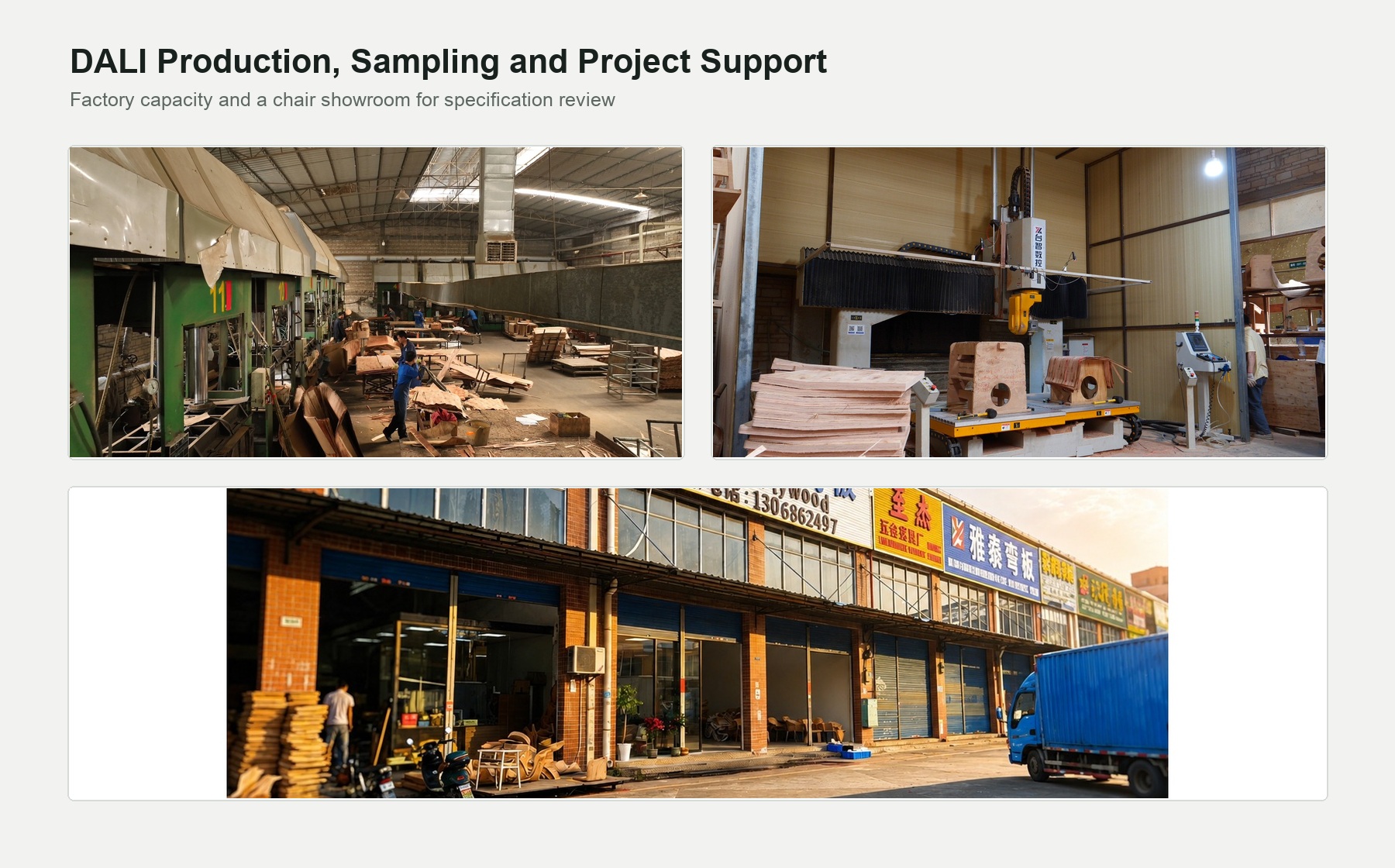
DALI operates four production bases with more than 200 production personnel and experience across nine product series. For cafeteria-chair programs, the workflow can include veneer preparation, mold pressing, conditioning, trimming, CNC machining, drilling, sanding, surface finishing, upholstery coordination and finished-product assembly according to the agreed supply scope.
This capacity supports several types of customers: education furniture distributors seeking a repeatable chair range, restaurant-chair brands developing a new plywood model, contract furniture factories purchasing components and campus project teams sourcing finished products. Orders can begin with one chair direction and expand after the geometry, finish and packaging are approved.
The best student dining rooms do more than serve lunch. They support breakfast, coffee, group work, informal meetings, quiet study and evening activity. The furniture must make those transitions easy without creating visual disorder or excessive maintenance.
Well-specified plywood cafeteria chairs can bring warmth, repeatable geometry and useful customization to that brief. DALI can help buyers compare existing chair directions, develop a custom plywood mold, prepare samples and plan repeat production. Send the floor plan, target chair dimensions, quantities, destination market and preferred finishes to begin a practical campus seating proposal.