


 Jul 30, 2026
 dali plywood
 182
182
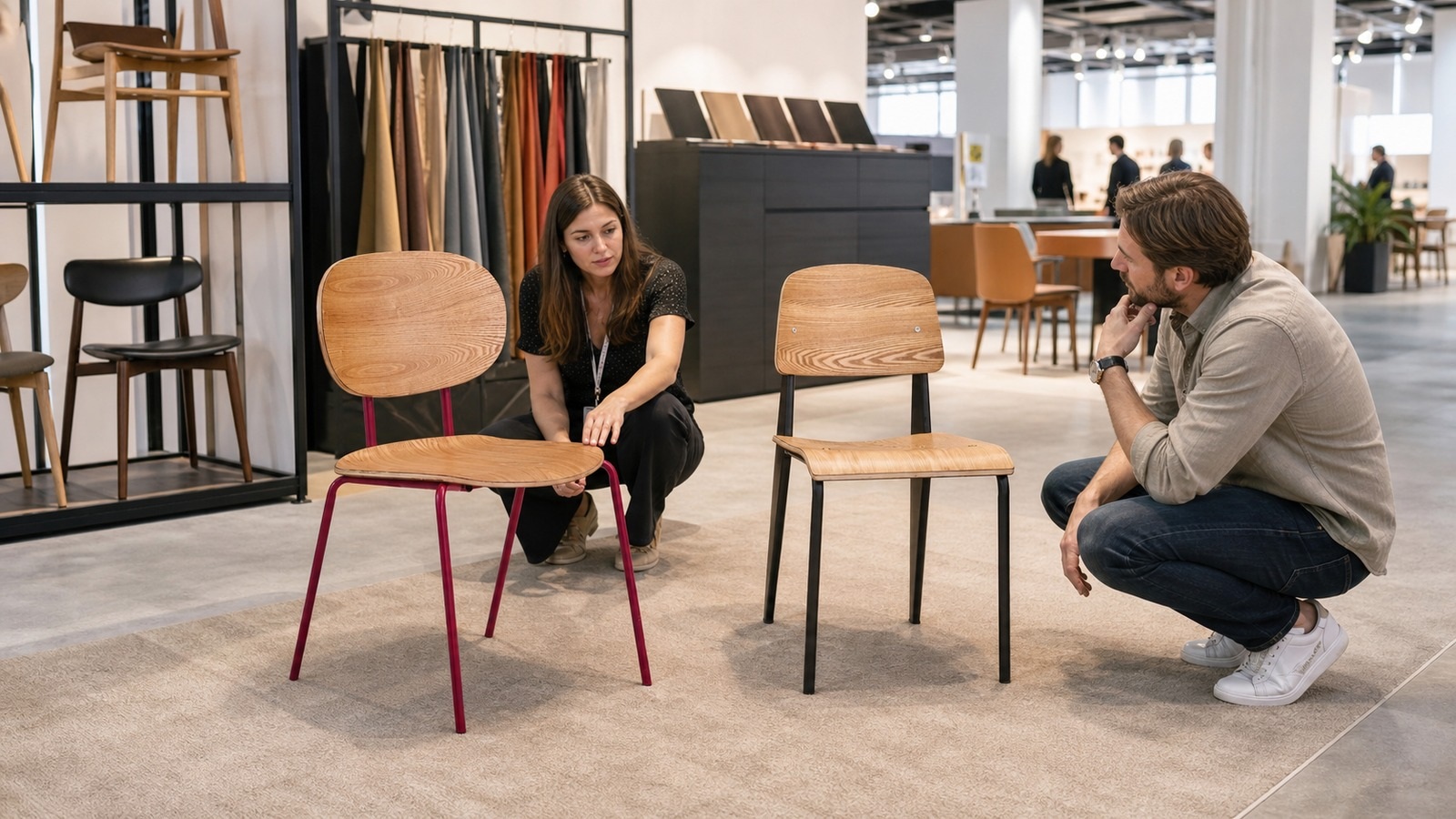
Summer furniture markets are built around discovery. Buyers walk through hundreds of showrooms, compare finishes, test chair proportions and look for a product that can become the next strong addition to their assortment. The 2026 Las Vegas Market, running July 26-30, presents more than 3,500 furniture, home decor and gift brands, while its new First Finds format emphasizes emerging brands and early product discovery.
The difficult work begins after the market. A promising chair still needs a manufacturable structure, a clear target price, a realistic minimum order, an approved finish and packaging that can survive export. For an independent furniture brand or regional distributor, committing immediately to a large order can create too much inventory risk. A better route is to build a controlled small batch custom chair program that can be tested before scaling.
Bent plywood is well suited to this approach because one seat, back or shell can become the visual center of a chair family. The same approved plywood component may be combined with different frames, veneers or upholstery treatments, but the first launch should remain focused. Fewer variables make sampling faster, quotations clearer and quality control more repeatable.
Current wholesale markets place a premium on newness. New showrooms, temporary exhibits and emerging brands give buyers more products to compare, but they also increase the pressure to make quick assortment decisions. A small pilot order allows a buyer to evaluate actual customer response rather than relying only on a rendering, a trade-show sample or a trend forecast.
A pilot program can answer practical questions:
Does the chair feel comfortable at the intended table height?
Does the finish look consistent under showroom and hospitality lighting?
Can the chair be assembled, moved and cleaned easily?
Does the packaging protect the plywood edges and metal frame?
Which color receives the strongest response from buyers?
Can the factory reproduce the approved sample when a repeat order arrives?
Small batch does not mean casual production. The prototype, specification and inspection standard should be prepared as if the chair will become a long-running product. That discipline makes the next order easier rather than forcing the buyer and factory to solve the same details again.
A useful brief starts with the market application, not only a reference photograph. A dining chair for a European cafe has different priorities from a hotel guest chair, training chair or residential accent chair. The buyer should identify the target user, seat height, expected sitting time, table type, desired weight, frame material, upholstery level and destination market.
The commercial information matters equally. A factory needs the expected pilot quantity, target annual potential, price range, launch date and number of finish options. Without those limits, a project can expand into too many variations before the first sample is approved.
For a first launch, one chair in two carefully selected finishes is often more manageable than four related chairs in six colors. The buyer can add an armchair, bar stool or upholstered version after the core geometry and supply process are stable.
The mold decision has a major effect on cost, speed and product identity. An existing molded plywood seat or back can reduce initial tooling cost and provide a faster route to a sample. The buyer can still create distinction through veneer, edge detail, upholstery, frame color and hardware.
A custom mold becomes valuable when the shape is central to the brand: a distinctive wraparound back, a specific lumbar curve, an integrated handhold or an unusual connection to the frame. The tooling discussion should cover the finished dimensions, curvature, plywood thickness, veneer direction, trimming line, holes and upholstery allowance.
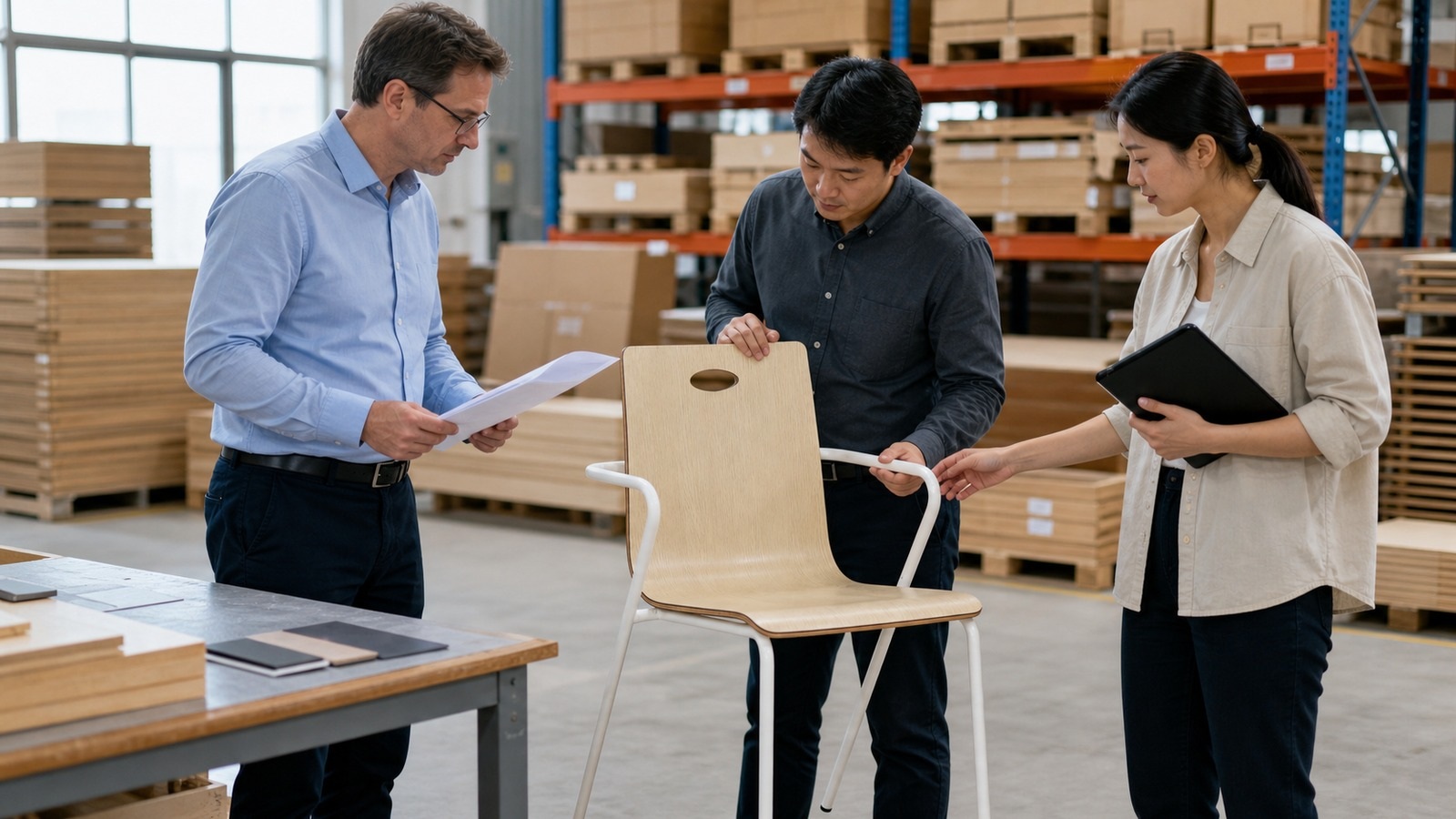
The decision should be made around the complete chair, not an isolated plywood shell. A beautiful component can fail if the frame connection is weak, the upholstery leaves an uneven edge or the seat angle changes the intended posture. Reviewing the physical chair with drawings and material samples exposes these issues early.
A photograph communicates style, but it does not define production. A useful technical package includes overall dimensions, critical curves, plywood thickness, visible and hidden surfaces, veneer species, coating, edge treatment, hole positions, inserts, frame connection, foam allowance, fabric direction and packaging limits.
If a 3D file is available, it should be checked against the physical construction. If only a physical sample exists, the factory can review it and prepare manufacturing information. Every change made during sampling should be recorded. A signed reference sample and written specification are more reliable than a chain of informal messages.
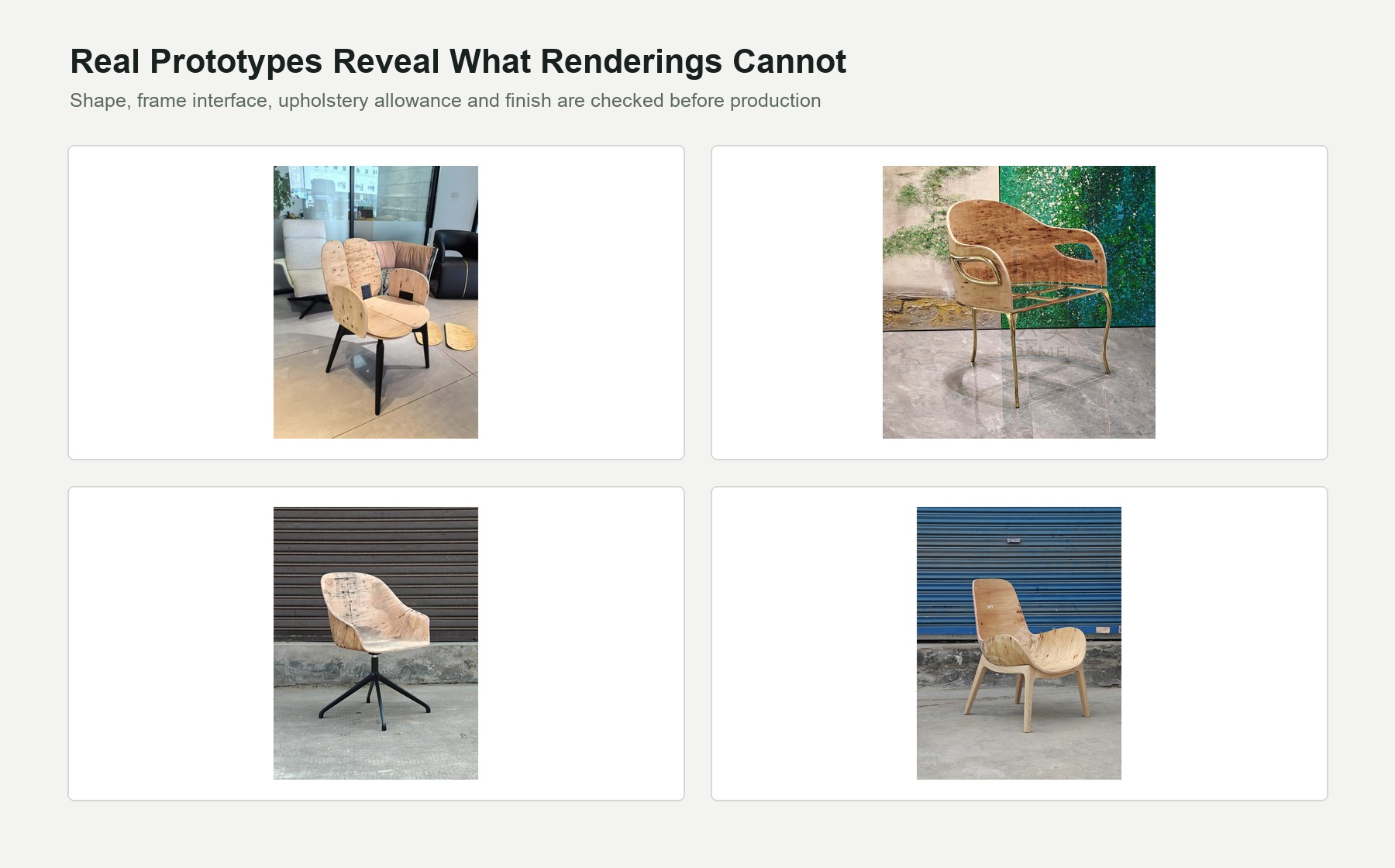
Raw prototypes are not presentation pieces. Their value is that they show the actual plywood behavior, edge build-up, connection zones and upholstery space. Markings, temporary fittings and unfinished surfaces help the development team decide what must change before the final sample.
A prototype review should check the back angle, seat depth, pressure points, symmetry, frame fit and visible veneer direction. For upholstered chairs, the foam and fabric can alter the apparent curve and reduce the usable seat space. For exposed plywood, the edge and face quality become part of the finished appearance.
DALI can work from drawings, 3D files, reference chairs, target dimensions or physical samples. Existing molds may offer a lower-cost route for suitable projects, while controlled custom mold development can support a more recognizable product.
A clear pilot-order request produces a more useful quotation. The buyer should state whether the order is for plywood components, upholstered subassemblies or finished chairs. The scope affects materials, labor, testing, packaging, assembly responsibility and inspection.
The quotation should identify:
pilot quantity and expected repeat-order range;
tooling or mold cost, where applicable;
unit price by finish and supply scope;
sample cost and approval process;
material and hardware assumptions;
packaging method and carton quantity;
production lead time after sample approval;
documentation or testing that is included or excluded.
DALI supports suitable low starting quantities according to the chair structure, material and production plan. The lowest possible quantity is not always the lowest total cost, so tooling, setup, packaging and freight should be evaluated together.
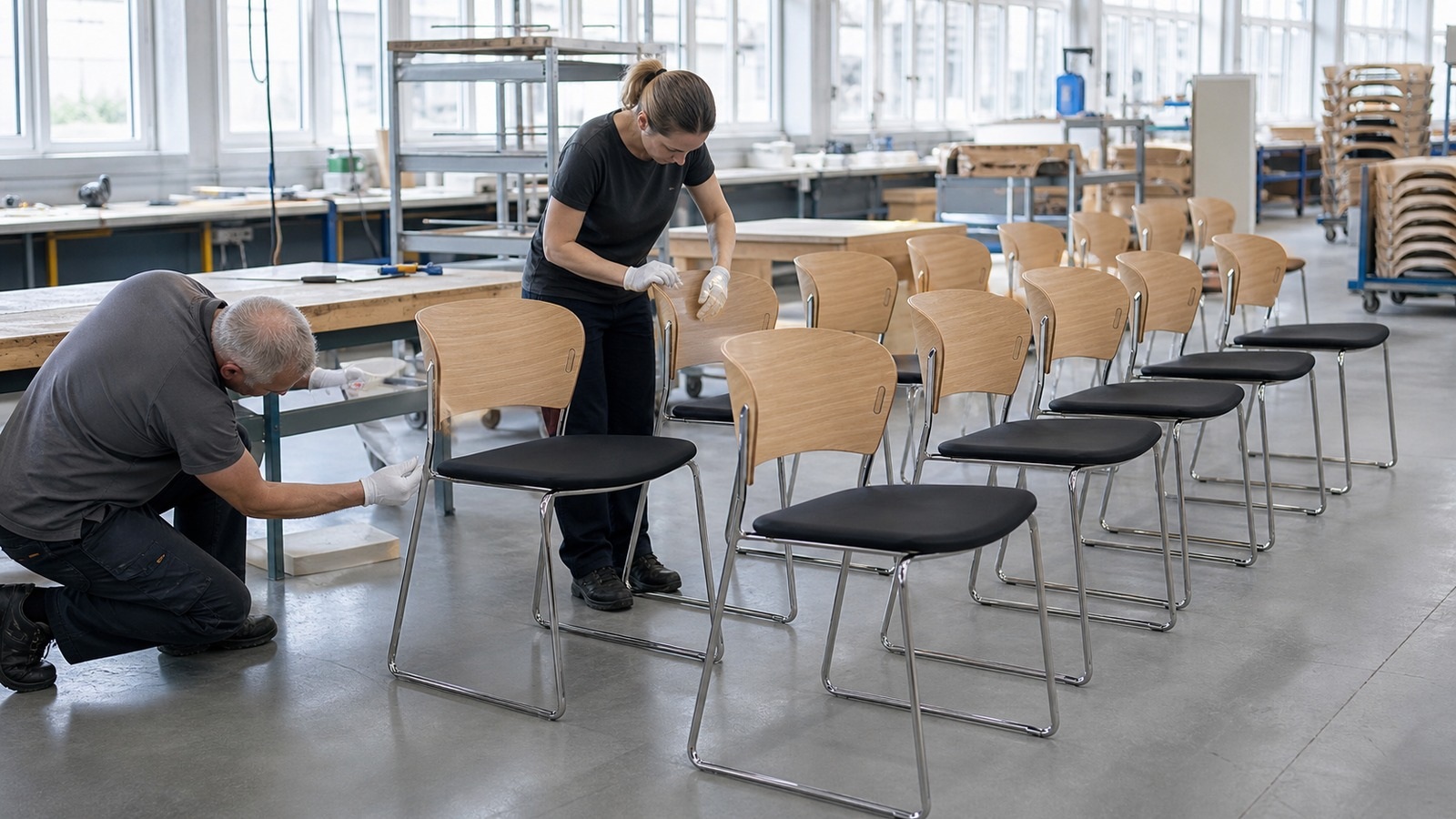
The pilot batch creates the reference for future supply. Inspection should compare production chairs with the approved sample and written specification. Critical checks can include dimensions, seat and back alignment, frame stability, weld appearance, fastener position, veneer tone, coating color, upholstery seams and floor glides.
Variation is easier to see when chairs are placed together. A row of finished products quickly reveals inconsistent back angles, frame heights or veneer direction. The quality record should identify acceptable tolerances and any corrections required before shipment.
Testing requirements depend on the complete chair, destination market and intended use. Buyers should confirm structural, emissions, coating, upholstery and fire-related requirements for the actual project rather than assuming that one general certificate covers every finished product.
Finish options can multiply faster than the product itself. A small brand may want oak, walnut, black paint, natural plywood, three frame colors and several fabrics. Each additional combination creates material purchasing, color matching, packaging and spare-part questions.
A disciplined launch can begin with one exposed-wood version and one upholstered version, or one veneer with two frame colors. The buyer can compare sales data before adding more choices. The approved finish board should record veneer tone, gloss, edge appearance, metal coating and upholstery reference.
This approach also supports private-label consistency. When the next order arrives, the factory can work from the same sample and finish record instead of interpreting a color from a photograph.
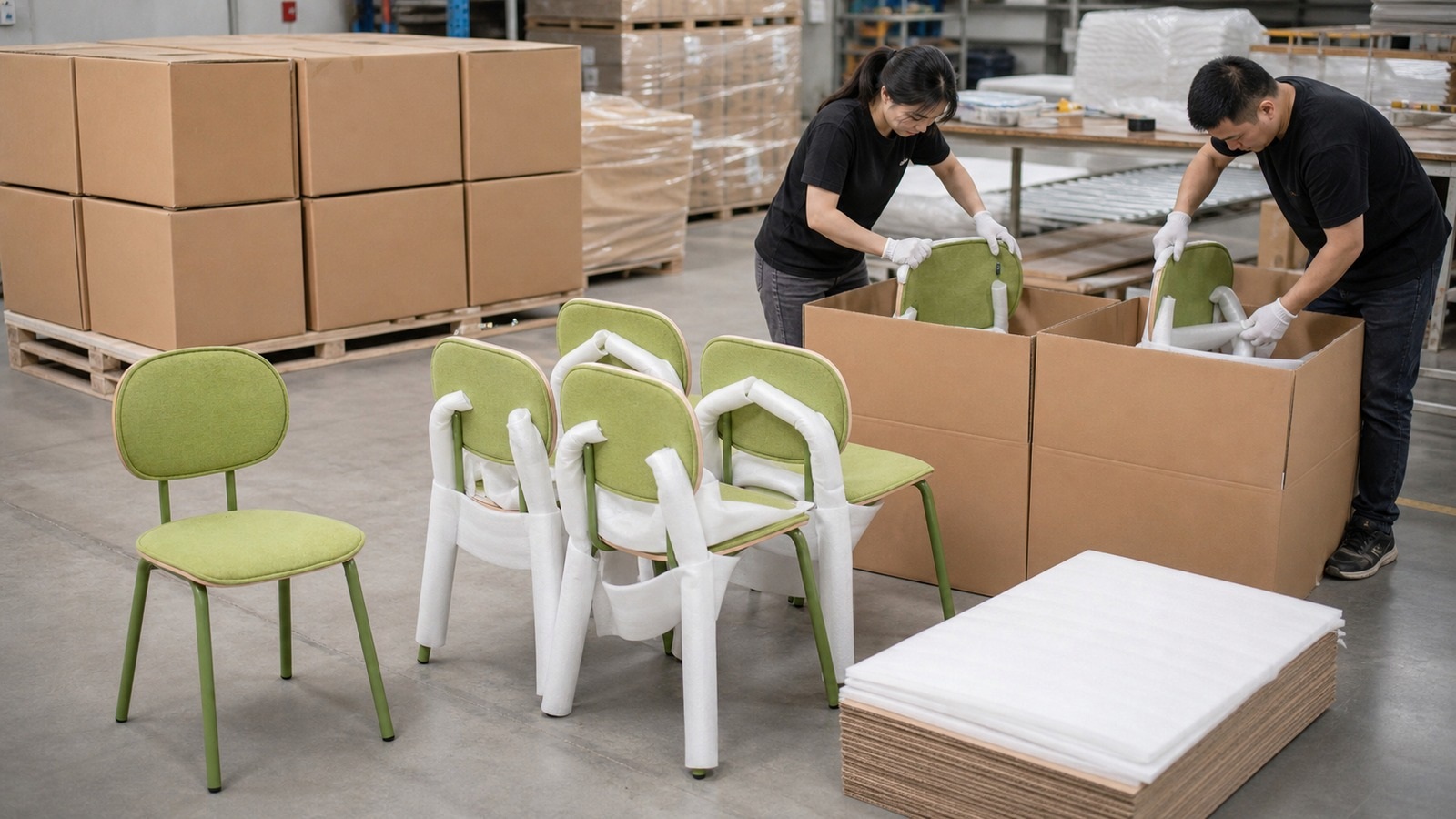
A well-made chair can still arrive damaged if the carton, protective material and loading method are not developed around the product. Plywood edges, frame finishes, armrests and upholstery require different protection. The packing design should prevent parts from rubbing, shifting or carrying load in the wrong direction.
For a pilot shipment, buyers should confirm whether chairs are shipped assembled or knock-down, how many units fit each carton, where hardware is stored and how the package is opened without damaging the finish. Carton dimensions also affect freight efficiency and warehouse handling.
Photographs of the packing sequence and a retained packing reference make repeat orders easier. If the pilot market is close enough, the first cartons can be opened and reviewed before the complete shipment is distributed.
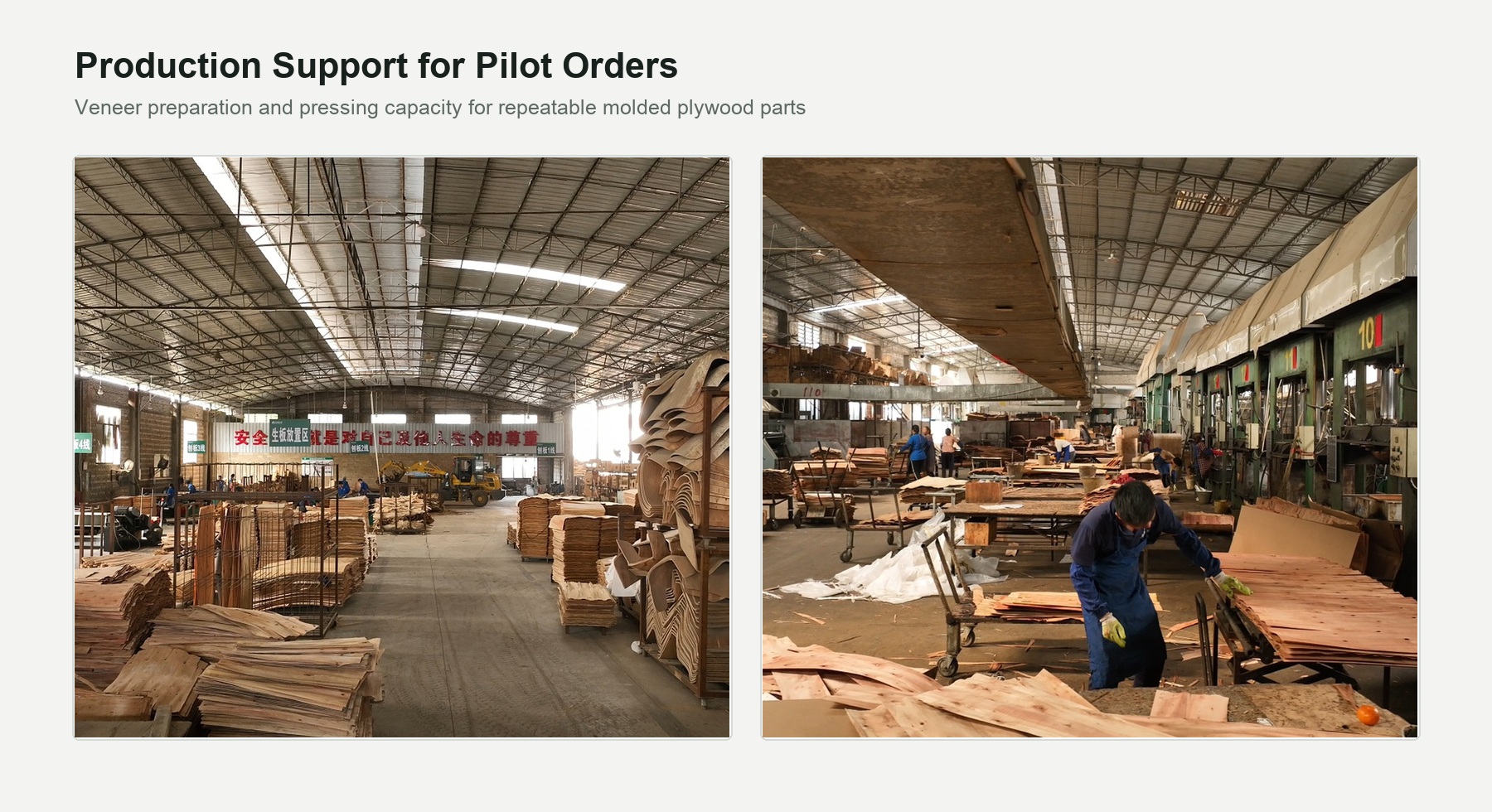
DALI operates four production bases with more than 200 production personnel and experience across nine product series. Capabilities can include veneer preparation, mold pressing, conditioning, trimming, CNC machining, drilling, sanding, surface finishing and upholstery coordination according to the order scope.
For a small-batch custom chair program, production planning should reserve the approved mold, material and finish information for future orders. The goal is not only to complete the first batch. It is to make the second batch predictable.
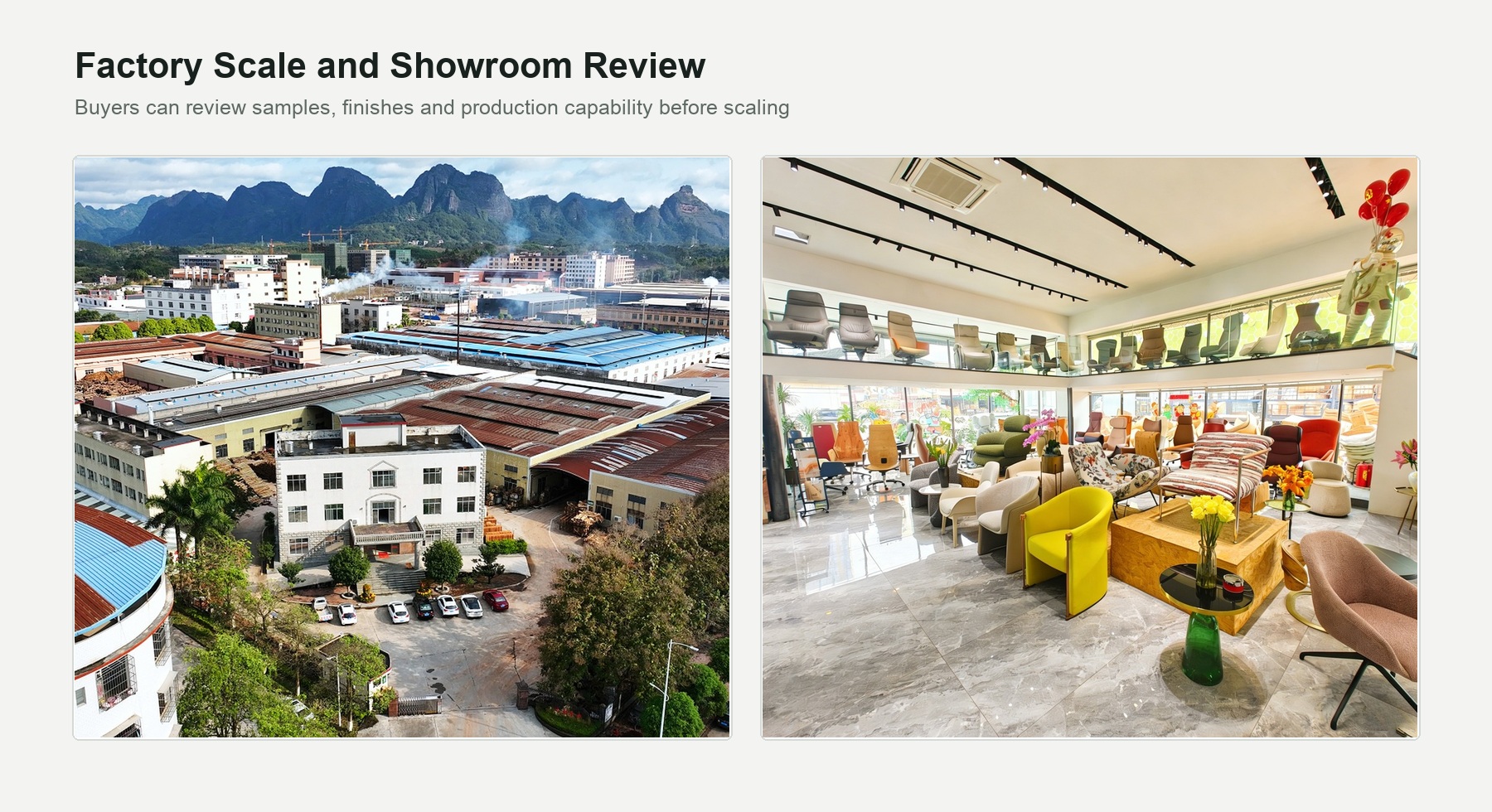
International buyers are welcome to visit the DALI factory and showroom to review molds, unfinished plywood parts, finished chairs, veneer options and production control points. A visit can be especially useful before a buyer expands from one pilot chair into a larger dining, lounge or office seating family.
DALI maintains FSC Chain of Custody certification within its stated scope and has an SGS report for a specified plywood sample covering selected formaldehyde-emission requirements. Documentation and any additional testing should be confirmed for the actual material, finished chair and destination market.
A small pilot order is not a shortcut around development. It is a structured way to learn before committing to larger inventory. The most successful programs define one use case, approve one clear product, limit the first finish options and record every production decision.
DALI can support furniture brands, importers and contract suppliers with existing molded plywood options, custom mold development, prototype review, suitable low starting quantities and repeat production. Send the target dimensions, reference chair or drawings, expected pilot quantity, destination market and preferred finish to begin a practical small batch custom chair proposal.