


 Jul 31, 2026
 dali plywood
 267
267

For European furniture buyers, compliance can no longer be treated as a folder assembled after production. In 2026, the most reliable sourcing programs begin with the destination market, product construction, material list, test plan and traceability route before a chair is approved for mass production.
This is especially important for a bent plywood chair. The finished product may combine veneer, plywood, adhesive, coating, metal, foam, fabric, glides, labels and packaging. Each part can affect the technical file, and a report for one raw material does not automatically cover the complete chair.
The immediate date for many buyers is 6 August 2026, when the new EU REACH restriction on formaldehyde released from articles begins to apply. GPSR product-safety and traceability obligations are already in force, while the EU Deforestation Regulation is moving timber supply-chain preparation toward its next implementation stage. A practical EU furniture compliance program should connect all three workstreams without confusing their scope.
Commission Regulation (EU) 2023/1464 added entry 77 to Annex XVII of REACH. From 6 August 2026, articles generally may not be placed on the EU market when formaldehyde released under the test conditions specified in Appendix 14 causes a concentration above 0.062 mg/m³ for furniture and wood-based articles. A separate 0.080 mg/m³ threshold applies to other articles. The regulation also contains exclusions and detailed test conditions, so the exact scope must be confirmed for the actual product.

The important purchasing lesson is that the figure refers to a defined chamber-based assessment of the article. It is not simply another name for an E0 or E1 material grade, and it is not automatically demonstrated by a CARB Phase 2 or US EPA TSCA Title VI report. Those documents may still be useful within their own scope, but the buyer should not substitute one requirement for another.
Before approving a production order, the importer and factory should agree on:
the complete test sample and the exact product configuration;
the applicable Appendix 14 loading factor and test conditions;
which finishes, adhesives, foams or fabrics are included in the tested version;
the qualified laboratory and report language;
the timing of pre-production and confirmation testing;
how material or supplier changes will trigger a technical review.
A natural-veneer chair and a fully upholstered version may not present the same material package. Likewise, changing the adhesive system, coating or plywood thickness after testing can make the original evidence less representative. The approved sample, bill of materials and test sample should therefore match.
The EU General Product Safety Regulation, Regulation (EU) 2023/988, has applied since 13 December 2024. For consumer furniture within its scope, the process goes beyond a general statement that a chair is safe. The manufacturer must carry out an internal risk analysis and prepare technical documentation, while supply-chain roles and product identification must be clear.
A buyer file should normally address the product type, batch or serial identification; manufacturer and importer contact details; the EU responsible economic operator where required; foreseeable risks; supporting standards and tests; instructions and warnings; and the process used to keep series production consistent. Relevant technical documentation must be retained for ten years after the product is placed on the market.
For chairs, risk analysis can include stability, structural failure, pinch or sharp-edge hazards, fastener loosening, floor-glide behavior, coating and chemical exposure, upholstery performance, foreseeable misuse and packaging information. The exact tests depend on the intended use. A residential dining chair, hotel chair, office visitor chair and school cafeteria chair should not automatically share one test plan.

Traceability is most useful when a complaint or inspection can be connected to a specific production record. A small durable label under the seat, on the frame or on the packaging can identify the model and batch without disrupting the design. The corresponding factory record can then connect that code to material suppliers, production dates, inspection results and retained samples.
A practical batch record may include the plywood press lot, veneer species and supplier, adhesive and coating references, frame batch, upholstery lot, final inspection date, carton code and shipment reference. The factory should also record approved deviations and corrective actions. This is more valuable than a certificate folder that cannot be linked to the chair in front of the buyer.
The European Commission updated the EUDR product scope and supporting information-system tools in July 2026. Under the current timetable, the regulation applies from 30 December 2026 for large and medium operators and for micro and small operators already covered by the EU Timber Regulation. Other micro and small operators have an application date of 30 June 2027.
Furniture buyers should not assume that every chair, component or accessory follows the same route. Product coverage depends on the latest commodity scope and Combined Nomenclature classification. The EU operator should check the current CN code and transition rules for the actual imported product.

Where a timber product is in scope, preparation can require more than an FSC certificate. The supply chain may need species information, including scientific name; country and area of production; supplier and transaction records; evidence of legality; geolocation information for plots of production; risk assessment; and due-diligence statement data handled by the responsible operator. FSC or other third-party certification can support due diligence, but it does not replace the legal assessment.
For plywood chair projects, the importer should ask early how veneer, core material and other timber inputs are traced. If information is requested only after the chair is packed, the supplier may have difficulty reconnecting finished goods to specific incoming material lots.
A concise product file can be more useful than a large archive with unclear scope. For a new chair program, buyers can request the following ten groups of records:
Product specification: intended use, dimensions, weight, finish, upholstery and destination market.
Bill of materials: plywood, veneer, adhesive, coating, frame, foam, fabric, fasteners and glides.
Drawings: overall dimensions, critical curves, hole positions, frame connections and packaging layout.
Material declarations: supplier references and relevant chemical or sustainability information.
Test plan and reports: structural, stability, emissions and other destination-specific requirements.
Risk analysis: foreseeable hazards, user groups, misuse and mitigation measures.
Traceability plan: model, batch code, label position and link to production records.
Quality-control plan: incoming checks, in-process controls, final inspection and tolerances.
Packaging and labeling file: carton information, warnings, assembly instructions and responsible-party details.
Change and corrective-action log: approved changes, complaints, investigations and follow-up.
The pack should identify who owns each document and which product version it covers. A report without a sample description, model link or date can create more uncertainty rather than less.
Certificates and laboratory reports should be read from the sample description and scope, not only from the logo on the first page. An FSC Chain of Custody certificate relates to certified material claims and controlled supply-chain procedures within its stated product scope. It does not certify the mechanical performance or chemical compliance of every finished chair.
Similarly, an SGS report for a specified plywood sample shows the result for that sample and the tests named in the report. A CARB/TSCA result does not itself establish compliance with the 2026 EU REACH formaldehyde restriction for a complete furniture article. Buyers should map each document to a precise requirement, material, model and market.
Testing a specially prepared sample is not enough if production uses a different adhesive, coating, foam density, veneer or frame connection. The factory should create the laboratory sample through the intended production route and preserve its bill of materials. The buyer can then lock critical inputs after approval.
When a substitution is necessary, the change-control record should ask whether the new input affects emissions, structural performance, appearance, fire behavior, labeling or timber traceability. Some changes may be accepted through documented review; others may require a new sample or test. The decision should be recorded before shipment.
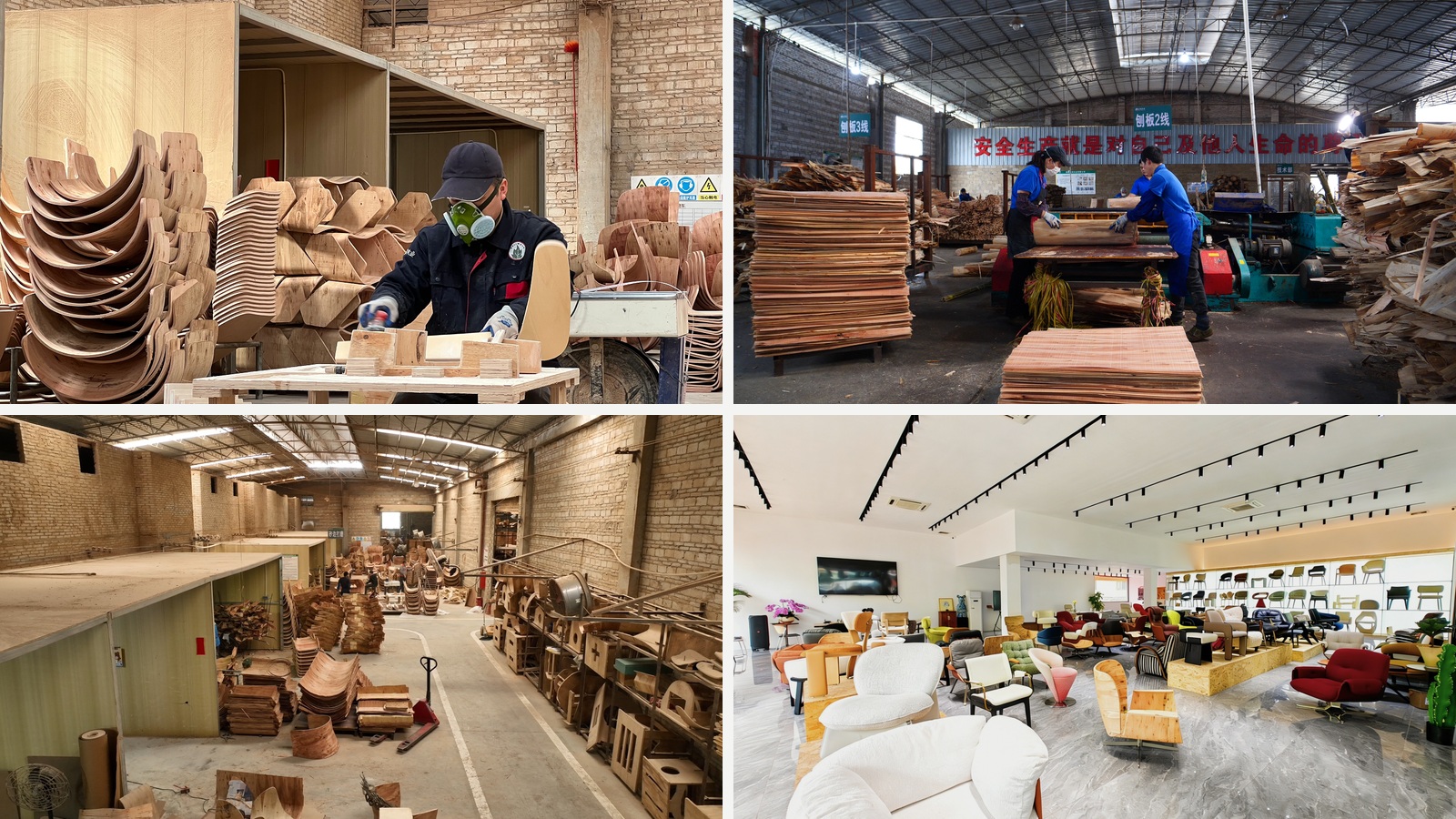
DALI operates four production bases with more than 200 production personnel and capabilities across nine product series. For custom bent plywood projects, work can include veneer preparation, mold pressing, conditioning, trimming, CNC machining, drilling, sanding, surface finishing and upholstery coordination according to the confirmed order scope.
Existing molds may reduce development cost and support a suitable low starting quantity. When a new curve is important to the product identity, DALI can review drawings, 3D files, reference chairs, physical samples or target dimensions for controlled custom mold development. The technical discussion should cover plywood thickness, curve radius, veneer direction, edge shape, holes, inserts, upholstery allowance and frame connection.
International buyers are welcome to visit the factory and showroom to review molds, raw plywood parts, sample construction, production routes and quality-control points. A factory review is particularly useful when one platform will be extended into dining, lounge, office or contract seating.
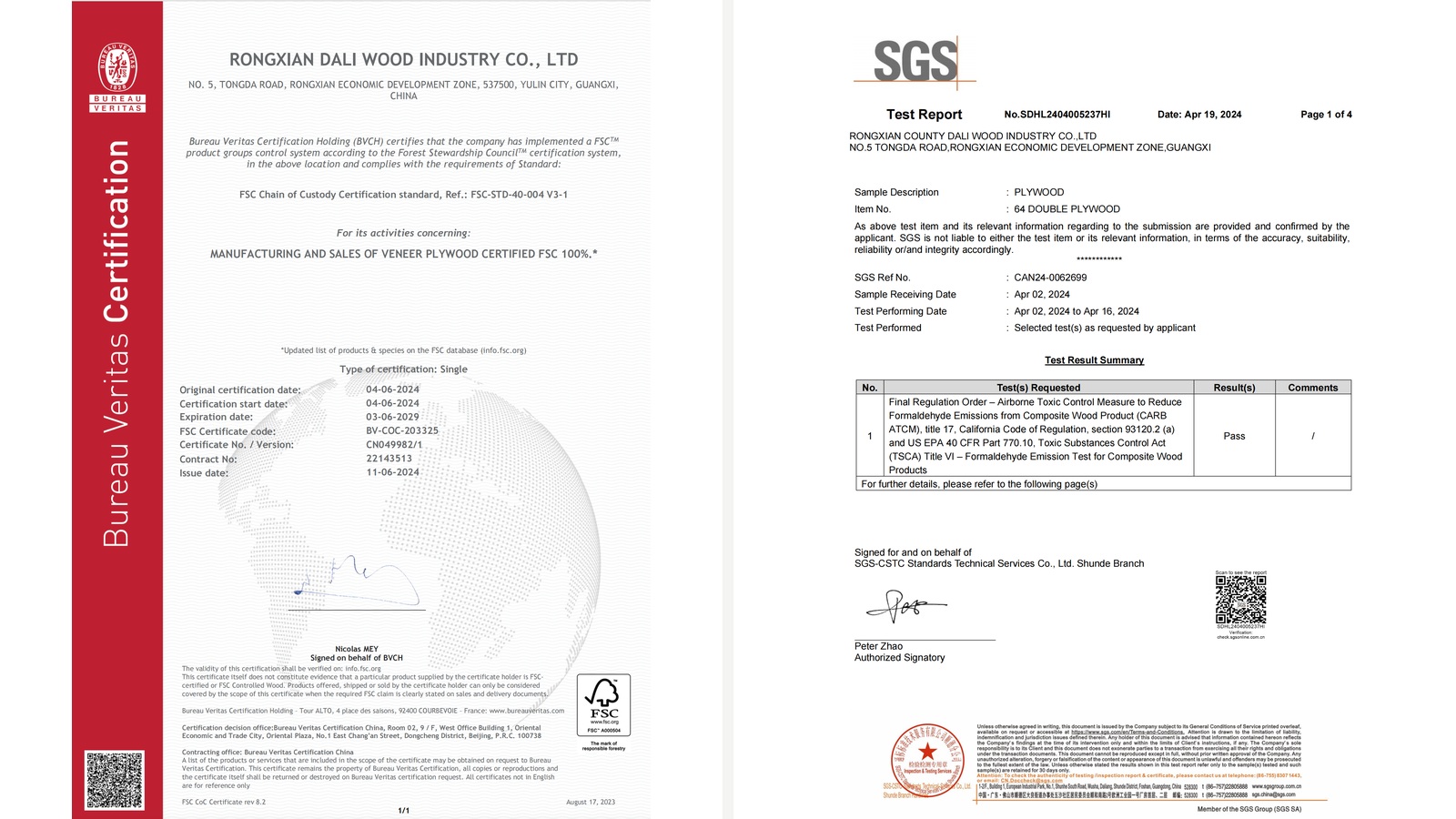
DALI maintains an FSC Chain of Custody certificate for activities and products stated in the certificate scope. The company also holds an SGS report for a specified plywood sample covering the CARB ATCM and US EPA TSCA Title VI formaldehyde-emission tests named in that report.
These documents can support a buyer's supplier assessment, but project compliance must be confirmed for the actual product, sample, material claim, destination and current regulation. Additional testing and documentation should be agreed before mass production when the buyer's market or contract requires it.
For a faster and more accurate quotation, send the chair drawing or reference, intended use, destination country, target quantity, annual forecast, preferred veneer and finish, upholstery scope, packaging method, required standards and desired launch date. Also identify whether the request covers plywood components, upholstered subassemblies or complete chairs.
DALI can then review mold options, sample preparation, production scope, suitable starting quantity and the documentation path. The goal is not to attach more paperwork to the order. It is to create a chair whose materials, tests, traceability and repeat production support the buyer's actual market.
This article is a practical sourcing overview and not legal advice. Importers should confirm current product classification, exemptions, test methods and economic-operator duties with qualified compliance specialists and laboratories.