


 Aug 03, 2026
 dali plywood
 207
207
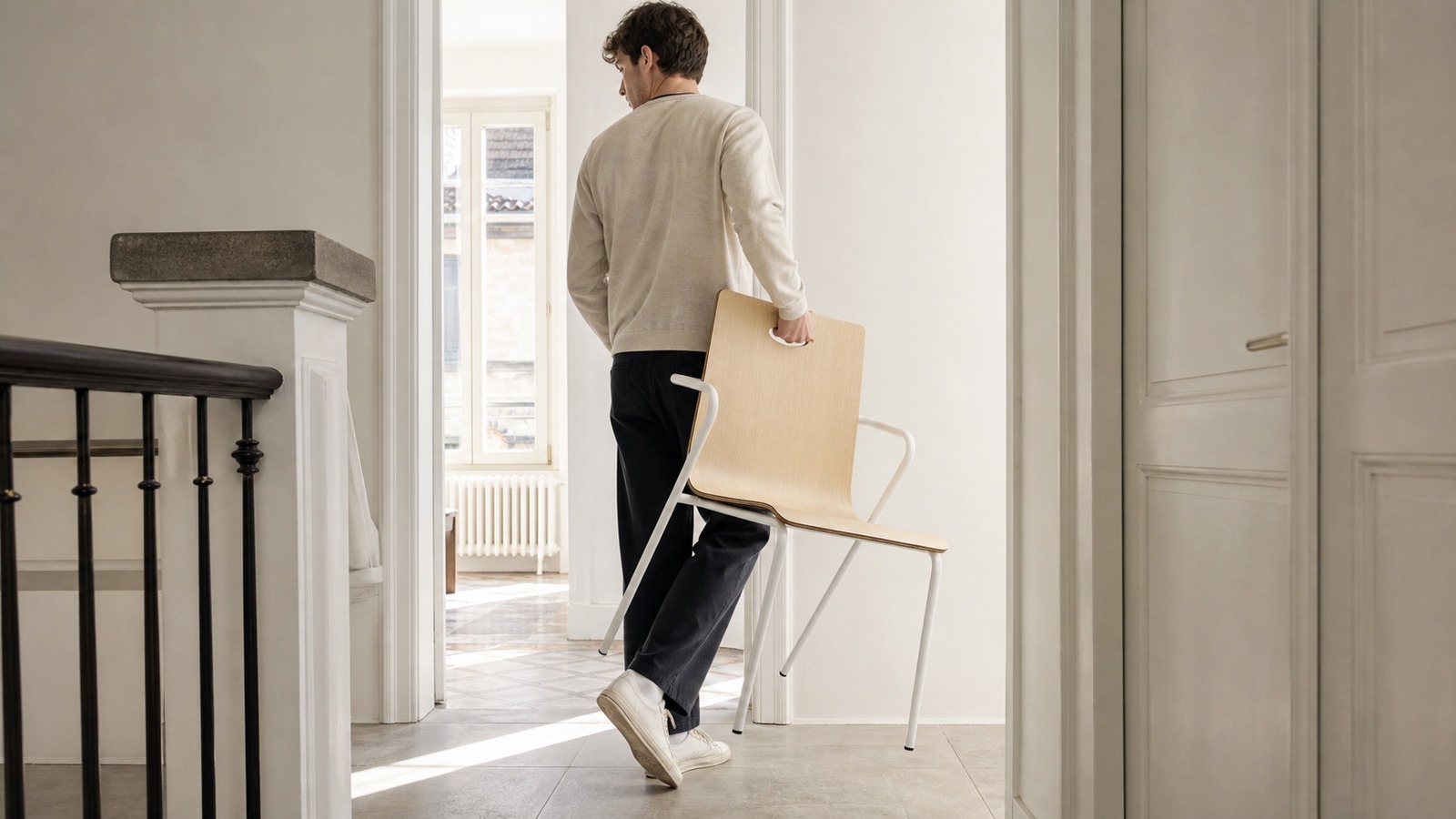
The international furniture conversation entering August 2026 is moving away from the idea that every purchase belongs in one permanent home. More young adults rent, relocate for study or work, share compact apartments and expect the same room to support several activities. For furniture buyers, this makes portable furniture for renters a practical product-development question rather than a passing style.
IKEA's newly announced KOMPISHANG collection is a clear industry signal. The company says the 11-piece collection launches globally in August 2026 and was developed for young city dwellers who move often. Its research included visits to adults aged 20 to 28 in central London, and the resulting brief focused on furniture that is easy to carry, useful in small spaces and capable of looking settled even when the resident's address is not permanent.
This matters beyond one retail launch. It points toward a larger demand for furniture for frequent movers: products that can pass through a narrow hallway, work in more than one room, survive repeated handling, use packaging intelligently and remain visually valuable after several moves.
A chair does not become portable merely because it looks light in a photograph. The complete product has to be evaluated as an object that a real person will lift, turn, carry through a doorway, place in a lift and protect inside a van.
Weight is only one part of that experience. Balance matters. A very light chair can still be awkward if its center of gravity pulls away from the user's body. A well-positioned handhold, a narrow overall profile and a frame without exposed snag points can make a more meaningful difference than removing a small amount of material.
For a portable dining chair design, developers should define the intended movement before confirming the shell and frame. Will one adult carry one chair at a time? Will the chair be stacked for storage? Does the user need to turn it through a small landing? Will it travel fully assembled, partly disassembled or protected in its original carton? These answers change the product.

Small apartments compress the traditional boundaries between dining, working and relaxing. A breakfast table can become a desk before noon. A dining chair can become a visitor chair in the evening. When space is limited, a product earns its place by doing more than one job without looking temporary.
This is why small space dining chairs should be judged by their visual footprint as well as their physical dimensions. A thin molded plywood seat and back can make a chair appear open and calm, while natural veneer adds a tactile surface that belongs in both residential and hospitality interiors. A compact steel frame can keep the floor visible and make cleaning easier.
Comfort still matters. Multi-use seating must support a short meal and a longer laptop session, so seat depth, back angle, lumbar contact, front-edge pressure and table clearance should be considered together. A chair that is merely narrow but uncomfortable will not become a lasting part of a renter's home.
Furniture importers, retailers and developers can make the trend measurable by adding six questions to the product brief:
Can one adult carry it? Confirm actual finished weight, balance and safe grip positions on the production sample.
Can it travel through the building? Check the complete width, depth and turning path against doors, stairs, corridors and lifts.
Can it support more than one activity? Review dining height, desk compatibility, comfort duration and visual suitability in different rooms.
Can worn parts be replaced? Identify glides, seat pads, fasteners, shells and frame components that can be serviced separately.
Can the packaging work again? Consider whether edge protectors, sleeves and cartons can protect the chair during a second move.
Will it still look permanent? Use authentic materials, controlled joints and finishes that do not make a compact product feel disposable.
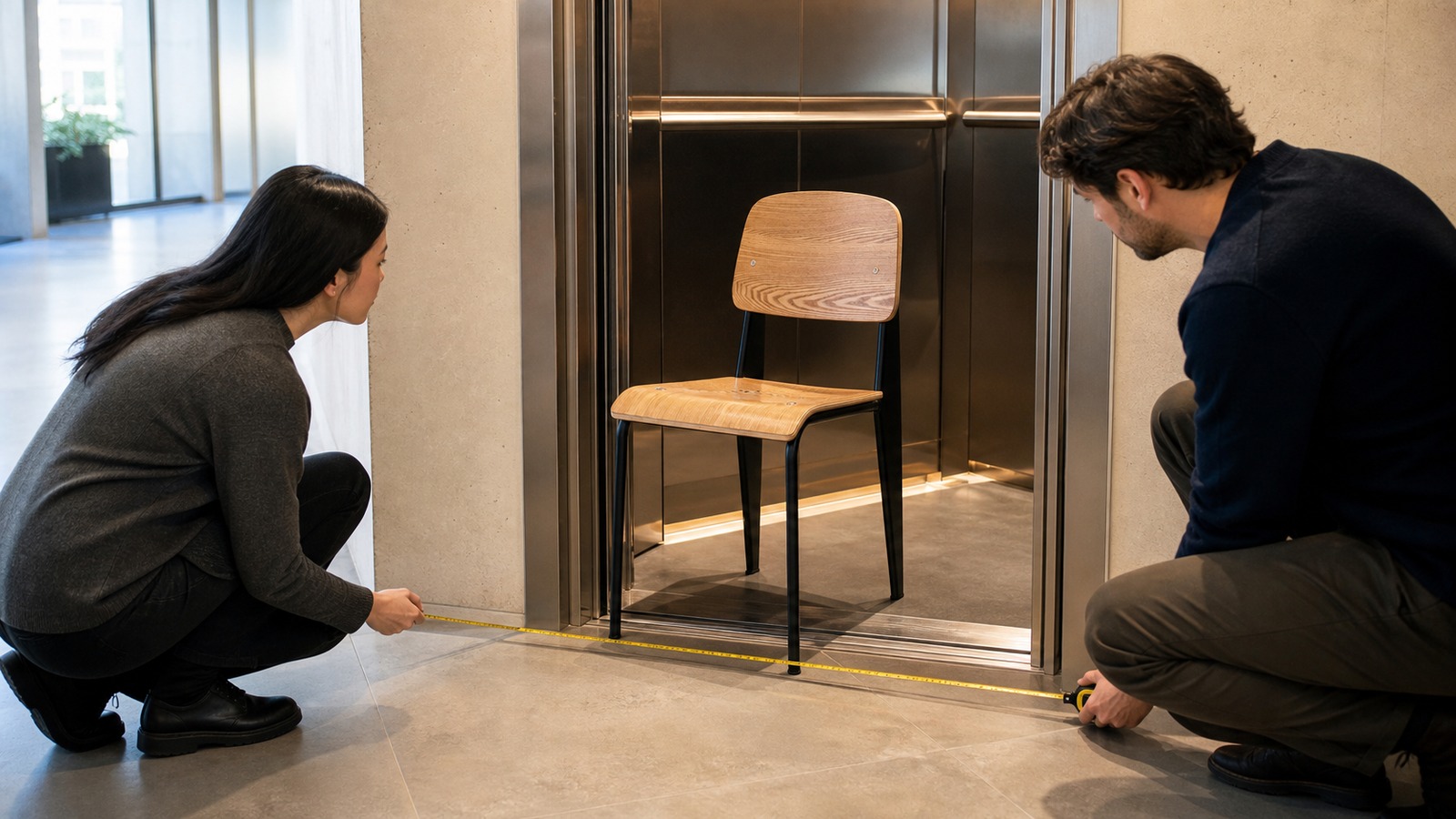
Product dimensions are usually presented as width, depth and height, but movers experience furniture as a rotating volume. A chair may fit through a door when held straight and still fail at the corner outside it. Armrests, sled bases and wide backs affect how the product turns through a tight route.
A practical prototype review can reproduce a narrow apartment door, lift opening and stair landing. The team should record the carry orientation, required turning space and contact points. For online and retail buyers, a simple dimension diagram can then communicate the real handling envelope instead of listing only three isolated measurements.
Integrated handholds can help when they are placed in a structurally suitable zone and sized for an adult hand. They should not be treated as decoration. The cutout radius, remaining plywood width, veneer direction and edge finishing all need to be reviewed so the grip remains comfortable and the shell retains the required strength.
Lightweight bent plywood chairs can combine a relatively thin visual profile with shaped support. Layers of veneer are pressed over a controlled mold, allowing a seat or back to follow a repeatable curve without the bulk of a deeply built upholstered body.
The method also gives designers several useful choices. A one-piece seat-and-back shell reduces the number of visible components. Separate molded seat and back parts allow different curvatures and easier component replacement. Natural veneer can provide oak, ash, walnut or other approved surface directions, while paint, laminate or upholstery can answer different price and maintenance requirements.
However, thin appearance does not automatically prove low weight, stackability or strength. The finished model must be assessed with its frame, hardware, coating and upholstery. Structural performance should be confirmed against the intended market, user group and contract standard. Good development turns a visual idea into verified production data.
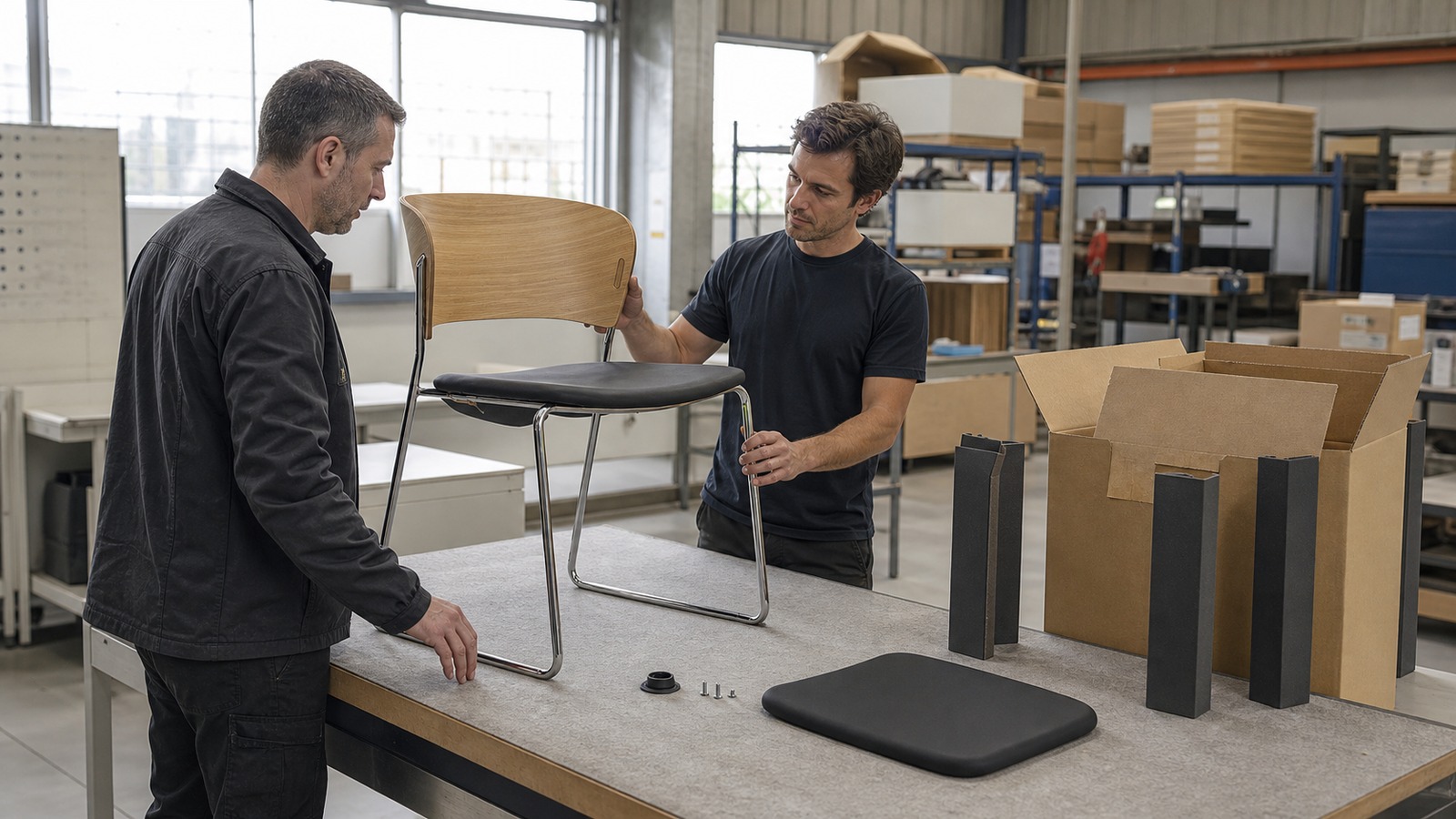
A chair that moves frequently will experience more contact with walls, floors, cartons and vehicles. Small service parts therefore become important. Replaceable floor glides can prevent a minor wear item from ending the useful life of the complete product. Accessible fasteners can make a loose connection easier to correct. A replaceable upholstered pad can refresh the product without discarding the plywood back and metal frame.
Component architecture should be agreed before tooling. Buyers can ask which parts will remain available, how they are identified, what tools are required and whether replacement is suitable for a retailer, service partner or end user. This supports a more credible repairable chair component strategy than simply describing the product as sustainable.
Packaging should be reviewed with the same logic. Corner guards, seat sleeves, frame protection and carton structure need to prevent the parts from rubbing during the first shipment. For compact furniture packaging, designers can also evaluate nesting, controlled disassembly and reusable protective elements, provided reassembly is simple and the connection remains reliable.
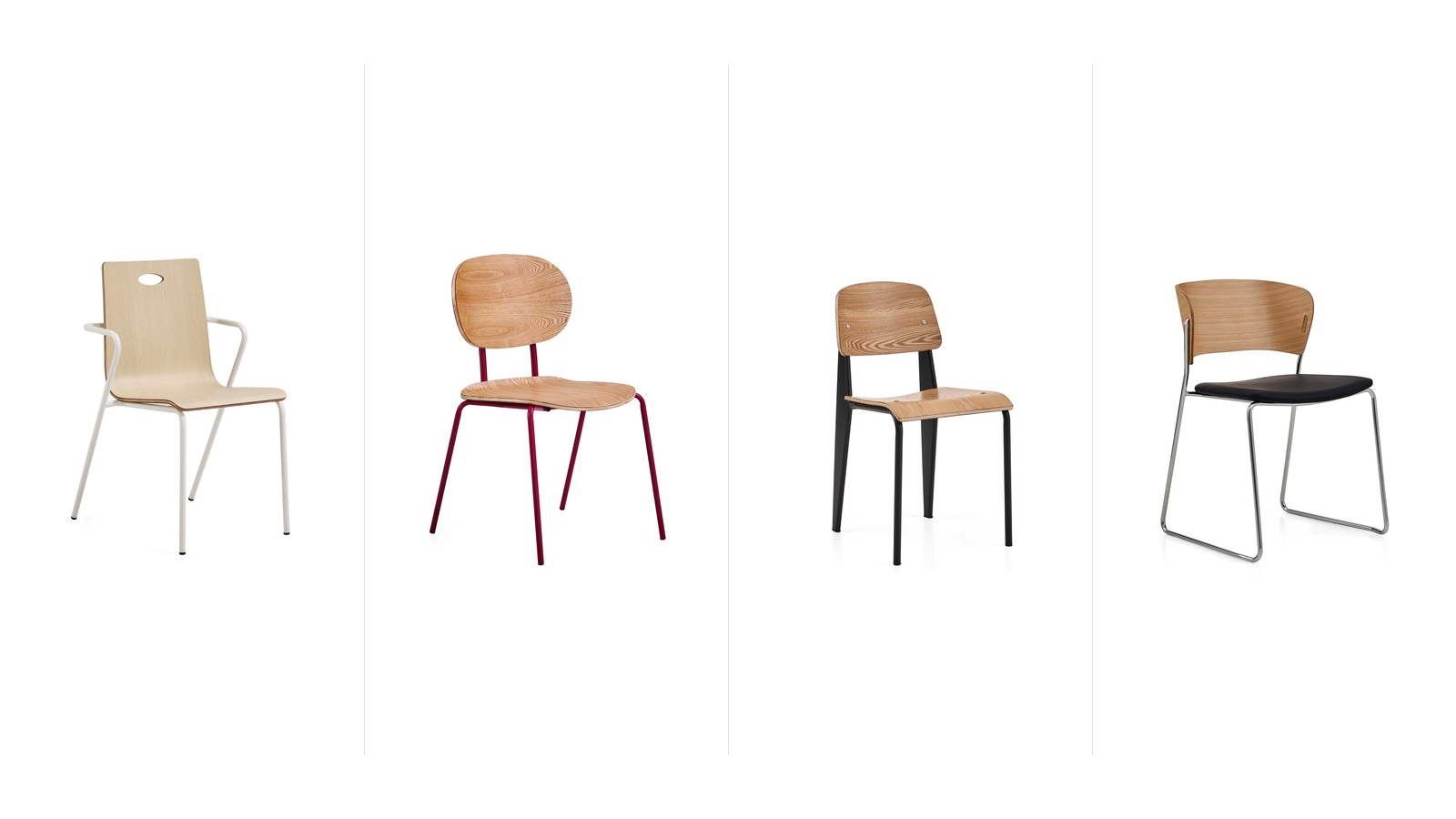
DALI's existing chair work provides several realistic starting points for renter friendly furniture. A one-piece molded shell can include a carefully engineered carry opening. Separate plywood seat and back components can create a smaller visual profile and support component-level development. Four-leg and sled-base frames offer different floor contact, transport and interior directions.
For a custom project, the buyer can begin with a drawing, 3D file, reference chair, physical sample or target dimensions. The development review can cover shell thickness, curvature, grip cutouts, veneer direction, edge profile, drilling, frame connection, upholstery allowance and packaging constraints. Where an existing mold is suitable, it can reduce development time. Where the geometry is new, DALI can evaluate a dedicated mold and provide a controlled tooling proposal.
The most useful first request is not simply "make this chair lighter." It is a complete use case: destination market, target user, maximum dimensions, expected weight direction, room type, frame preference, surface material, required testing, packing method, order plan and target price. That information lets the engineering and purchasing teams identify the strongest cost-to-performance route.
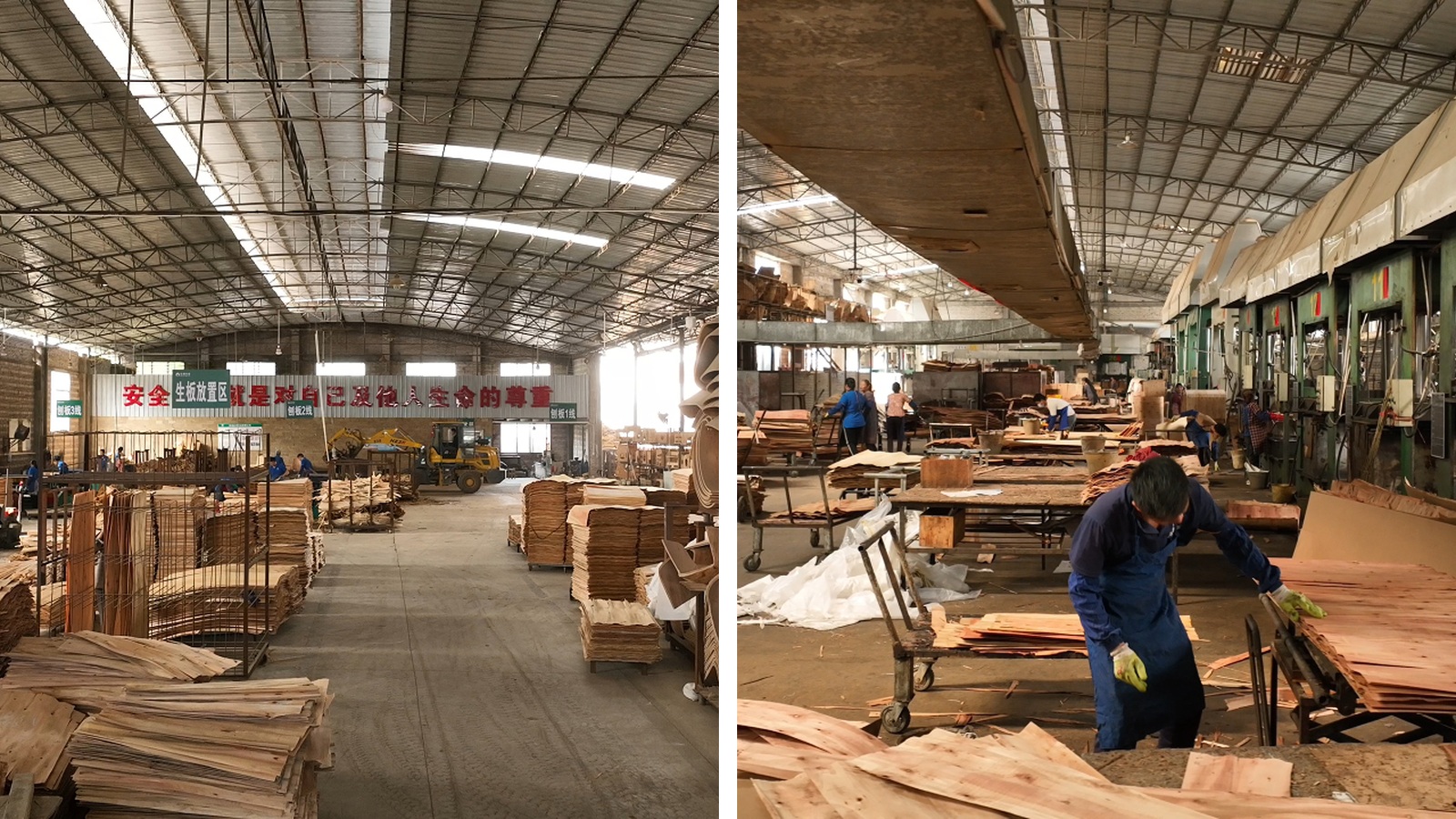
DALI operates four production bases with more than 200 team members across its manufacturing network. The process for molded plywood components can include veneer selection and preparation, adhesive control, mold pressing, conditioning, trimming, CNC machining, drilling, sanding, finishing and inspection.
For an urban apartment furniture program, repeatability is especially important. A handle opening must remain smooth from batch to batch. A compact frame connection must align with the approved shell. Veneer appearance needs an agreed range, and packaging must protect edges without adding unnecessary volume.
DALI can support component supply or complete-chair development depending on the project. Low starting quantities may be available for suitable models, while new tooling and custom finishes are quoted according to the actual design and production plan. Samples can be used to confirm appearance, dimensions, comfort, construction and packing before scale production.
The August 2026 focus on life in transit is a useful reminder: many customers are not furnishing one final address. They are building a home that may need to move, shrink, expand or change purpose. Furniture brands that design around this reality can create products that feel lighter in use without feeling temporary in value.
To start a new flexible living furniture project, send DALI the target market, reference design, required chair type, preferred veneer, frame direction, dimensions, use environment, testing requirement, quantity and packaging goal. The team can review existing molds, propose custom molded plywood options and prepare a sample path for a compact dining chair, desk chair, guest chair or multi-use seating collection.
The strongest portable chair is not the one with the loudest transformation. It is the one that carries easily, fits naturally, repairs sensibly and still looks at home after the next move.