


 Aug 06, 2026
 dali plywood
 209
209
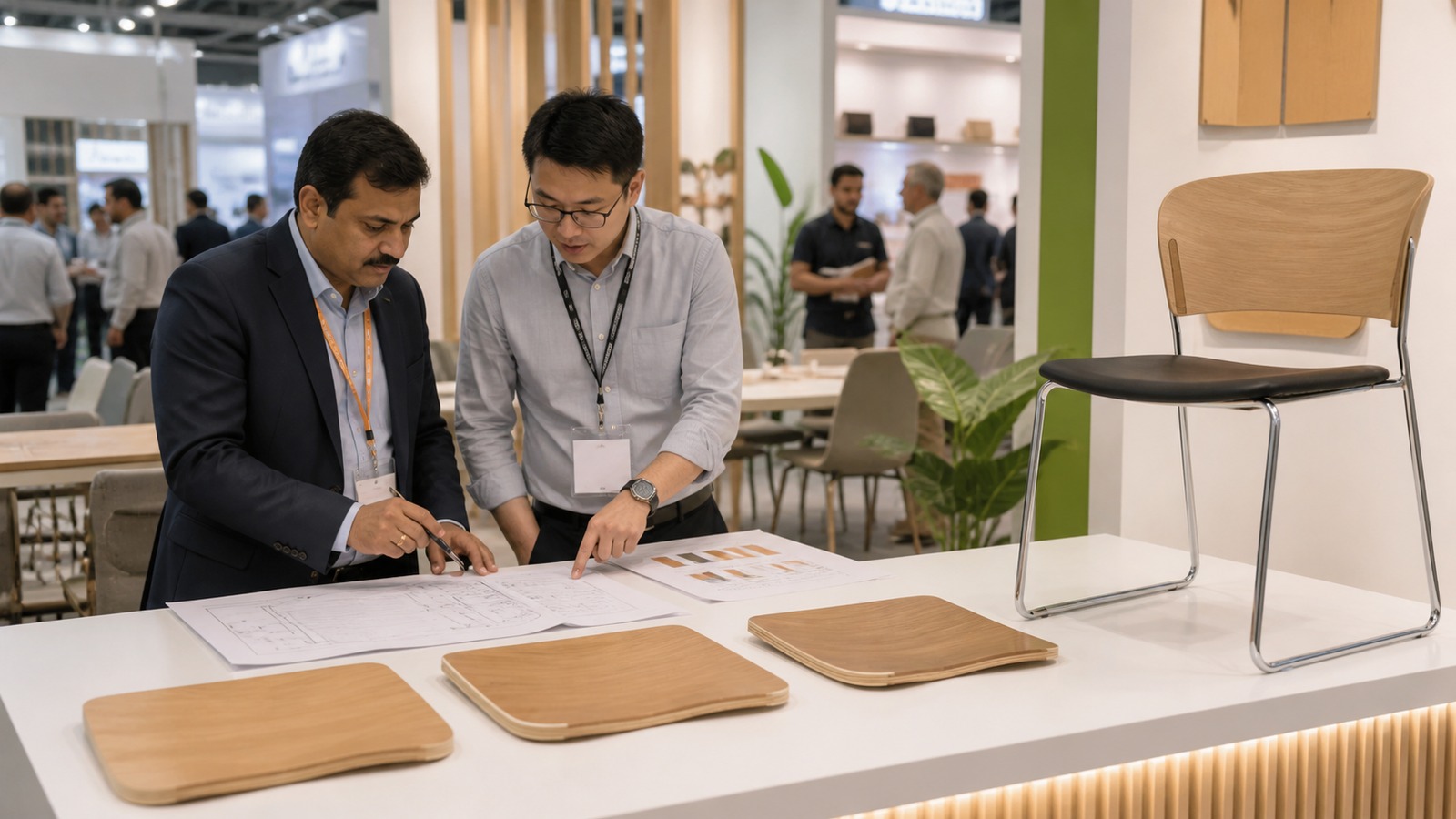
Tomorrow, the doors open at INDEXPLUS New Delhi. For Indian furniture manufacturers, the most valuable question at the show may not be What is the newest chair? It may be How can we launch the next chair with less development waste and more margin?
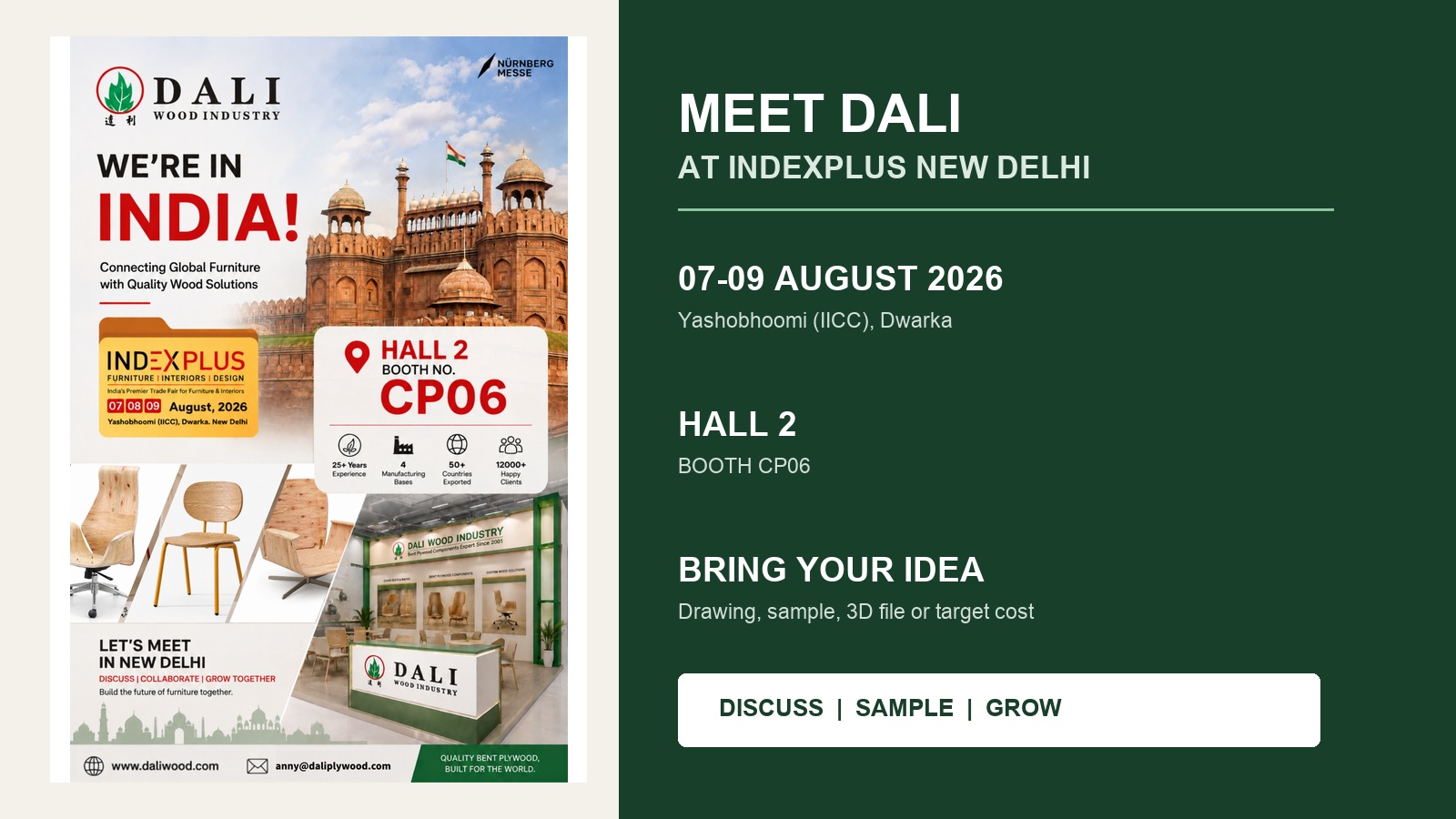
DALI Wood Industry will meet buyers at Yashobhoomi (IICC), Dwarka, New Delhi, from 7 to 9 August 2026. Visit Hall 2, Booth CP06 to compare existing molds, discuss a new drawing, review component options and build a realistic sampling plan.
DALI has worked with bent wood and molded plywood since 2001. The company operates four manufacturing bases, maintains a library of more than 3,000 molds and supplies customers in more than 50 countries. That combination creates a practical opportunity for Indian factories: keep market knowledge, final assembly and customer relationships close to home, while using specialized molded plywood capacity where it can reduce avoidable development work.
Many furniture projects become expensive before the first commercial order. A new mold is commissioned before existing options are checked. Samples are revised because drilling positions or frame interfaces were not confirmed. Veneer, upholstery allowance and packaging are discussed too late. Several small shipments are booked instead of one coordinated program.
These are not simply purchasing problems. They are launch-planning problems. A lower component quotation does not help if repeated tooling, rework and delayed market entry consume the saving. The better route is to control cost from the first technical review.
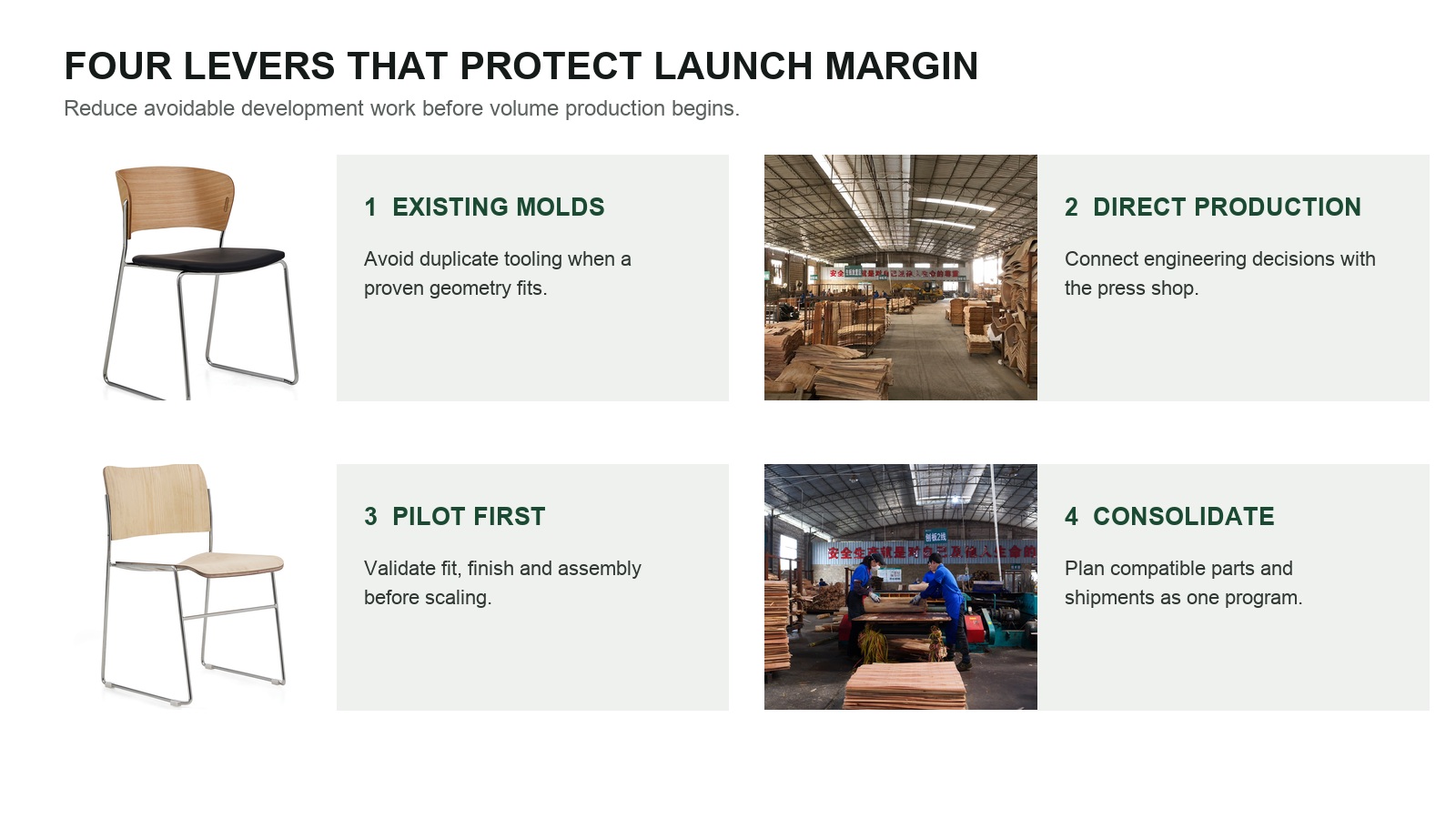
Check existing molds first. If a proven seat, back or shell is close to the target geometry, the buyer may avoid a completely new tool or limit the work to a controlled modification.
Connect engineering with production. Curvature, thickness, veneer direction, holes, inserts and edge shape should be reviewed with the people who understand pressing and trimming, not only with a sales quotation.
Run a pilot before volume. A sample or small pilot validates appearance, comfort, assembly, packaging and quality checkpoints before capital is committed to a large launch.
Consolidate compatible parts. Planning multiple seats, backs or related models together can improve communication, packing and shipment efficiency.
Depending on the design, using an existing mold, reducing sample rounds and sourcing components directly can remove a substantial share of selected pre-production expense. In a suitable project, those specific development expenses may be reduced by around half. This is not a promise to cut every factory's total operating cost by 50%; the actual result depends on geometry, tooling, quantity, finish, testing, packaging and freight.
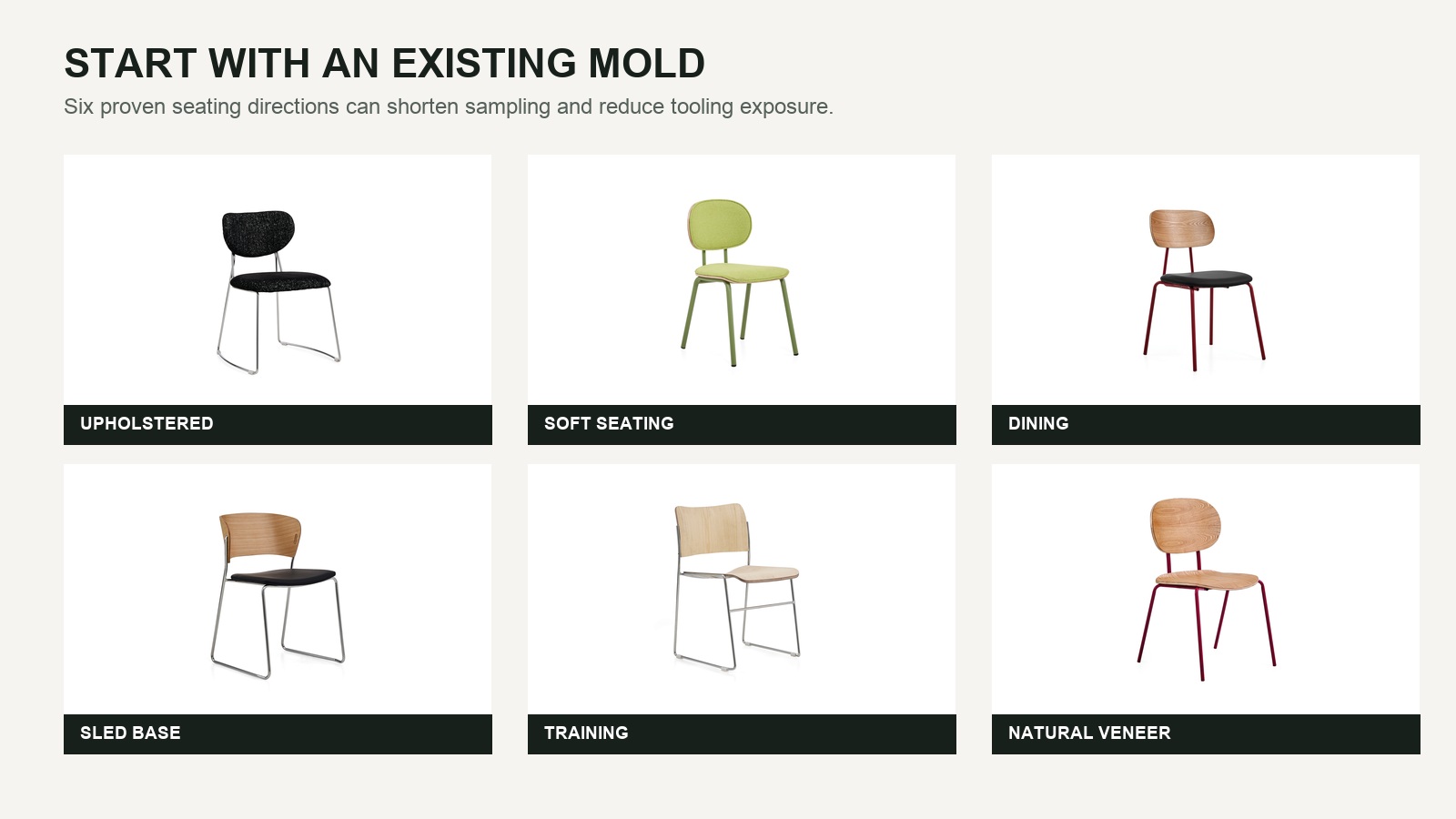
DALI's mold library covers dining chairs, training chairs, office seating, lounge seating, upholstered inner shells, sofa and bed components, pet furniture and other special curved parts. Existing products can serve as a starting point even when the final chair will carry the Indian buyer's own dimensions, finish, frame and brand.
At Booth CP06, bring a drawing, 3D file, reference sample, photograph or target measurements. The team can review whether an existing mold is suitable, whether a limited structural adjustment is possible, or whether a new mold is justified. New tools are quoted according to actual size and complexity, while a proven mold route can keep the first step smaller.
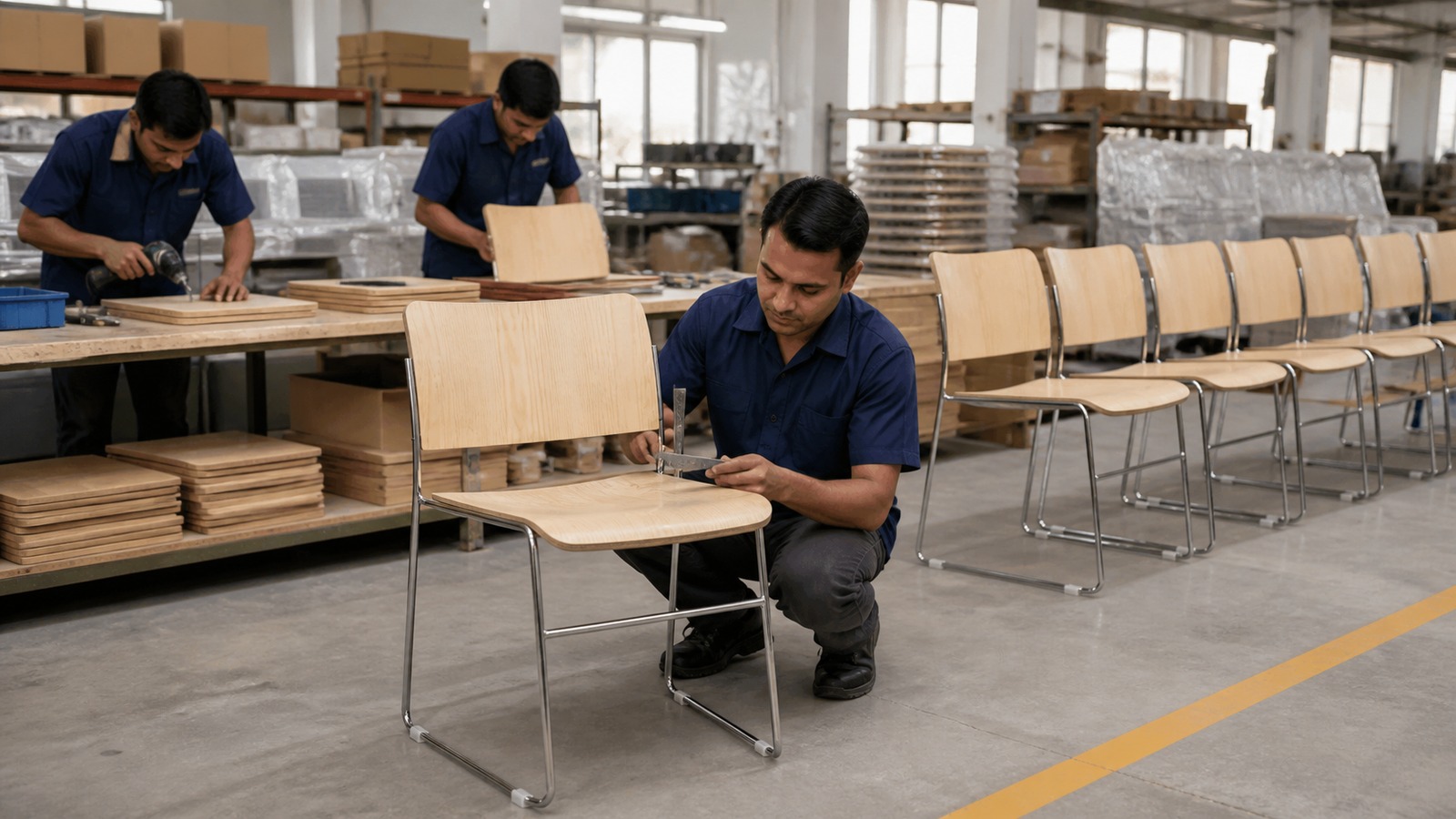
For some Indian furniture factories, the most efficient model is not to import a complete finished chair. It is to source precise molded plywood seats, backs, arms or shells and complete the metal frame, upholstery, assembly, packaging or project delivery in India.
This approach can protect local value creation while giving the buyer access to specialized plywood pressing and mold resources. It can also make customization easier: the Indian partner controls color, upholstery and final-market details, while DALI controls the repeatability of the curved plywood component.
China and India are regional Asian trading partners, and sea freight can provide a practical route for samples, components and repeat orders. Freight cost and transit time must still be confirmed for the chosen port, sailing schedule, shipment size and trade terms. DALI can discuss component dimensions and packing early so logistics are considered before the design is locked.
To get more value from the exhibition meeting, prepare the intended use, target size, plywood thickness, veneer species, grain direction, finish, drilling pattern, frame connection, expected quantity, target price and destination port. If testing or documentation is required, identify the exact Indian buyer standard or project requirement.
A clear brief allows the engineering team to compare molds quickly and reduce repeated revisions. DALI can support natural veneer options, upholstery-ready components, CNC trimming and drilling, custom edge profiles and project-specific quality checkpoints.
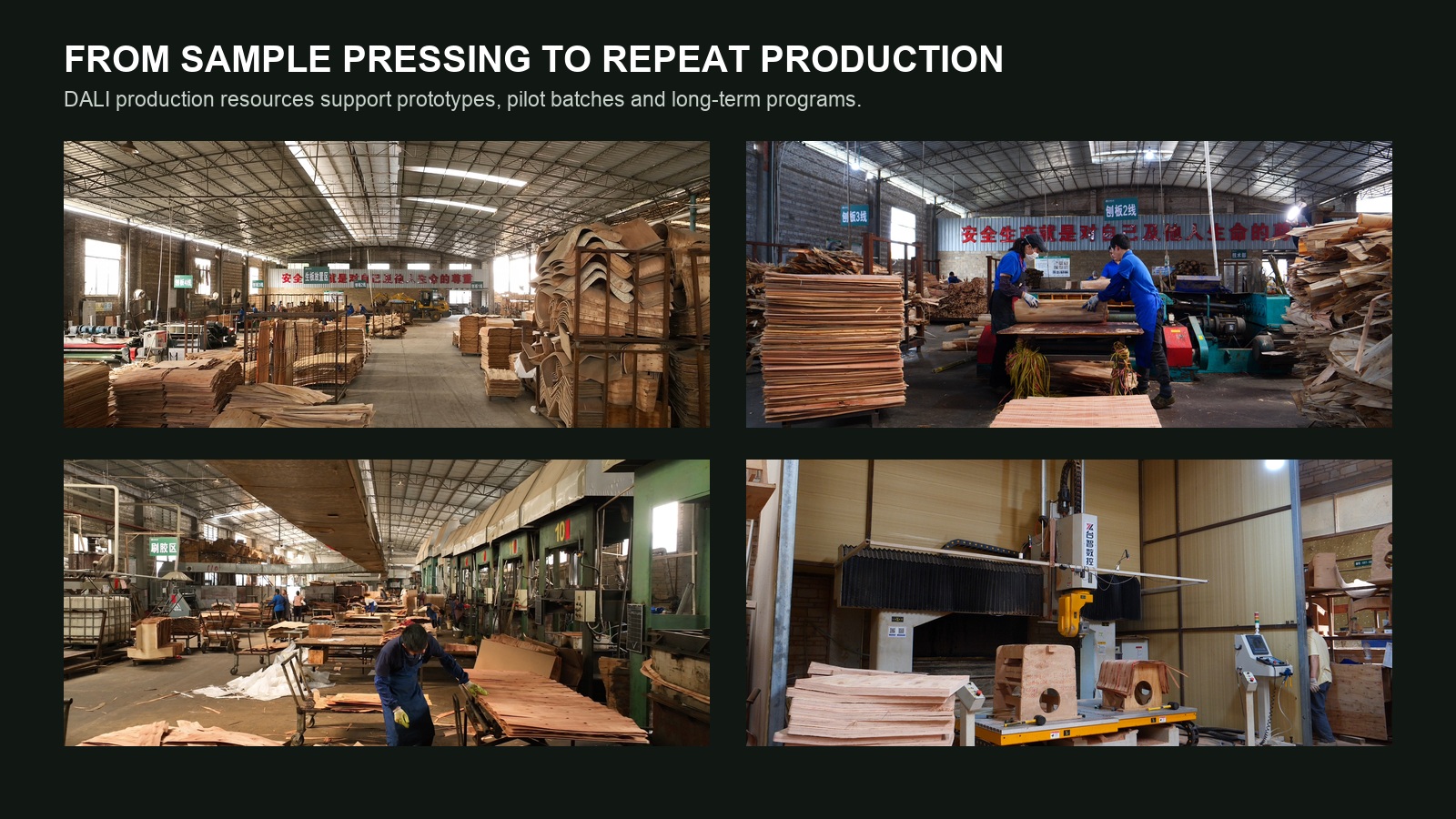
DALI's four production bases cover more than 50,000 square meters and include more than 200 team members, over 100 presses and approximately 50 CNC operating positions. The company reports annual capacity of up to four million pieces across its product network.
Scale matters only when the approved sample remains repeatable. Veneer preparation, adhesive application, pressing parameters, conditioning, trimming, drilling, sanding and finishing must follow the same confirmed specification. Buyers are welcome to discuss factory visits, sample inspection and quality-control points for long-term programs.
INDEXPLUS is a sourcing platform where a short face-to-face review can replace weeks of uncertain email exchanges. Bring the product you want to improve, the cost you need to reach and the market you want to serve. DALI will help separate necessary investment from avoidable development expense.
Event: INDEXPLUS Furniture, Interiors & Design
Date: 7-9 August 2026
Venue: Yashobhoomi (IICC), Dwarka, New Delhi
Location: Hall 2, Booth CP06
The goal is simple: a faster decision, a more controlled sample and a furniture launch with a healthier path to profit. Meet DALI in New Delhi and bring the next idea with you.