


 Aug 11, 2026
 dali plywood
 198
198
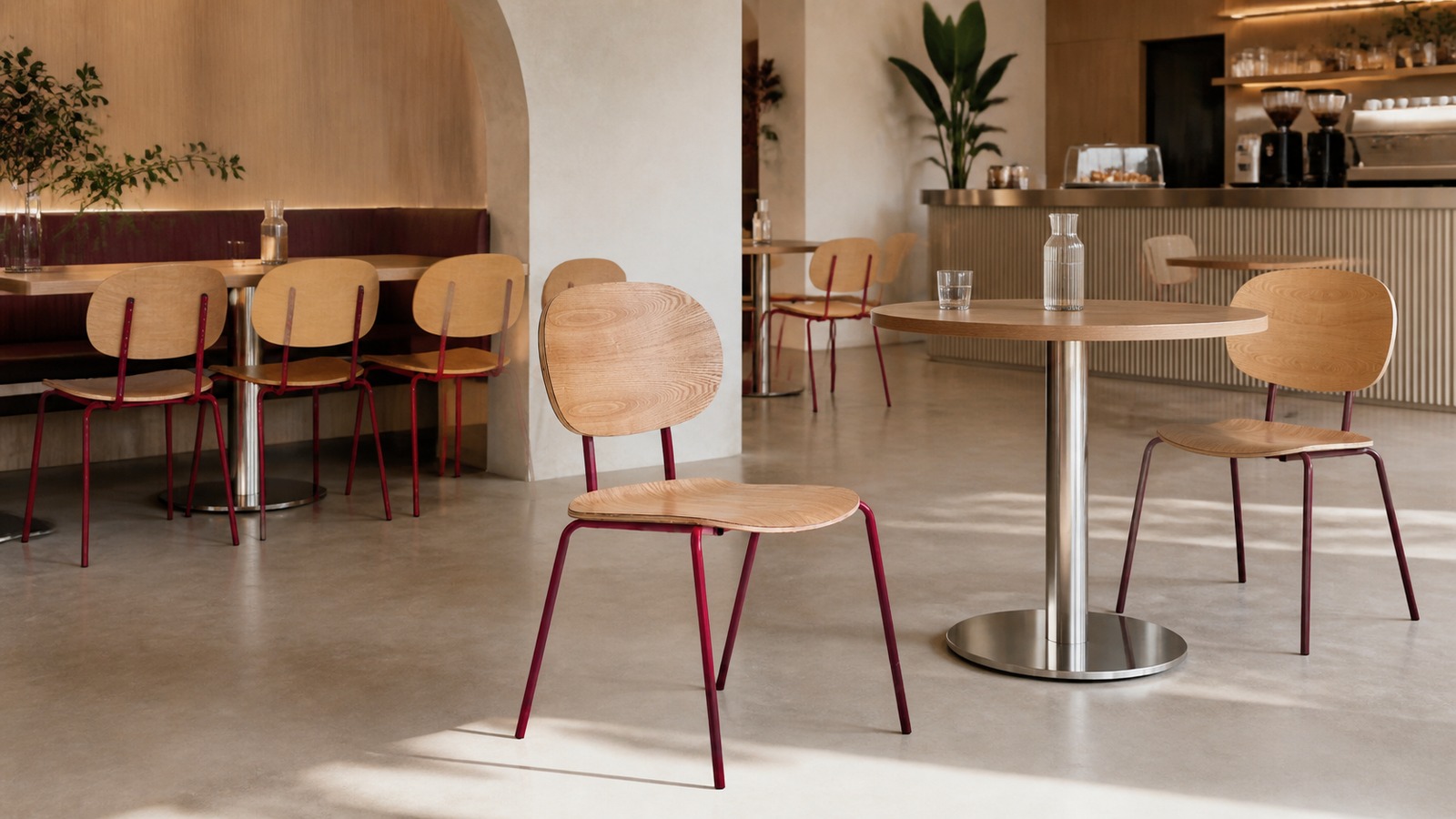
After months dominated by neutral interiors and oversized upholstered forms, a sharper furniture direction is becoming visible in 2026: natural wood grain, precise metal frames and softer geometry are moving into the same product.
Recent European design coverage offers useful signals. Livingetc's 2026 furniture awards highlighted the contrast between characterful timber and brushed stainless steel, while also praising flowing lines, comfort and soft geometry. Reporting from Milan Design Week described stainless steel evolving through mixed metals, warmer combinations and softer visual boundaries. The message for chair developers is not that every model must look identical. It is that buyers are responding to materials that feel genuine, silhouettes that feel welcoming and structures that still look light.
For manufacturers, the opportunity is practical. A well-engineered bent plywood seat or back can carry visible veneer, introduce a controlled curve and connect cleanly to steel, chrome, aluminum or wood frames. The result can work across dining, hospitality, meeting and workplace collections.
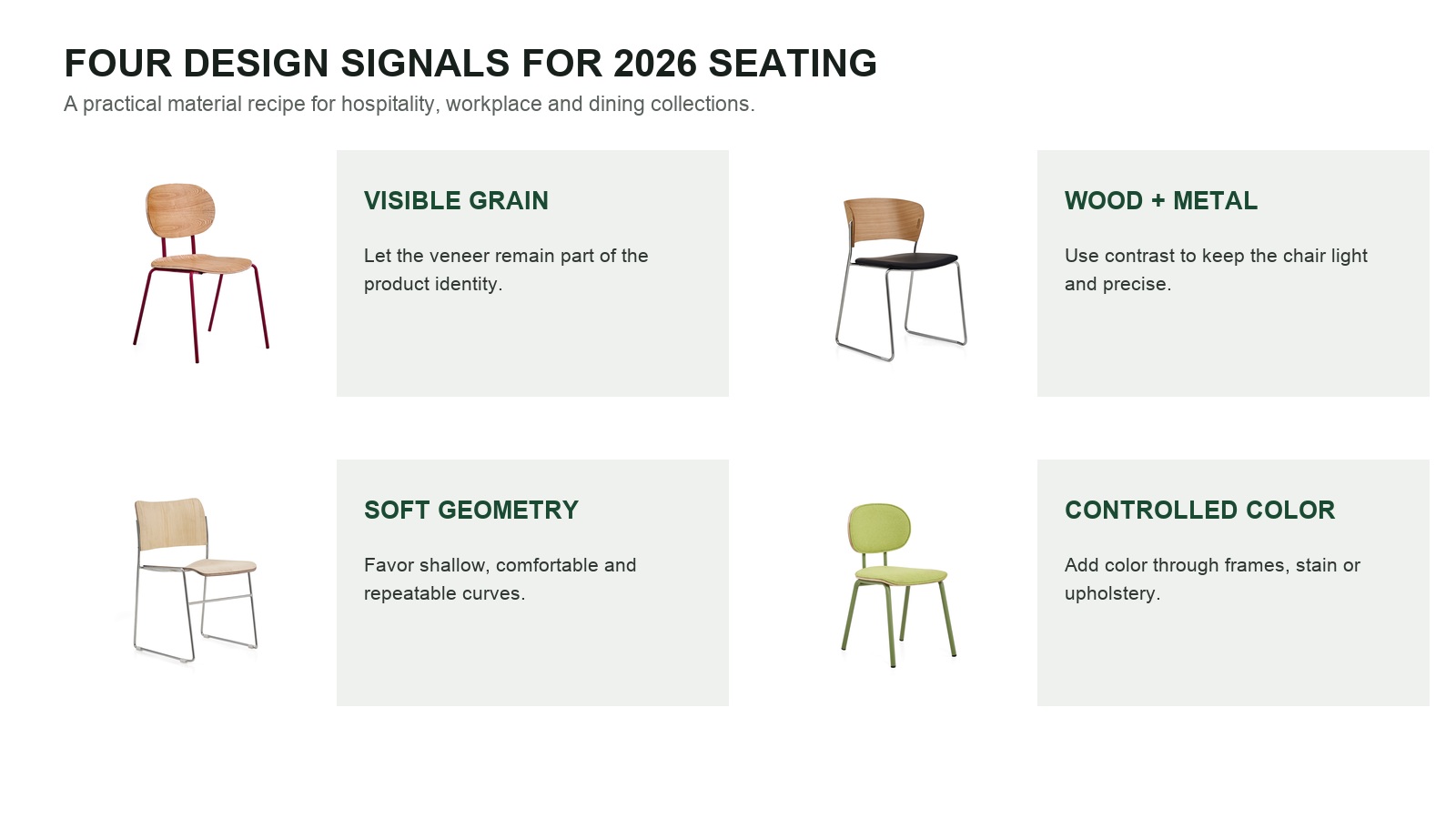
Natural wood is no longer only a quiet background material. Grain direction, color variation and tactile depth can become the visual signature of the chair. Oak, ash, walnut and other veneer directions each create a different market position.
Natural veneer should also be presented honestly. Real wood grain varies from piece to piece. Buyers should confirm veneer species, grade, matching method, acceptable color range and finish sample before production rather than expecting every chair to look digitally identical.
Polished chrome or brushed stainless steel can make natural veneer feel cleaner and more architectural. Powder-coated frames can introduce wine red, green, black or another controlled accent without hiding the wood surface. This contrast is especially effective when the plywood components are visually light and the frame connections remain precise.
Soft geometry does not require an exaggerated wave or impossible curve. In successful seating, it may be a shallow seat dish, a gently wrapping back or a rounded rectangular profile. The curve should support comfort, frame clearance, stackability where required and repeatable pressing.
One seat-and-back language can support a dining chair, meeting chair, counter stool or upholstered variation. Brands gain a coherent collection, while manufacturers reduce repeated development work by sharing veneer, edge, drilling and finish standards.
Cafes, restaurants and hotel breakfast spaces need chairs that feel welcoming but do not make the room visually heavy. Natural veneer brings warmth, while slim metal frames keep sightlines open around tables. Rounded backs and modest seat curves soften the overall atmosphere without turning the chair into a decorative object that is difficult to manufacture.
For contract seating, appearance must be balanced with daily use. Designers should review seat height, table clearance, back angle, edge profile, floor glides, cleaning requirements, frame finish and replacement-component planning. A beautiful material combination is commercially useful only when it can survive repeated handling.
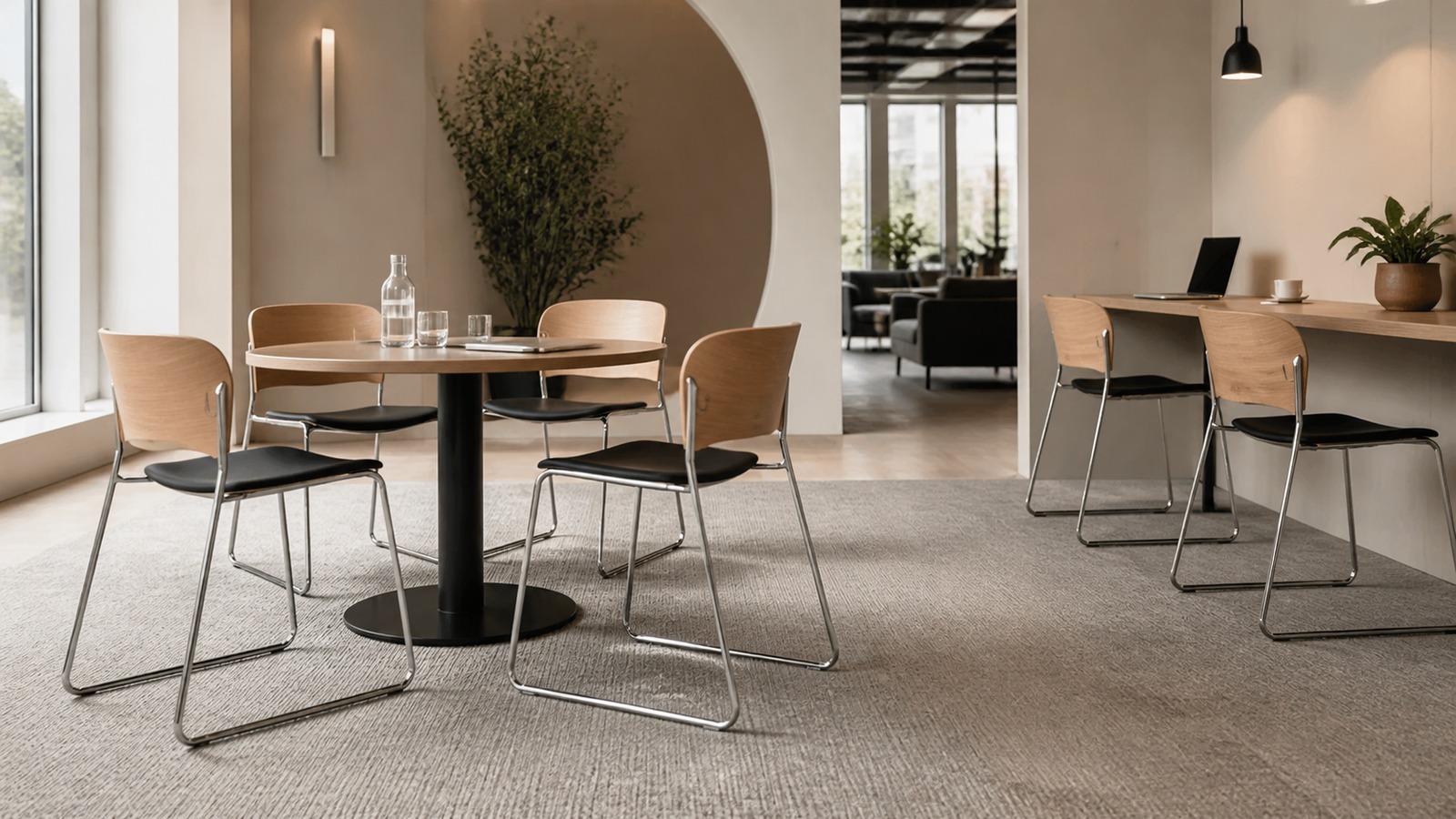
Workplace interiors are using fewer rigid visual boundaries. Meeting areas, shared counters, touchdown spaces and hospitality-style lounges increasingly sit close together. A natural-wood and metal chair can move between these zones more easily than a highly specialized task chair.
A plywood back can remain exposed while the seat receives a thin upholstered pad. Chrome creates a brighter technical expression; black or colored powder coating produces a quieter result. The important step is to confirm the seat board, back board and frame as one assembly rather than sourcing each part without a shared tolerance plan.
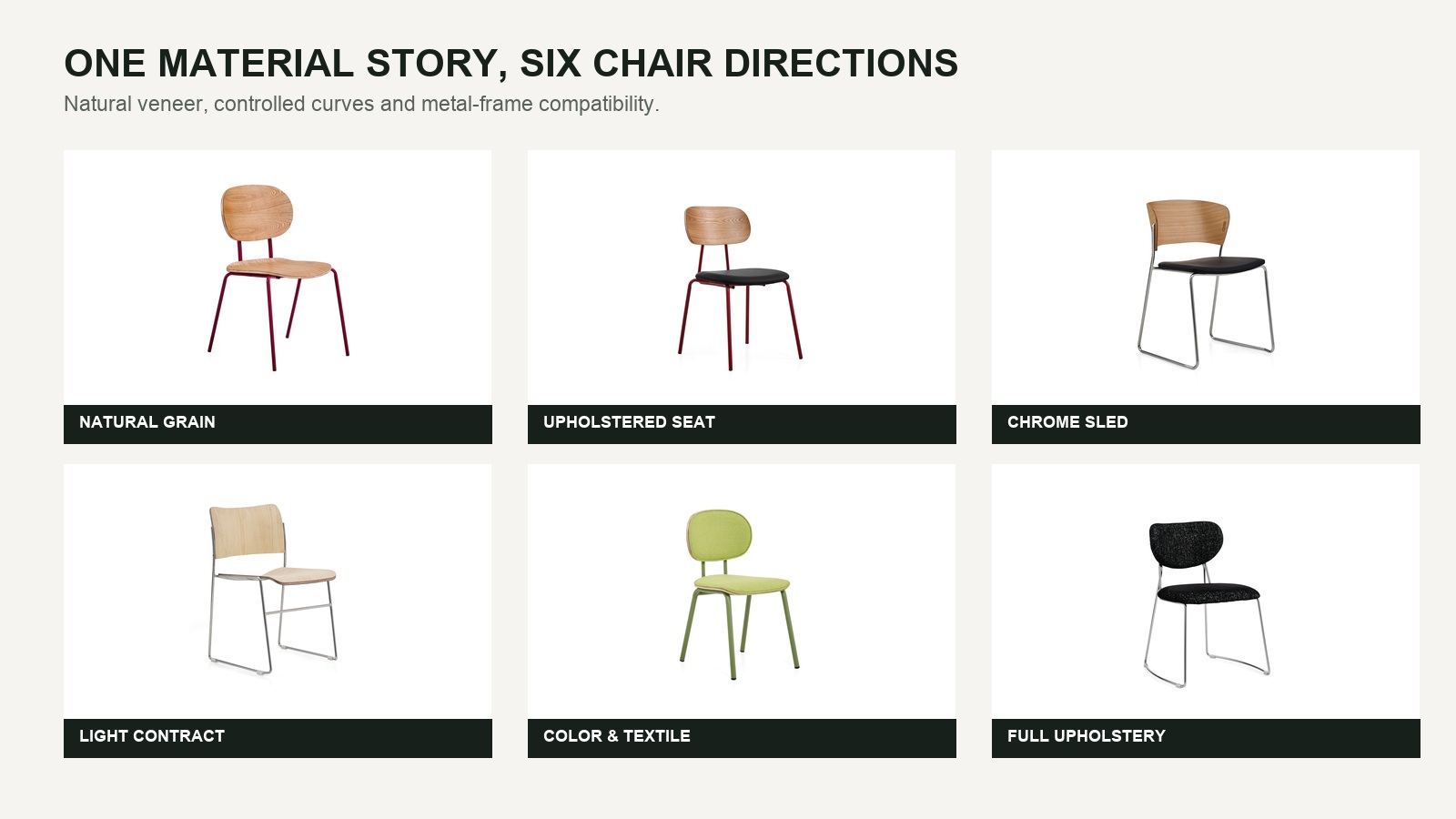
DALI's current product references show how this direction can change without losing its core identity. Natural veneer can be paired with a burgundy four-leg frame, a chrome sled base, a padded seat, colored upholstery or a fully upholstered surface.
These are not only styling choices. Each version affects drilling, inserts, plywood thickness, frame geometry, packing and quality inspection. A collection should therefore begin with the common platform: which curve stays consistent, which holes are shared and which details can change by market.
Dining and cafe: compact proportions, easy table clearance and visible veneer.
Meeting and training: stable frames, optional stacking and efficient layouts.
Hospitality: warmer finishes, padded seats and coordinated color families.
Workplace: wood-and-chrome contrast with practical upholstery options.
Retail collections: shared geometry offered in several frame and finish levels.
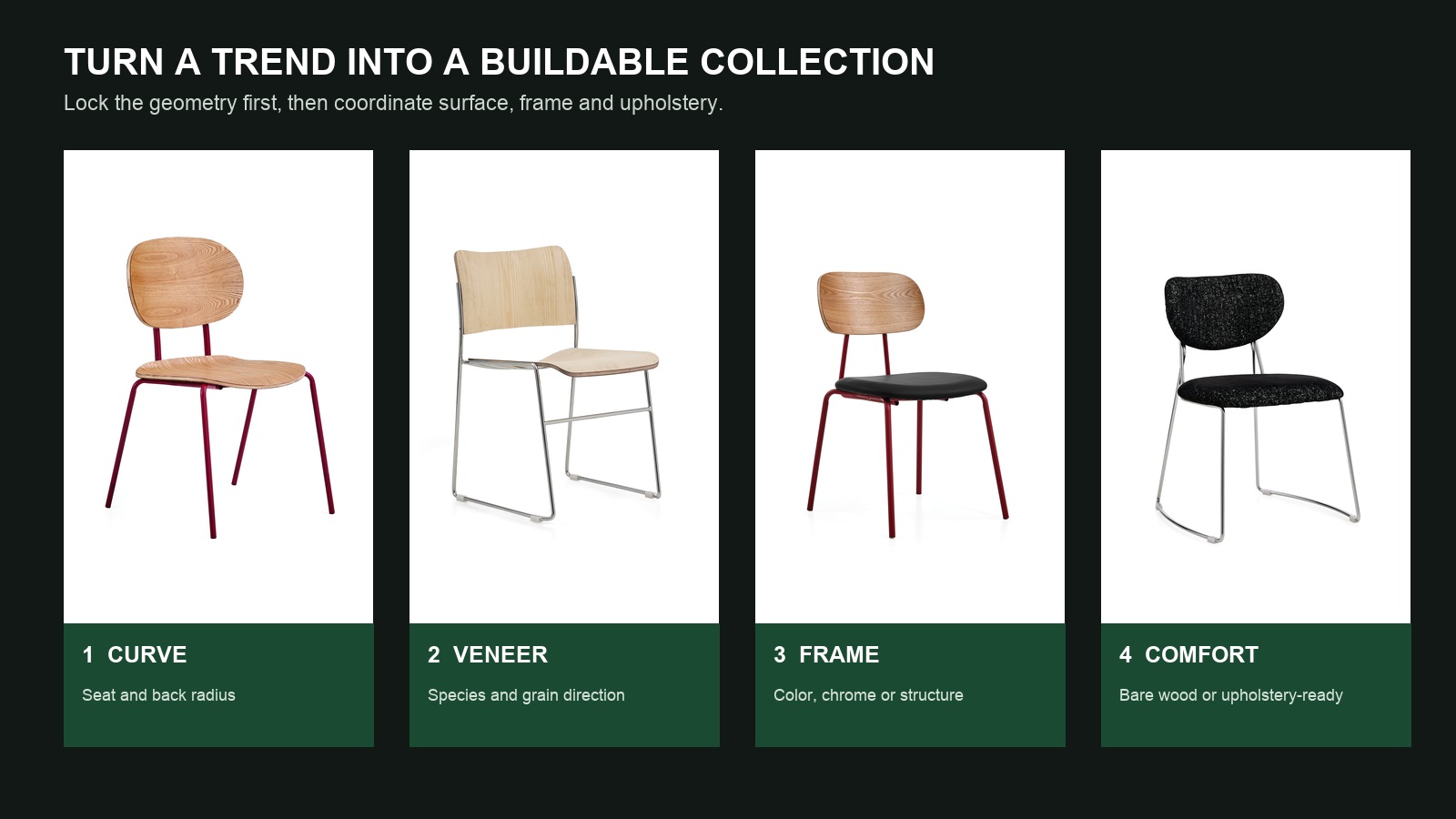
A buyer can begin with a reference image, drawing, 3D file, physical sample or target dimensions. DALI then reviews four connected decisions:
Curve: seat dish, back radius, edge return and ergonomic intention.
Veneer: species, grain direction, surface grade, stain and protective finish.
Frame: four-leg, sled, swivel or custom connection geometry.
Comfort: exposed plywood, seat pad, front upholstery or full upholstery-ready shell.
An existing mold may provide the fastest route when the target geometry is close. A new mold can be developed when dimensions, curvature or connection points are unique. Tooling cost, sampling time and minimum order quantity should be confirmed from the actual design rather than treated as one fixed number for every chair.
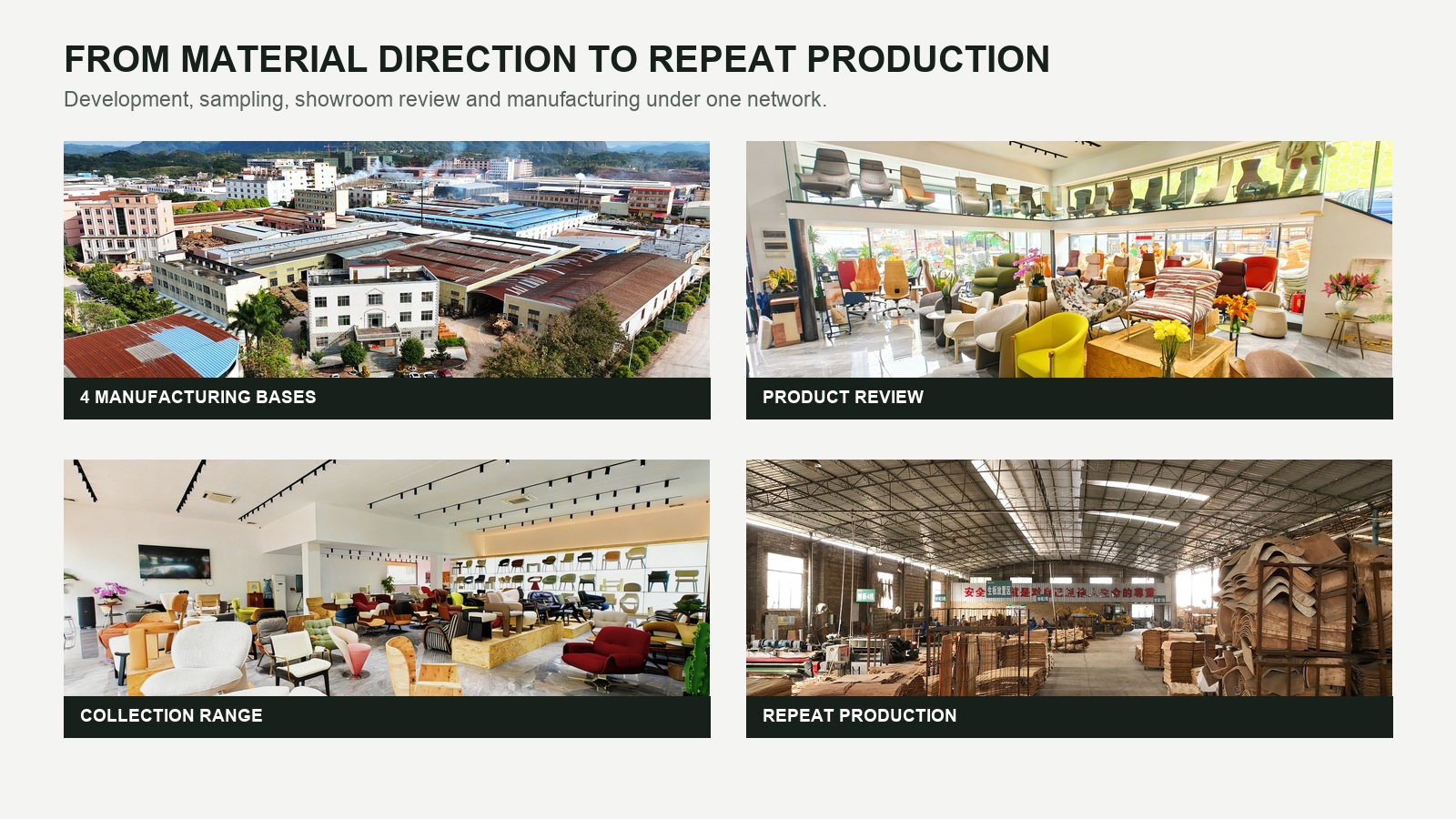
DALI Wood Industry has developed bent wood and molded plywood since 2001. The company's network includes four manufacturing bases, more than 200 team members, over 100 presses, approximately 50 CNC operating positions and a mold library of more than 3,000 sets.
Showroom comparison helps buyers decide which curve, veneer and upholstery level fits the target market. Production control then carries the approved sample through veneer preparation, adhesive application, pressing, conditioning, CNC trimming, drilling, sanding and finishing.
For brands planning a 2026 collection, the strongest opportunity is not to copy one fashionable chair. It is to translate the broader signal into a product family that belongs to the brand: real grain, controlled curves, precise metalwork and a structure that can be repeated.
To discuss a natural-veneer chair, molded plywood component or custom collection, send the drawing, reference, estimated quantity and destination market to anny@daliplywood.com or contact DALI through the website inquiry form.