


 Aug 18, 2026
 dali plywood
 196
196
International furniture buyers are entering a different kind of buying season. The hot topic is not only the chair, the sofa or the hotel room set. The new question is: what happens before the product reaches the showroom?
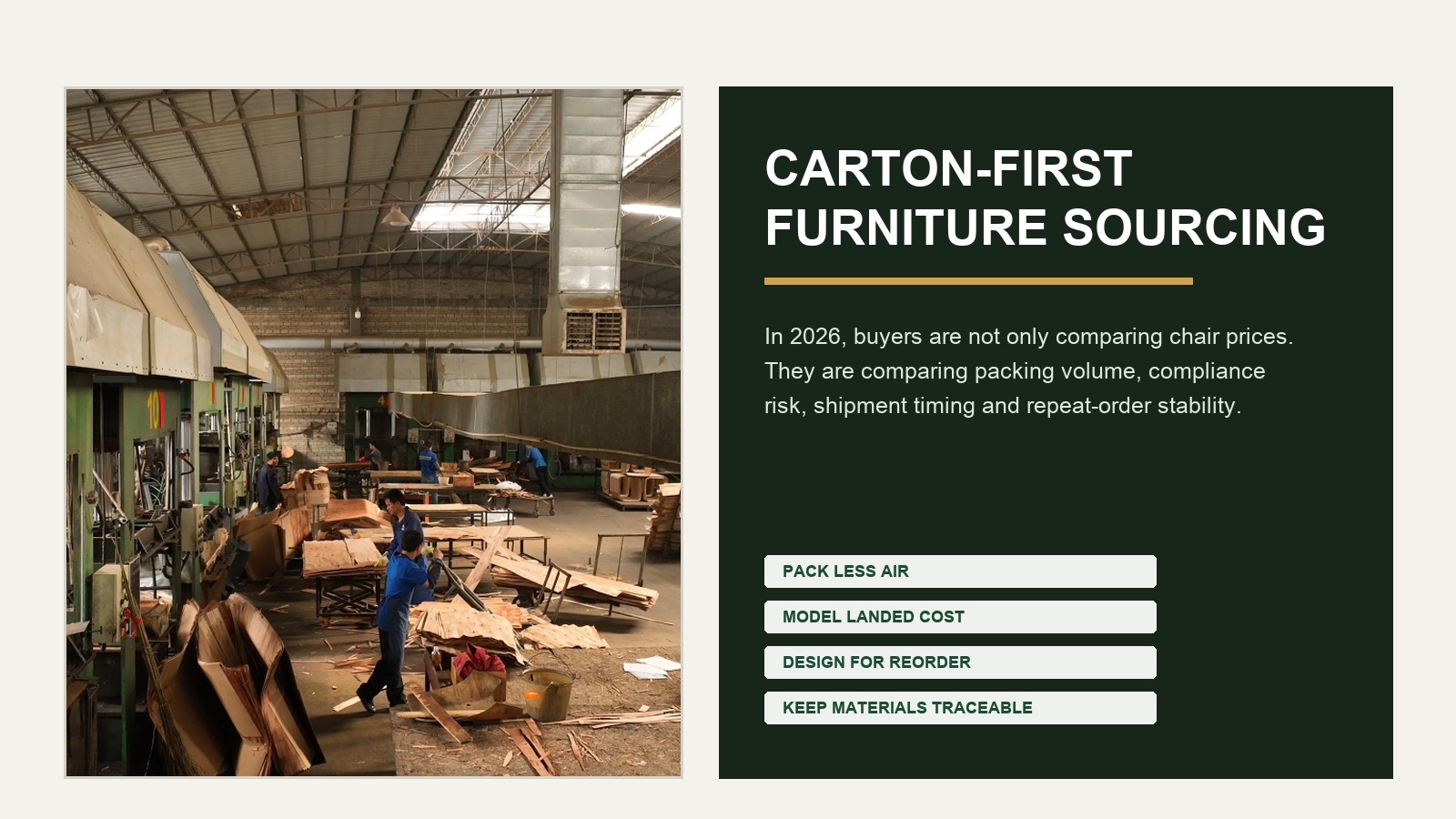
In August 2026, packaging, freight cube, tariff risk and documentation are becoming part of the product conversation. A chair that looks affordable at the factory gate can become expensive if it ships too much air, uses weak packaging, creates complicated assembly problems or lacks the documentation buyers need for overseas markets.
For DALI Wood Industry, this is a strong topic because bent plywood furniture components can be designed from the beginning for compact packing, stable assembly and repeat production. The best project is no longer only beautiful. It is beautiful, packable, traceable and easy to reorder.
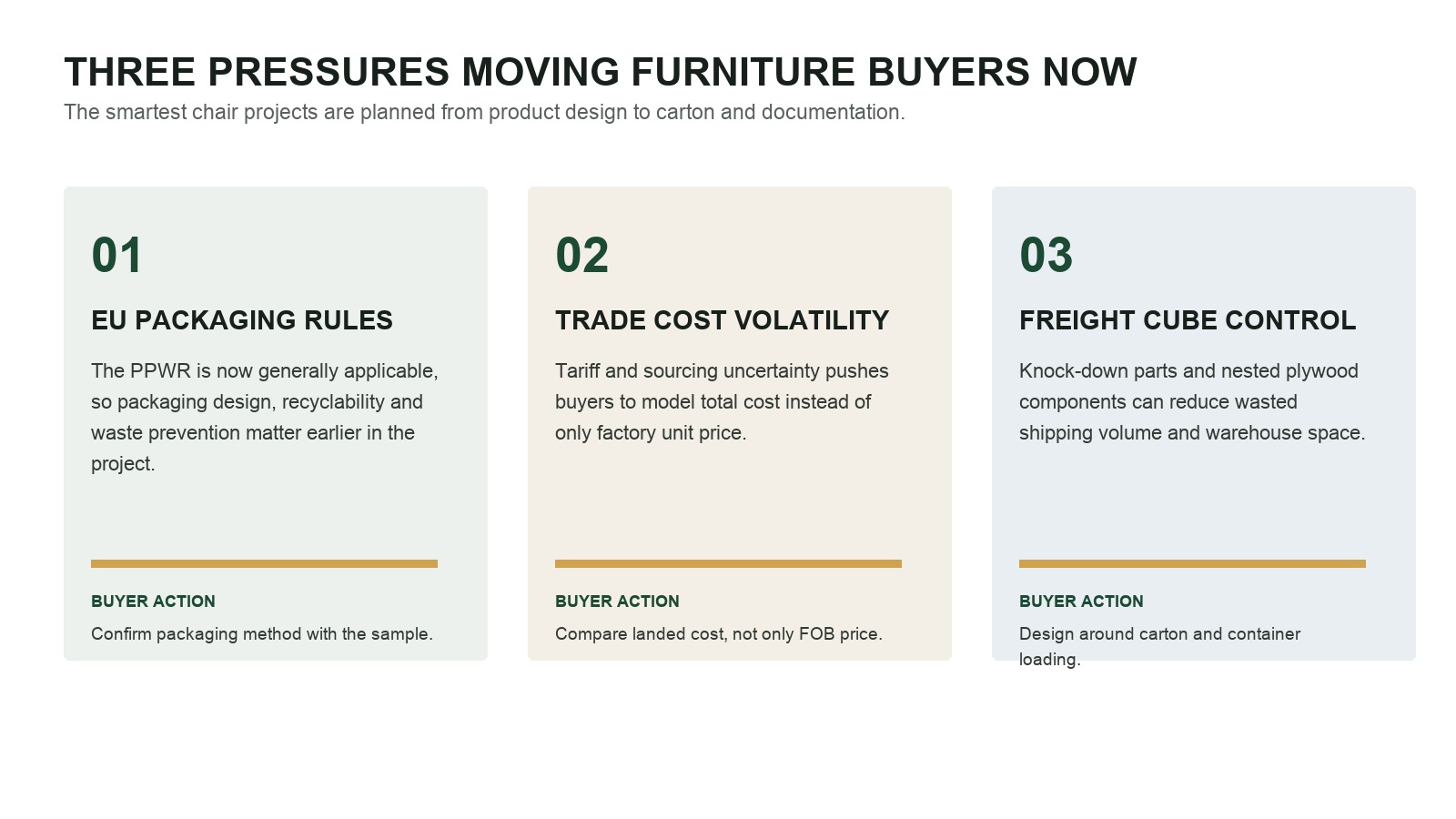
The European Union's Packaging and Packaging Waste Regulation is now generally applicable from 12 August 2026, covering packaging placed on the EU market and setting requirements around packaging design, recoverability and waste prevention. At the same time, furniture retailers and importers are still watching trade-cost uncertainty, tariff reviews and freight planning closely.
That combination changes how serious buyers think. A purchasing manager may still ask for a lower unit price, but the stronger question is total landed cost. How many chairs fit in a carton? How many cartons fit in a container? How much protective material is required? Can the parts be replaced? Can the supplier provide a stable packing method for the next order, not only the first one?
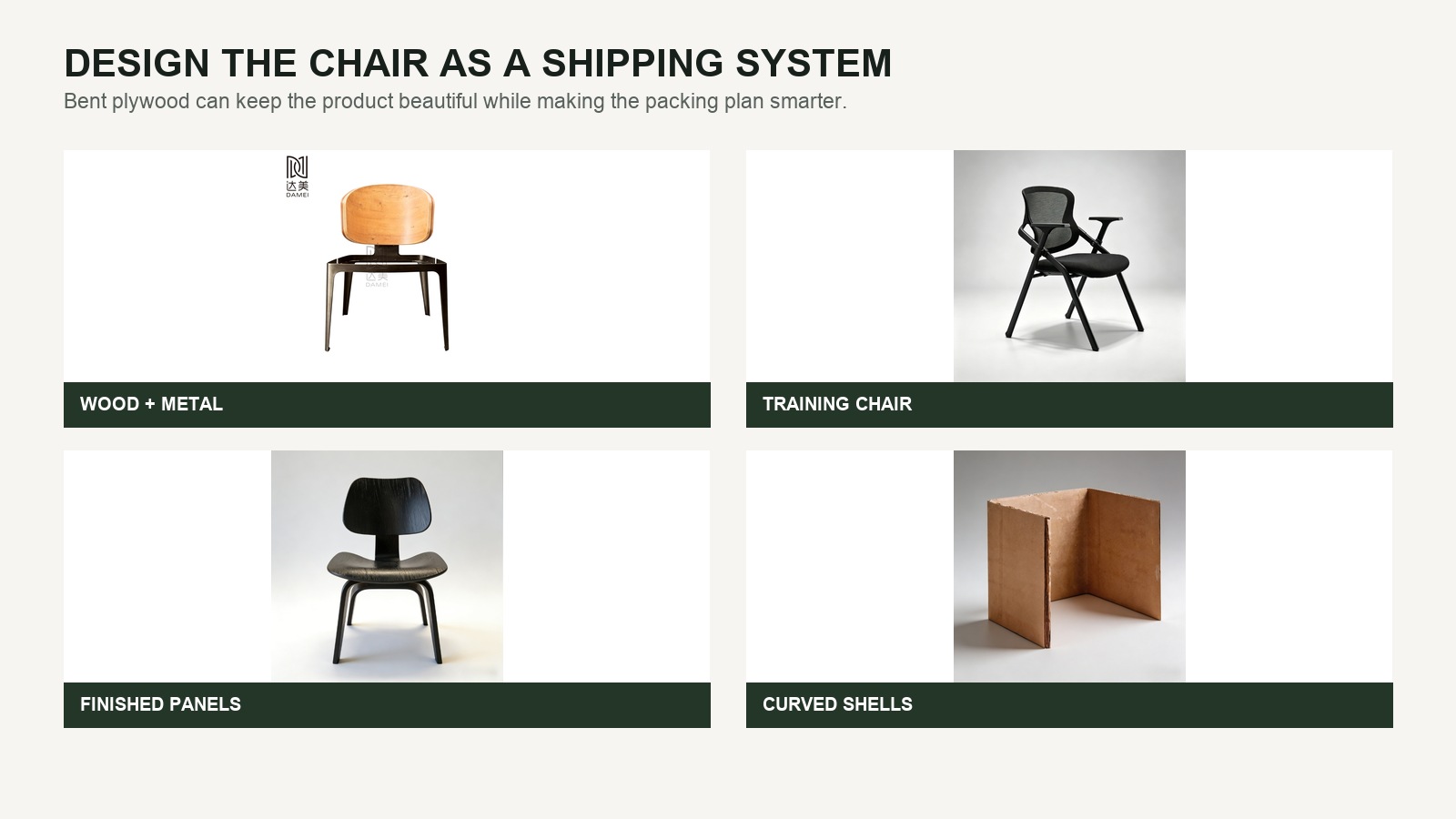
A carton-first chair does not mean a cheap chair. It means the product is designed with real logistics in mind. Bent plywood seats, backs, shells and panels can be shaped so they remain comfortable and attractive while still allowing smarter nesting, detachable frames, controlled hole positions and more efficient protection in the carton.
This is especially important for dining chairs, training chairs, office chairs and hotel seating. If a buyer needs 500, 2,000 or 10,000 pieces, small improvements in packing volume and assembly method can become meaningful savings. A better structure can also reduce damage claims, missing hardware issues and confusion during installation.
For furniture brands, the value is simple: the product can keep its design identity, while the supply chain becomes easier to manage.
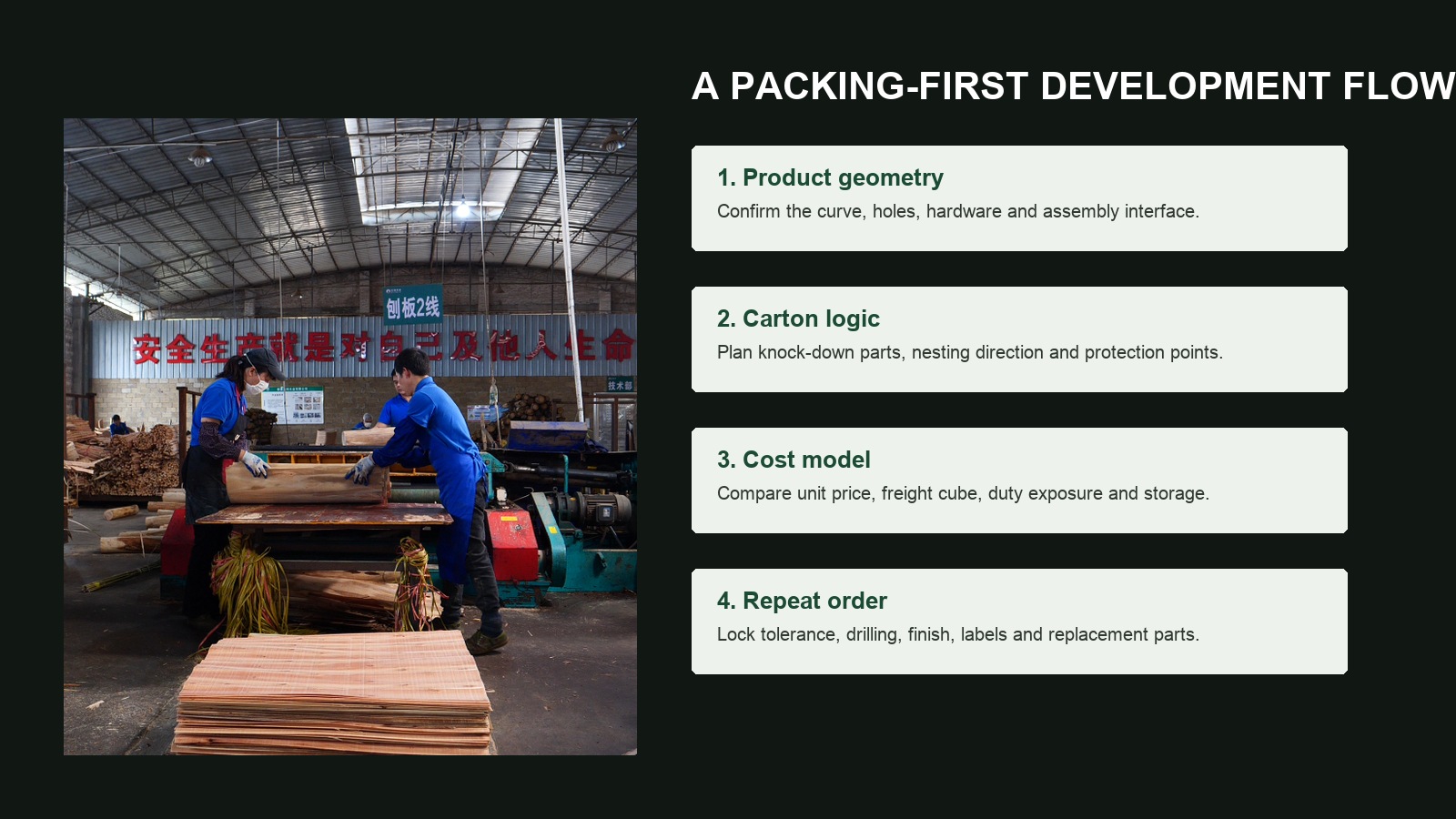
A useful development process should not wait until the final sample is finished before asking how the chair will ship. DALI can review the product in four connected steps: geometry, carton logic, landed cost and repeat-order control.
Geometry: confirm the curve, drilling, insert position, frame interface and ergonomic target.
Carton logic: decide whether the product should ship assembled, semi-knock-down or fully knock-down.
Landed cost: compare factory price, freight cube, destination duties, warehousing and damage risk.
Repeat order: keep the approved tolerance, finish, packing sequence and replacement-part method stable.
This approach is very useful when buyers are developing new dining chair families, hotel seating, office visitor chairs, school or training chairs, or compact lounge seating for rental apartments and small hospitality rooms.
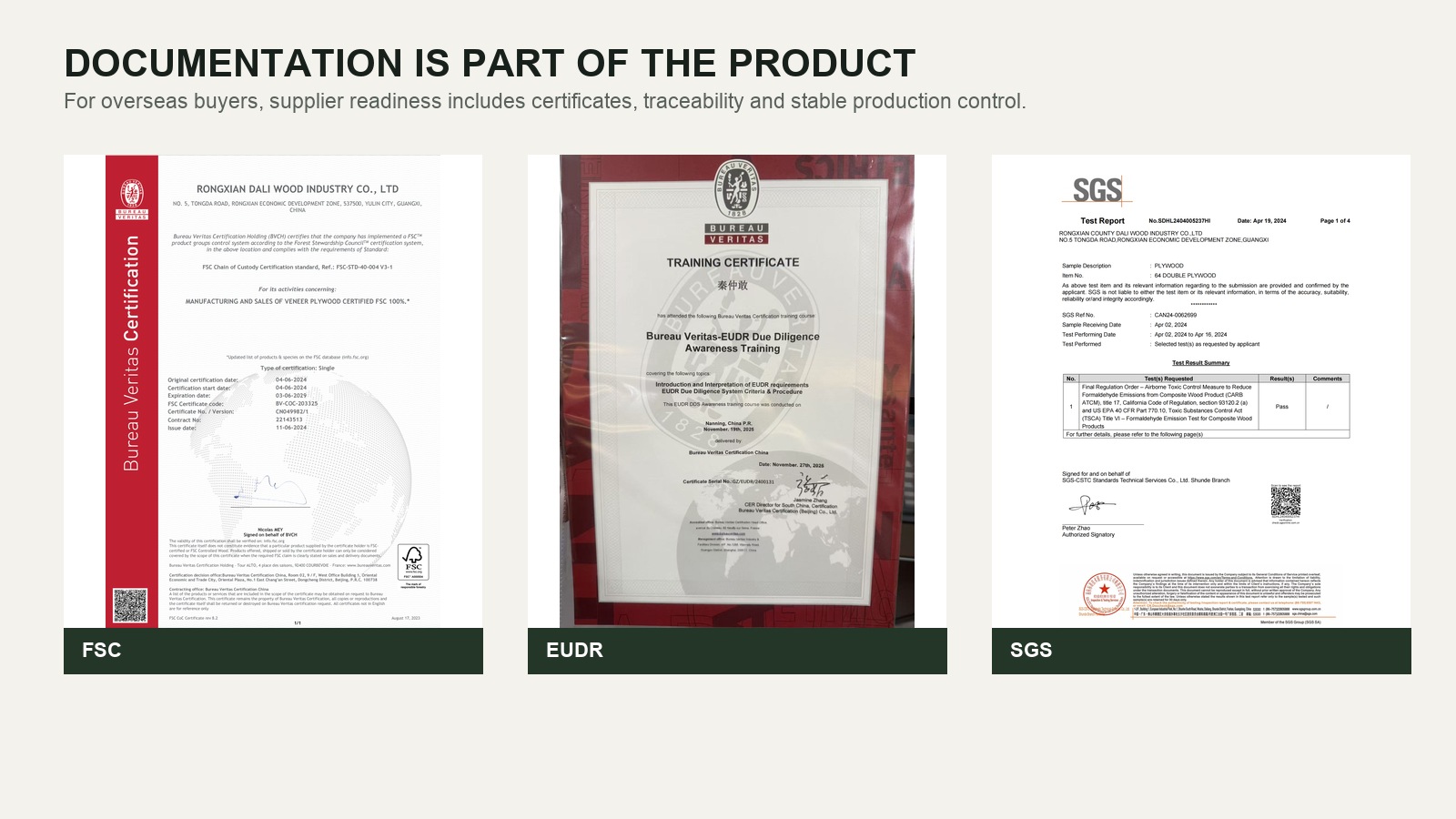
Buyers in Europe, North America and other international markets are asking suppliers for more than a nice sample. They also need material clarity, production stability and export documentation that can support their internal purchasing review.
DALI can support buyers with product discussion around FSC-related needs, EUDR-related documentation direction, SGS-style testing references, material choice, veneer direction, adhesive standard, surface finish and packaging details. The exact documentation package should always be confirmed according to the destination market and the buyer's compliance requirements.
For buyers, this prevents a common problem: finding a beautiful chair late in the season, then discovering that the packaging, document list or replacement-part plan is not ready for real import work.
Bent plywood is useful because it can combine repeatable shape, lighter structure and natural surface options. It can be developed as a finished visible part or as an internal support part for upholstery. It can also be drilled, trimmed and matched to wood, metal or plastic frames.
That makes it suitable for more than one furniture category. Dining chairs can use compact seat and back boards. Training chairs can use molded backs with stable frame interfaces. Lounge chairs can use larger shells. Hotel beds and sofas can use curved or shaped components that help the final furniture look softer without making production too complicated.
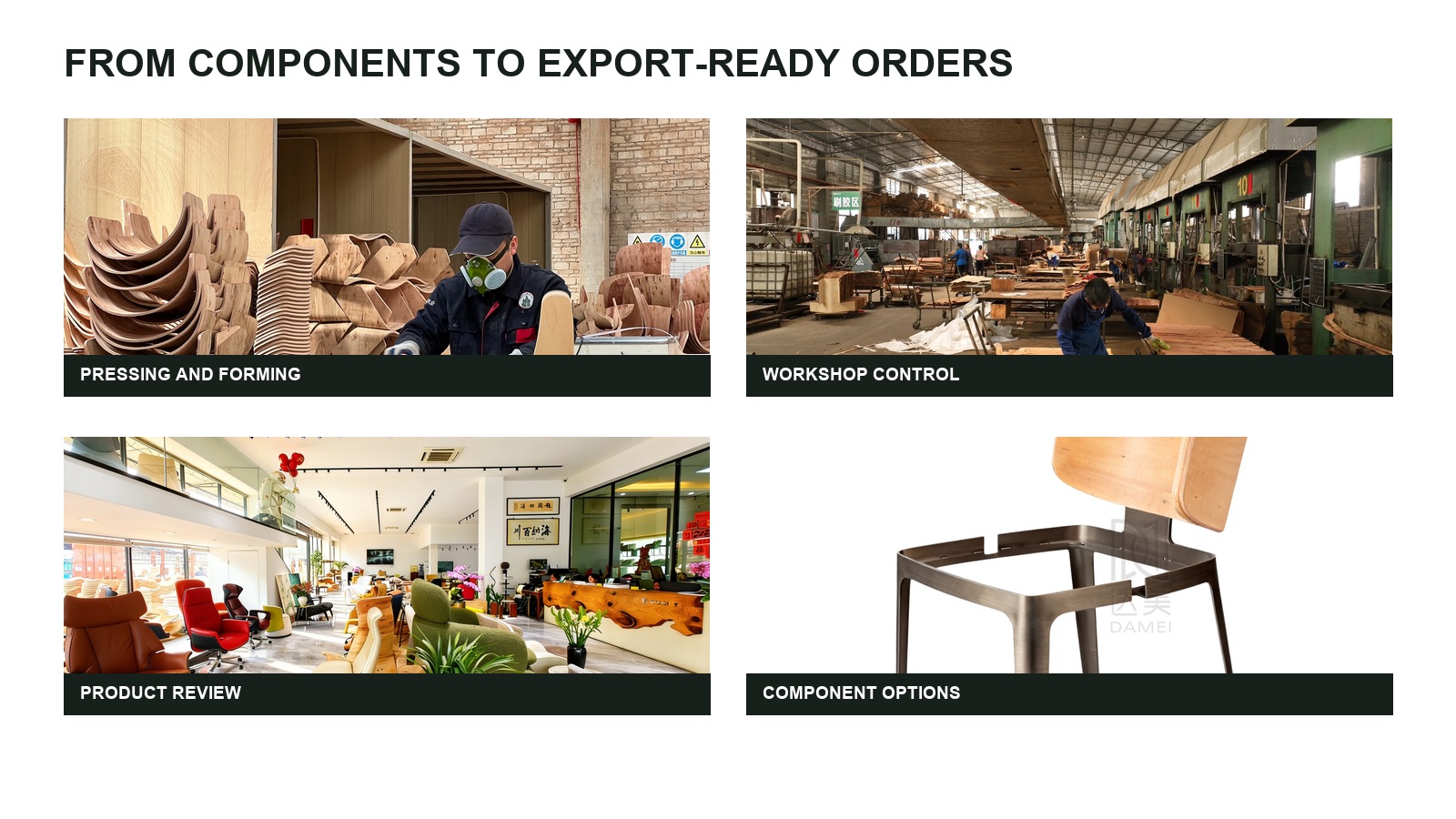
For importers, the biggest advantage is not only the component itself. It is the ability to connect component development, workshop control, sample review and packing planning under one supplier conversation.
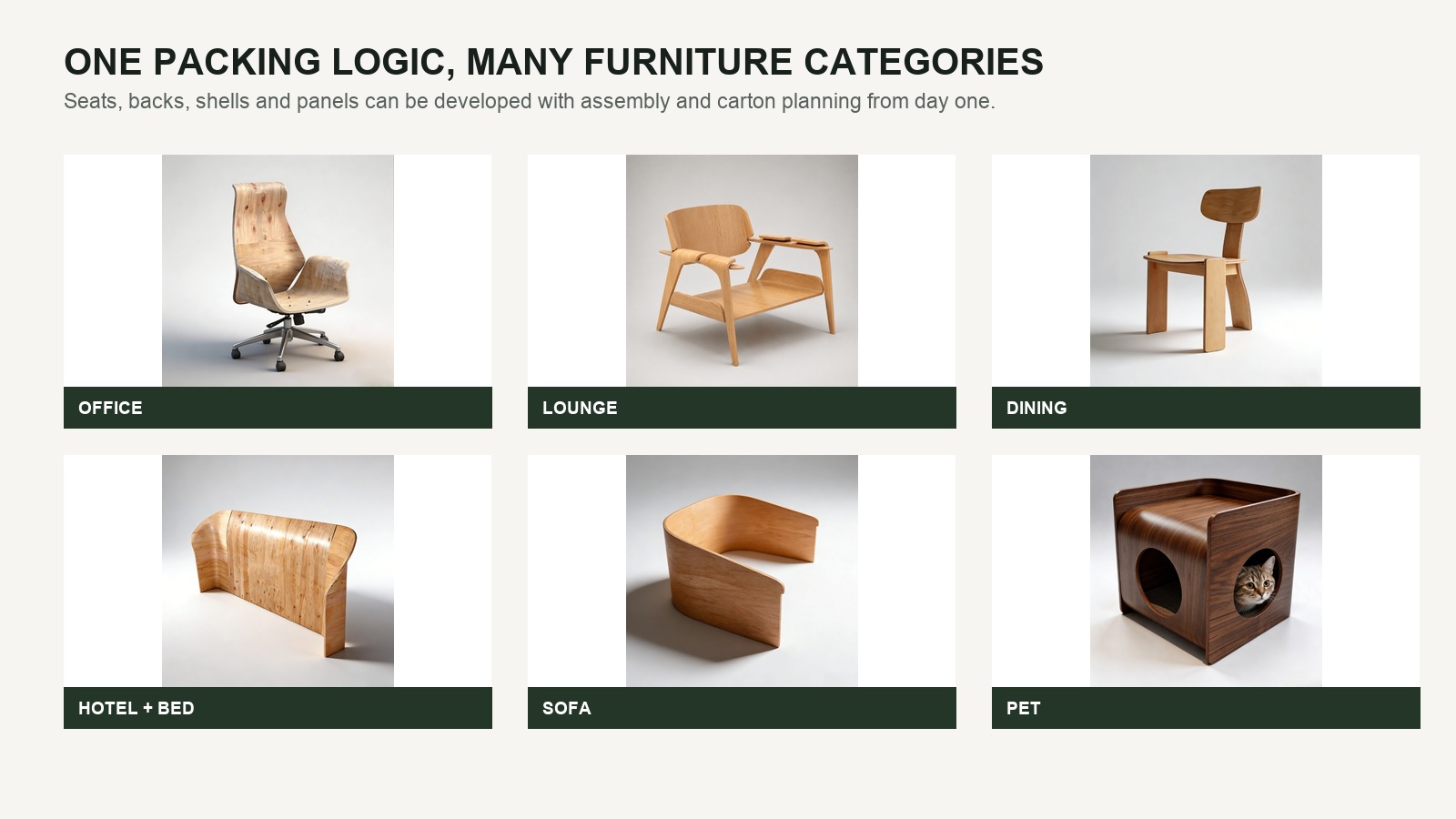
DALI Wood Industry has worked in bent wood and molded plywood furniture components since 2001. The company supports office chair plywood, dining chair plywood, leisure chair plywood, hotel furniture plywood, sofa and headboard plywood, wood chair parts and other customized furniture directions.
Buyers can send a drawing, reference chair, 3D file, target price or physical sample. DALI can then discuss whether an existing mold is suitable, whether a new mold is needed, how the product should be packed, and which material route can balance appearance, cost and order quantity.
For 2026 buying plans, this is the practical message: do not only ask, "How much is one chair?" Ask, "How will this chair be packed, shipped, assembled, documented and reordered?" That is where a capable bent plywood manufacturer can help buyers protect profit.
To discuss a carton-first chair, molded plywood component or custom furniture project, contact anny@daliplywood.com or send an inquiry through the DALI website with your target quantity, destination market and reference design.