




As contract furniture and project seating demand keeps drawing attention in 2026, buyers need repeatable bent plywood chair components, molded plywood backs and export-ready parts that protect margin.
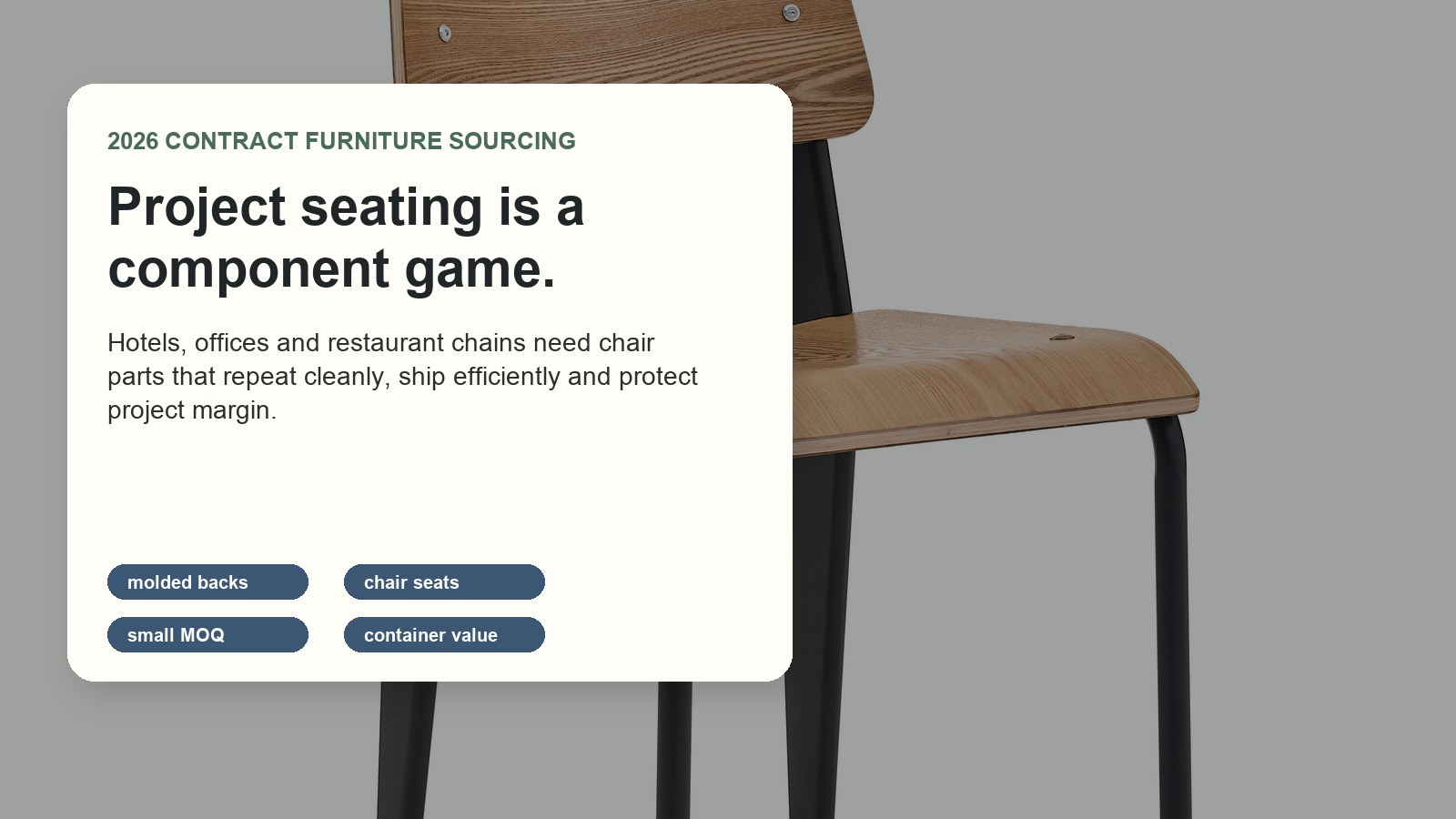
Why contract furniture buyers are looking past the finished chair
Contract furniture is different from one-off retail furniture. A hotel, office, restaurant chain or education project may need hundreds or thousands of seats that look consistent, assemble quickly and remain profitable after freight, inspection and installation. That is why project seating in 2026 is increasingly a component game.
Recent market coverage continues to highlight demand around contract furniture, hospitality upgrades and commercial fit-outs. For buyers, the important sourcing question is not only which chair design is attractive. It is whether the chair seat, chair back, molded plywood shell and packing method can repeat accurately across the full project.
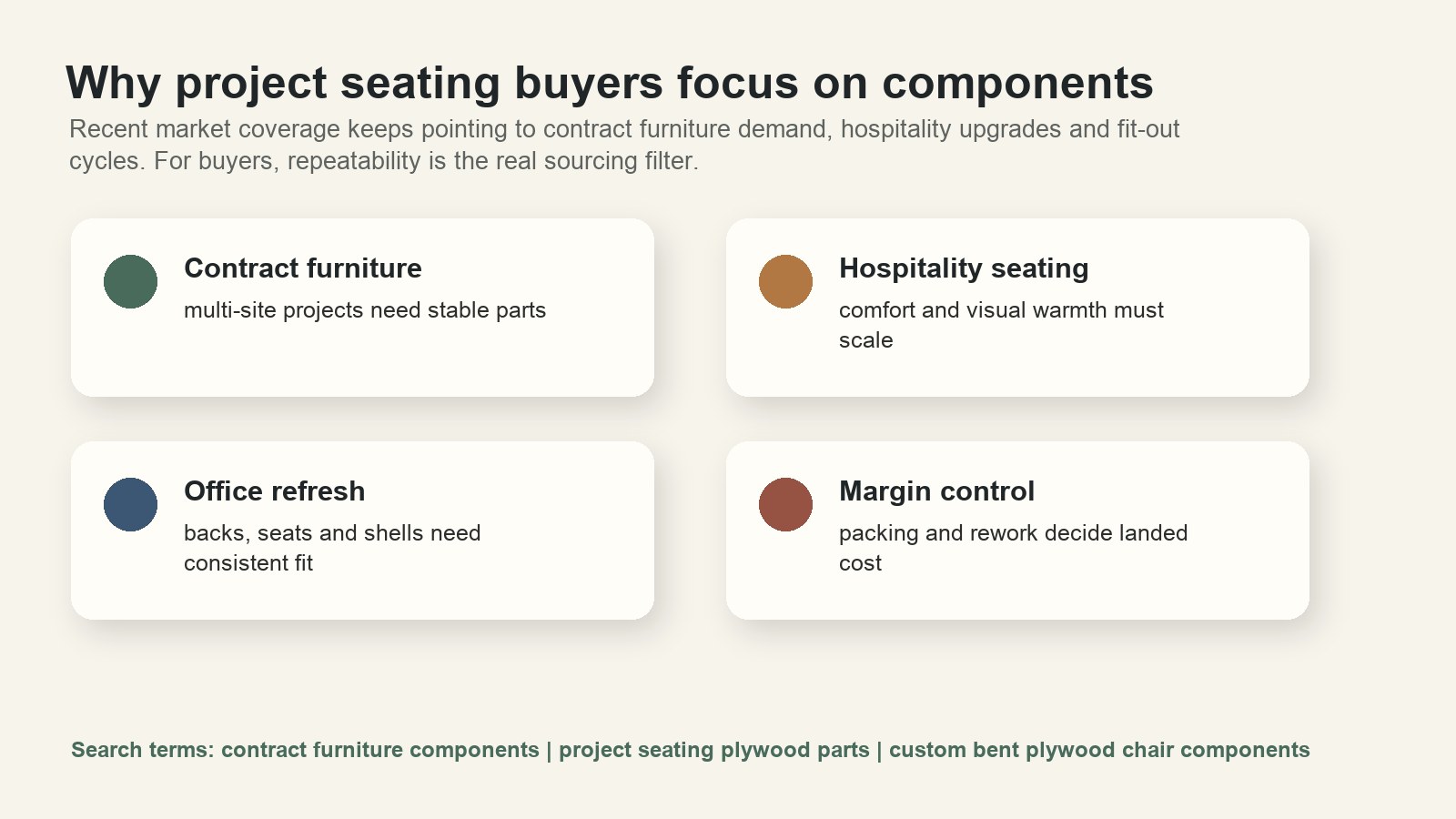
What makes bent plywood useful for project seating?
Bent plywood gives project furniture buyers a practical balance of warmth, curve, comfort and production efficiency. A molded plywood chair back can carry natural wood grain for hospitality interiors, a paintable surface for brand-specific color, or an upholstered shell for office seating. The same manufacturing logic can support dining chair plywood seat and back sets, office chair plywood parts, leisure chair plywood and hotel furniture plywood parts.
For procurement searches such as custom bent plywood chair components, curved plywood chair shell manufacturer, molded plywood chair backs and project seating plywood parts, the buyer usually needs a supplier who understands both design and repeat production.
How DALI turns a project chair into repeatable parts
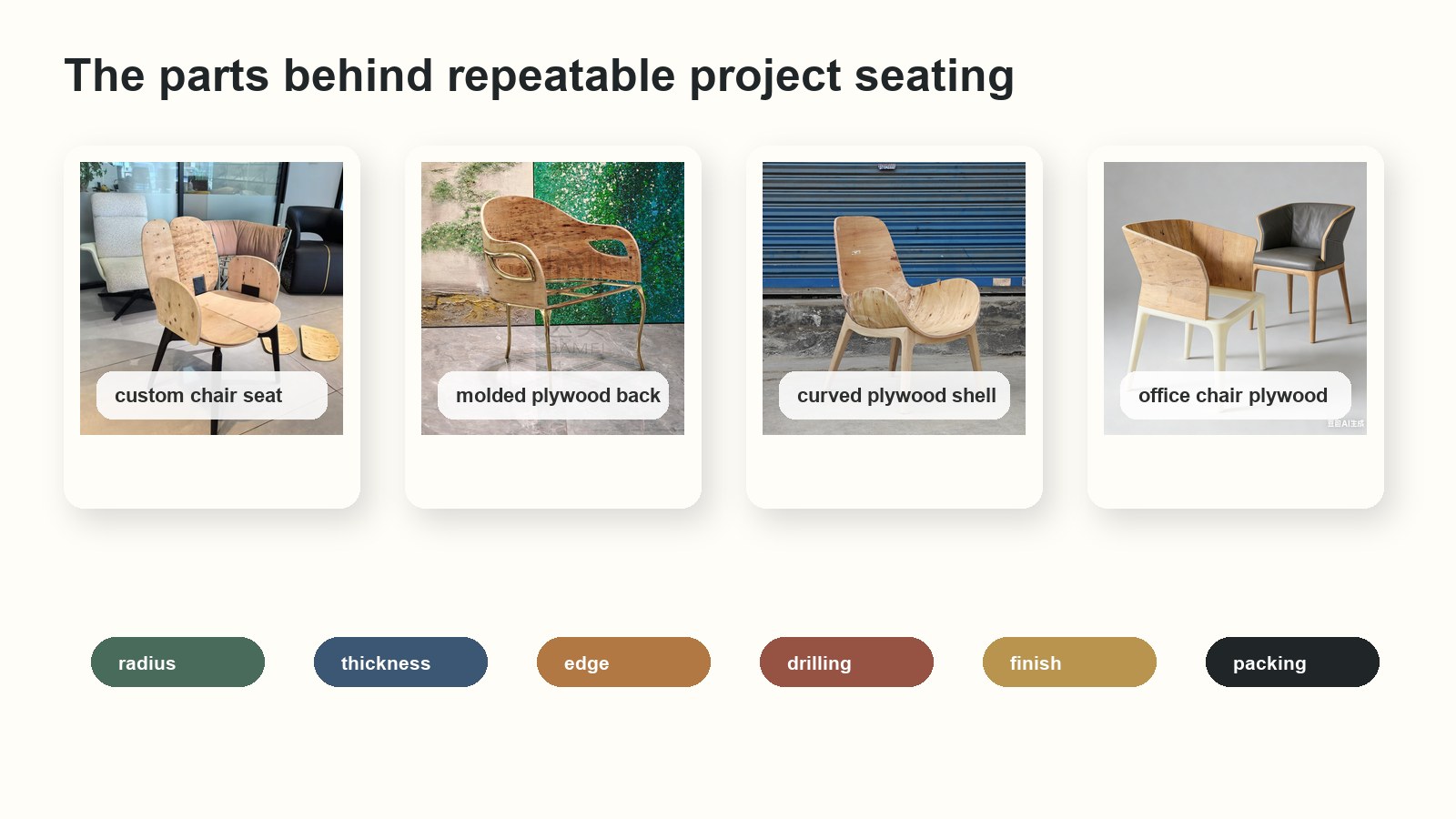
DALI Wood Industry supports custom chair seats and backs, molded plywood backs, curved plywood shells and plywood furniture parts for project orders. The process starts with the target chair type, dimensions, curve, drilling position, finish route and destination market. From there, DALI can review existing mold options or develop a low-cost custom plywood mold when the design requires it.
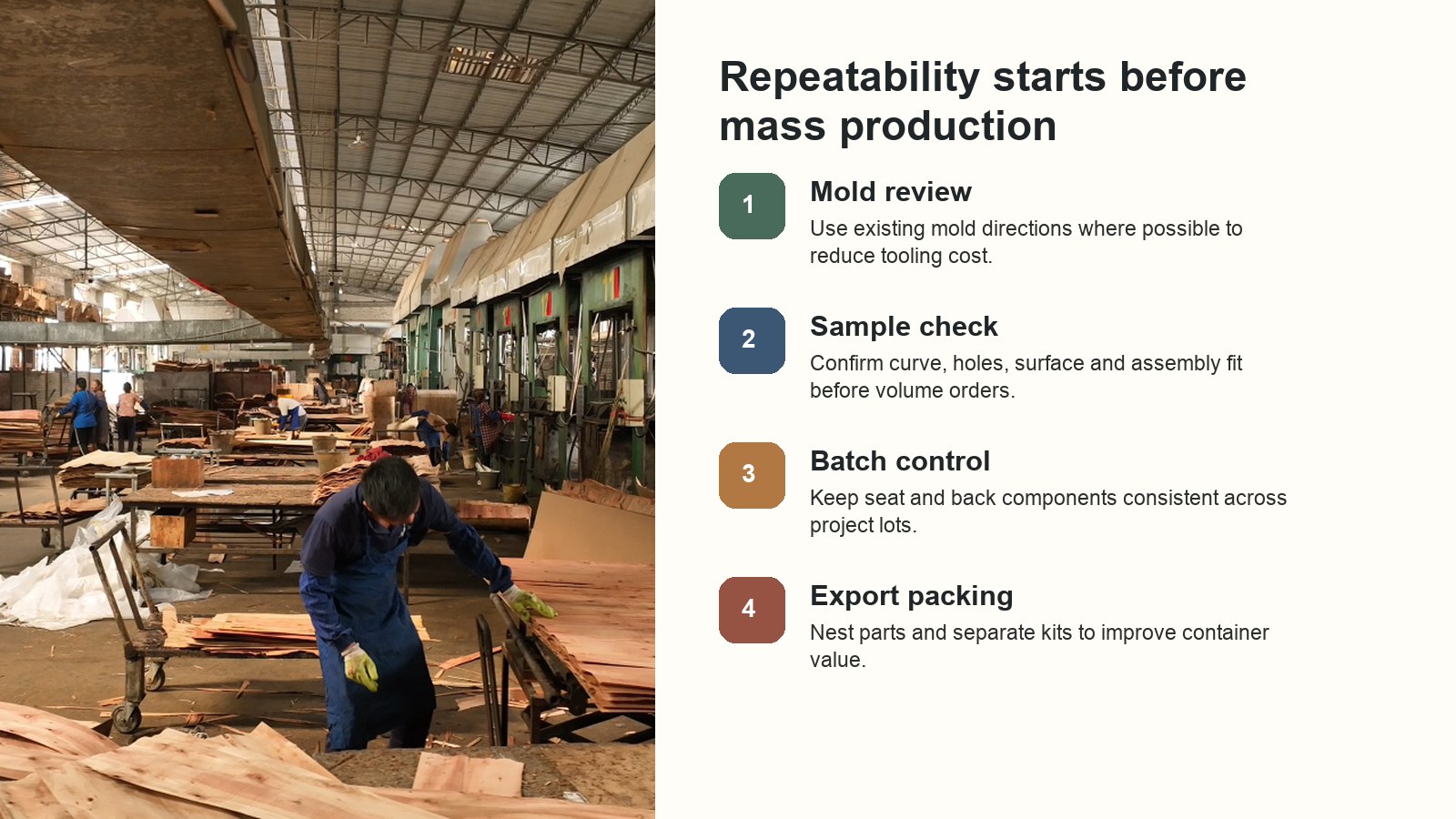
This approach helps buyers reduce sample loops. The component can be checked for radius, thickness, edge quality, hole accuracy, finish preparation and assembly fit before volume production begins. For project seating, that early discipline matters more than a beautiful first sample that cannot repeat.
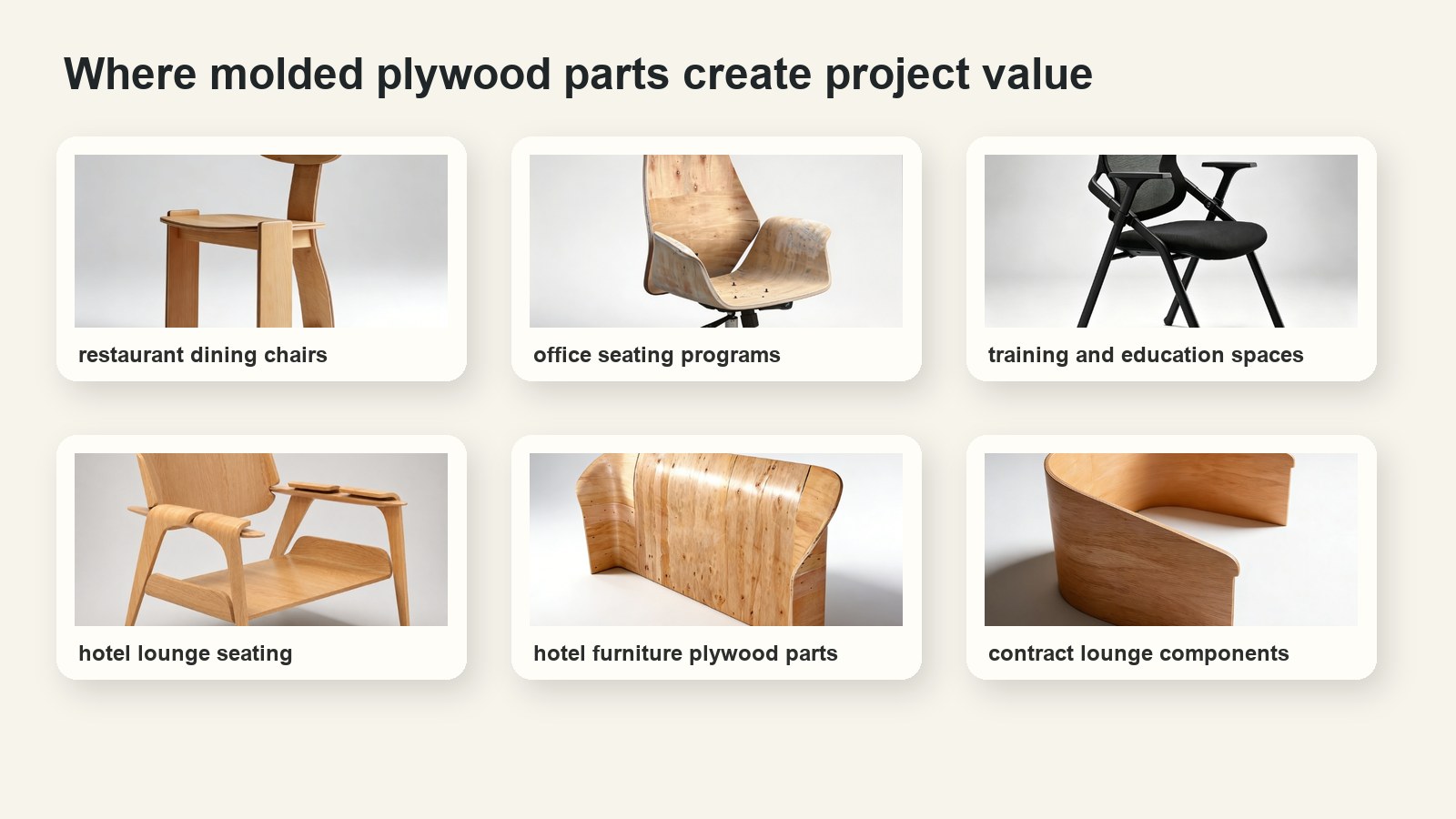
Applications: hotel, office, restaurant and education furniture
Hotels need comfortable lounge chairs and warm restaurant seating. Offices need reliable chair backs and seats that fit metal or plastic frames. Restaurants need durable dining chair plywood seat and back sets. Education and training spaces need repeatable, cost-controlled seating parts. In each case, molded plywood components allow buyers to keep the complex curved part stable while managing final assembly close to the market.
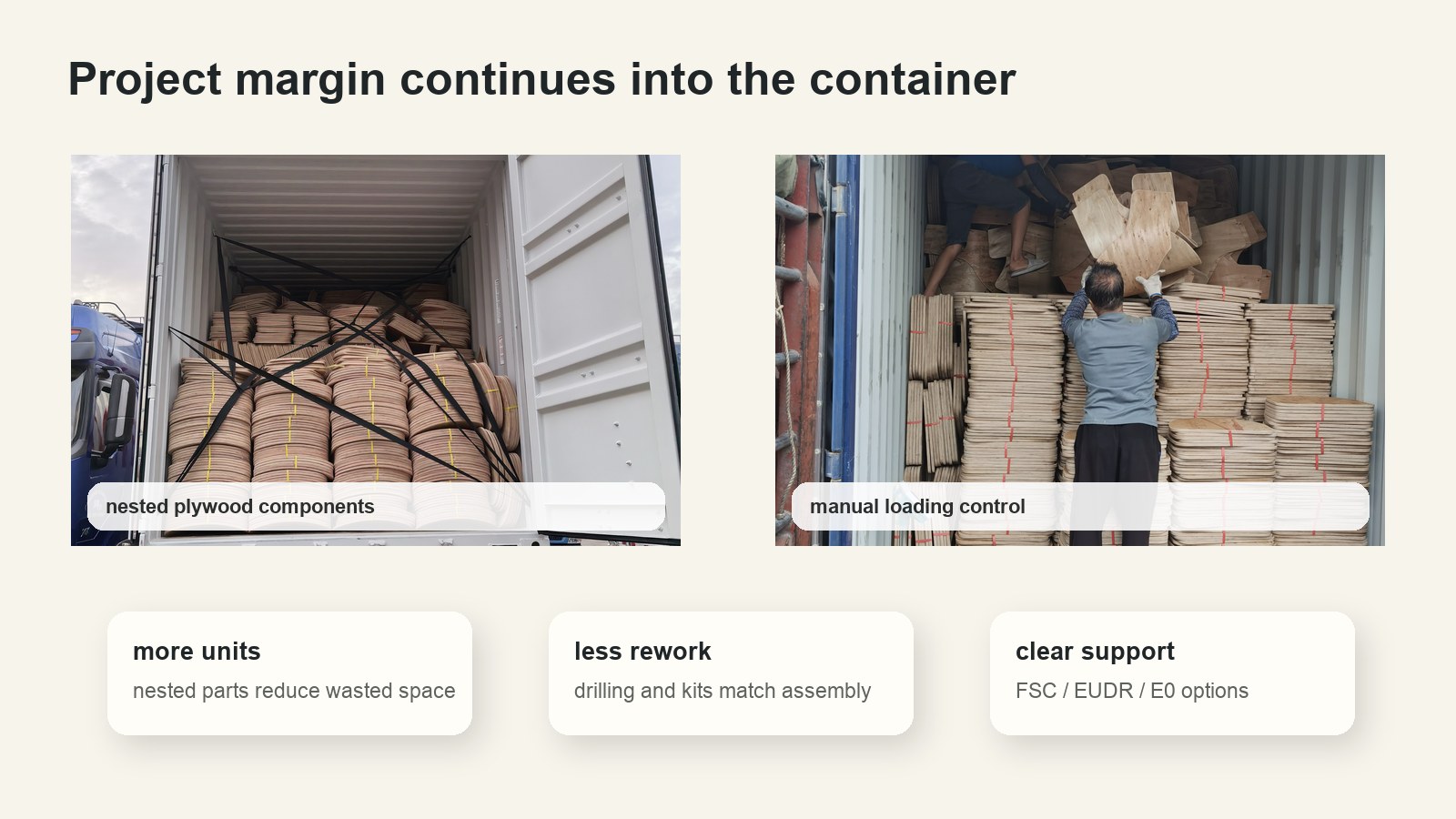
This is relevant for furniture factories in Mexico, Poland, Southeast Asia and other assembly markets. Importing compact bent plywood components from China can reduce development cost, support local assembly and improve container value compared with shipping bulky finished chairs.
Repeatability, documentation and packing decide landed cost
Project furniture buyers often compare unit price first, but landed cost is shaped by more than the invoice. Rework, mismatched holes, weak edge preparation, unclear documentation and poor packing all reduce margin. DALI's production process focuses on stable molding, sample control, drilling accuracy, sanding, export packing and project communication.
For buyers who need sustainable furniture components, DALI can also discuss FSC, EUDR and E0 support at the component planning stage. This helps avoid late compliance questions after the project is already moving.
What should a project seating RFQ include?
A strong RFQ for contract furniture components should include the application, target chair type, drawings or reference dimensions, material preference, finish route, hole position, expected MOQ, sample deadline, destination market and preferred packing method. These details allow DALI to quote a practical route instead of guessing from a single photo.
Small MOQ and fast sampling are important because project buyers often need to verify comfort, assembly and finish before committing to a full container. Low tooling cost helps new chair programs move from concept to test order without unnecessary capital pressure.
Why DALI is a practical supplier for 2026 project furniture
DALI Wood Industry manufactures bent plywood and molded plywood components for dining chairs, office chairs, leisure chairs, hotel furniture and contract seating. The company supports custom chair seats and backs, low-cost molds, small MOQ, fast sampling, export packing and FSC / EUDR / E0 documentation support when required.
For 2026 contract furniture buyers, the goal is clear: choose components that can repeat, ship efficiently and protect project margin. That is where custom bent plywood chair components become a practical sourcing advantage.