




Recent furniture and design news shows fashion and lifestyle brands moving deeper into home collections, collaborations and branded interiors. For furniture buyers, this creates demand for custom bent plywood chair components that can turn a visual identity into repeatable seating.
Why are fashion and lifestyle brands moving into furniture?
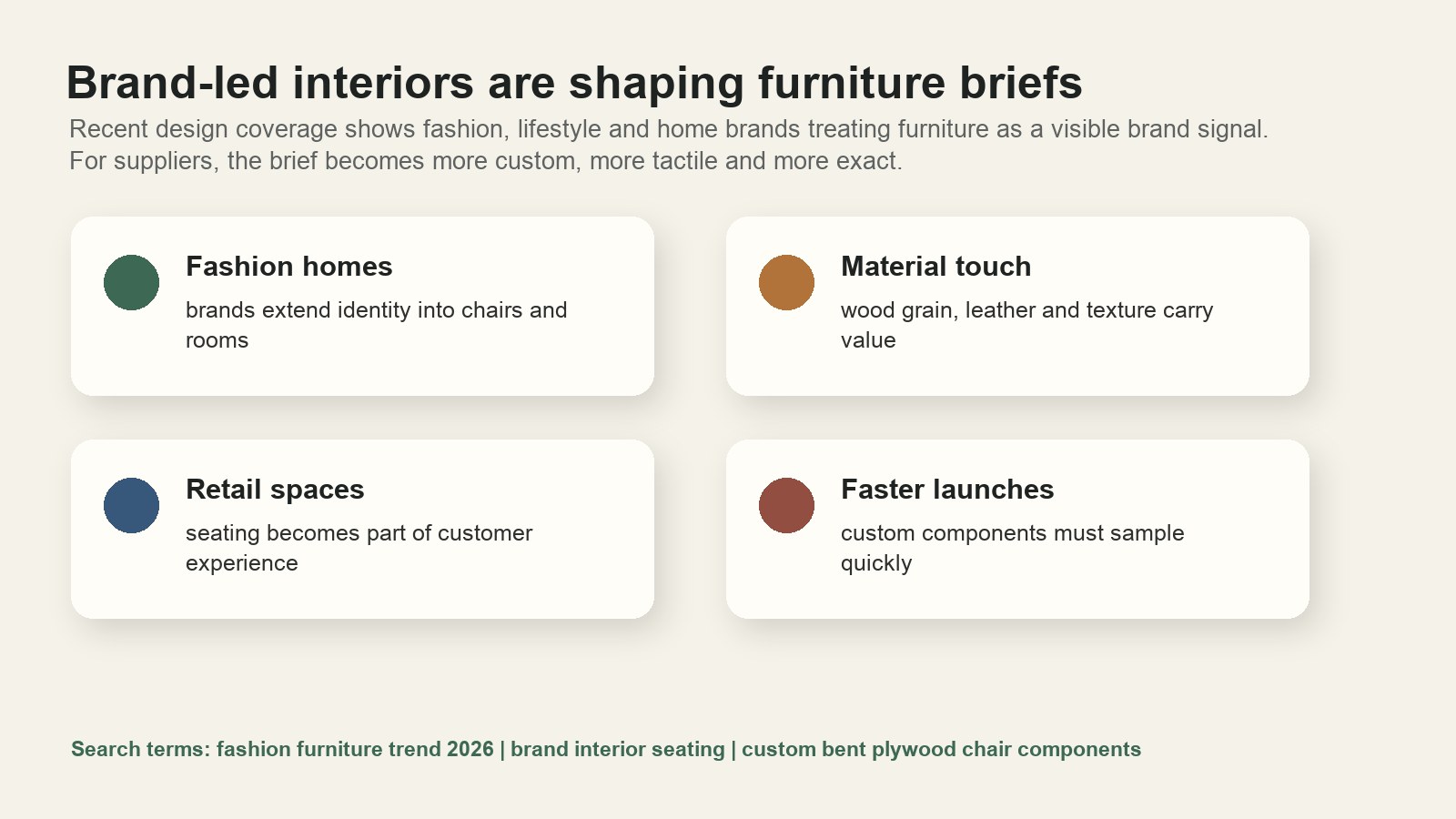
Recent design coverage around fashion month, home collaborations and material-focused furniture launches shows a clear 2026 signal: furniture is becoming part of brand identity. Chairs, lounge pieces and home collections are no longer only background objects. They help a brand express texture, mood, comfort and cultural taste in retail stores, restaurants, hotels, offices and private homes.
For furniture manufacturers and project buyers, this trend changes the sourcing question. The buyer is not simply asking for a standard chair. The buyer is asking for brand interior seating, a recognizable curve, a material story and a production route that can repeat across locations or future collections.
What does this mean for chair component suppliers?
Brand-led furniture needs both design sensitivity and manufacturing discipline. A chair may need a softer back profile, a warmer natural veneer, a specific paint-ready surface, a leather or upholstery base, or a compact shell that works in a restaurant, boutique hotel or lifestyle retail lounge.
This is where custom bent plywood chair components become useful. Bent plywood can form a distinctive profile without making the chair visually heavy. It can support natural wood grain, upholstery, painted finishes and mixed-material frames. It also allows buyers to control the part that gives the chair its main silhouette: the seat, back or curved plywood shell.
How can bent plywood turn a design language into a product?
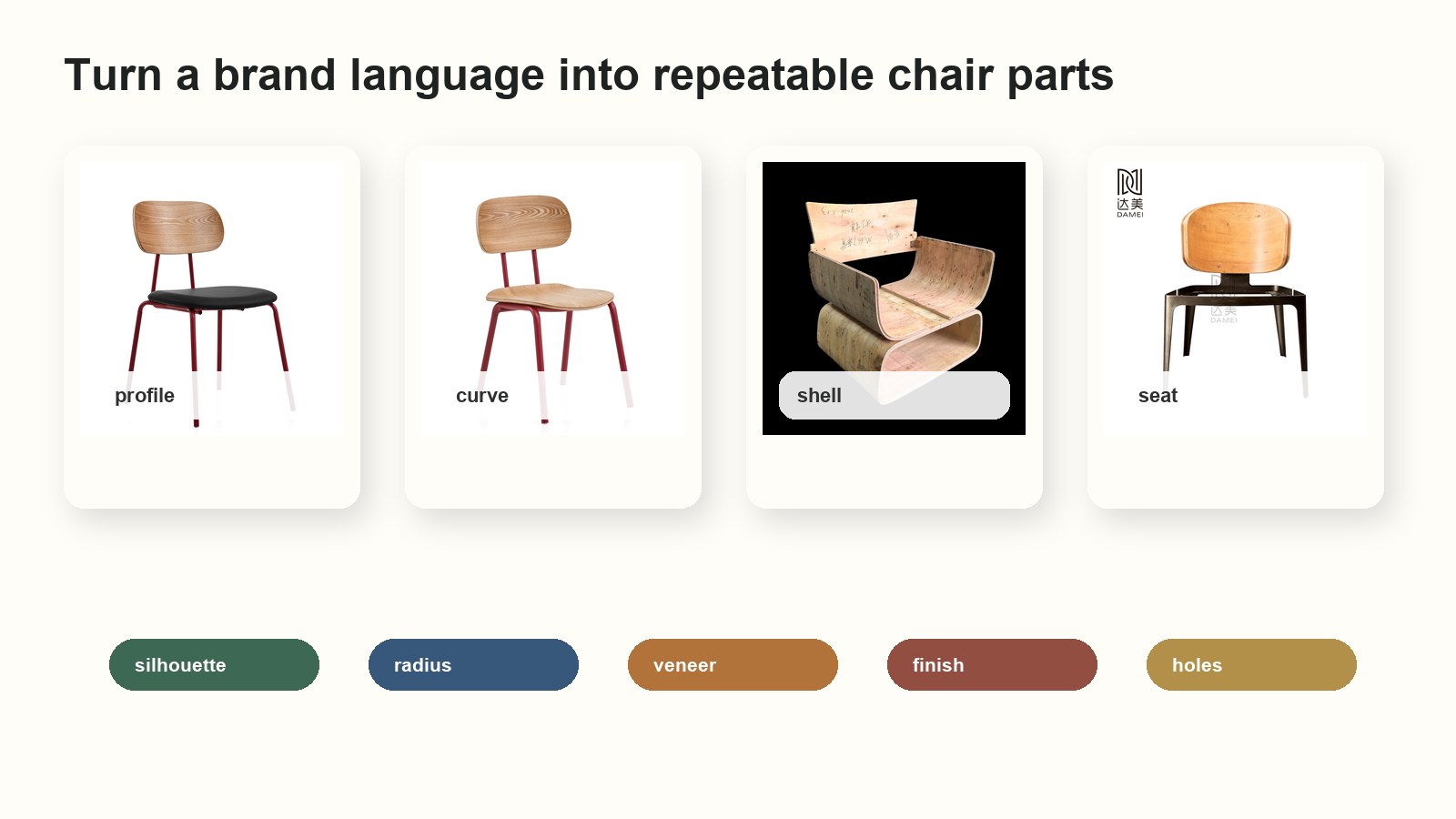
A brand design language may begin with words like warm, refined, minimal, crafted, soft or architectural. To turn those words into furniture, the component supplier must translate them into radius, thickness, veneer direction, edge detail, hole position, finish route and packing method.
DALI Wood Industry supports custom chair seats and backs, molded plywood chair backs, office chair plywood parts, dining chair plywood seat and back sets, leisure chair plywood and hotel furniture plywood parts. Buyers can develop a curved plywood chair shell from drawings, samples or reference dimensions, then confirm comfort and assembly before moving into bulk orders.
Where brand-led seating creates commercial value
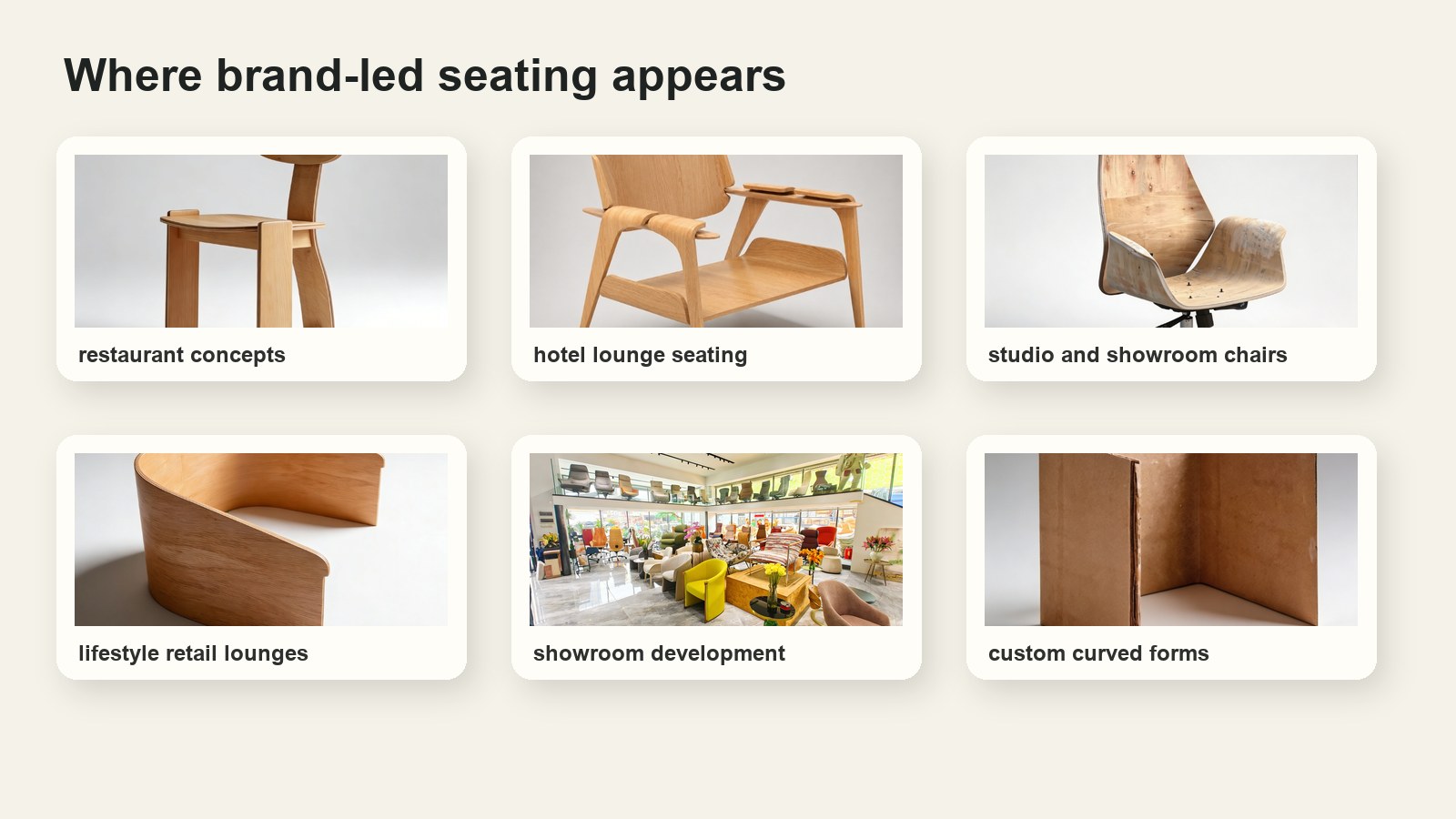
Fashion and lifestyle furniture is not only about home decor. It also affects commercial spaces. A restaurant chain may need a chair that feels aligned with its visual identity. A boutique hotel may use warm plywood backs to make rooms and lounges feel more personal. A retail brand may need seating that encourages customers to stay longer while still being durable enough for daily use.
For these projects, the hidden commercial value is repeatability. If one chair works, the buyer may need more seats for another store, another hotel floor or a later collection. A stable molded plywood supplier helps keep the design consistent while supporting small MOQ samples and future repeat orders.
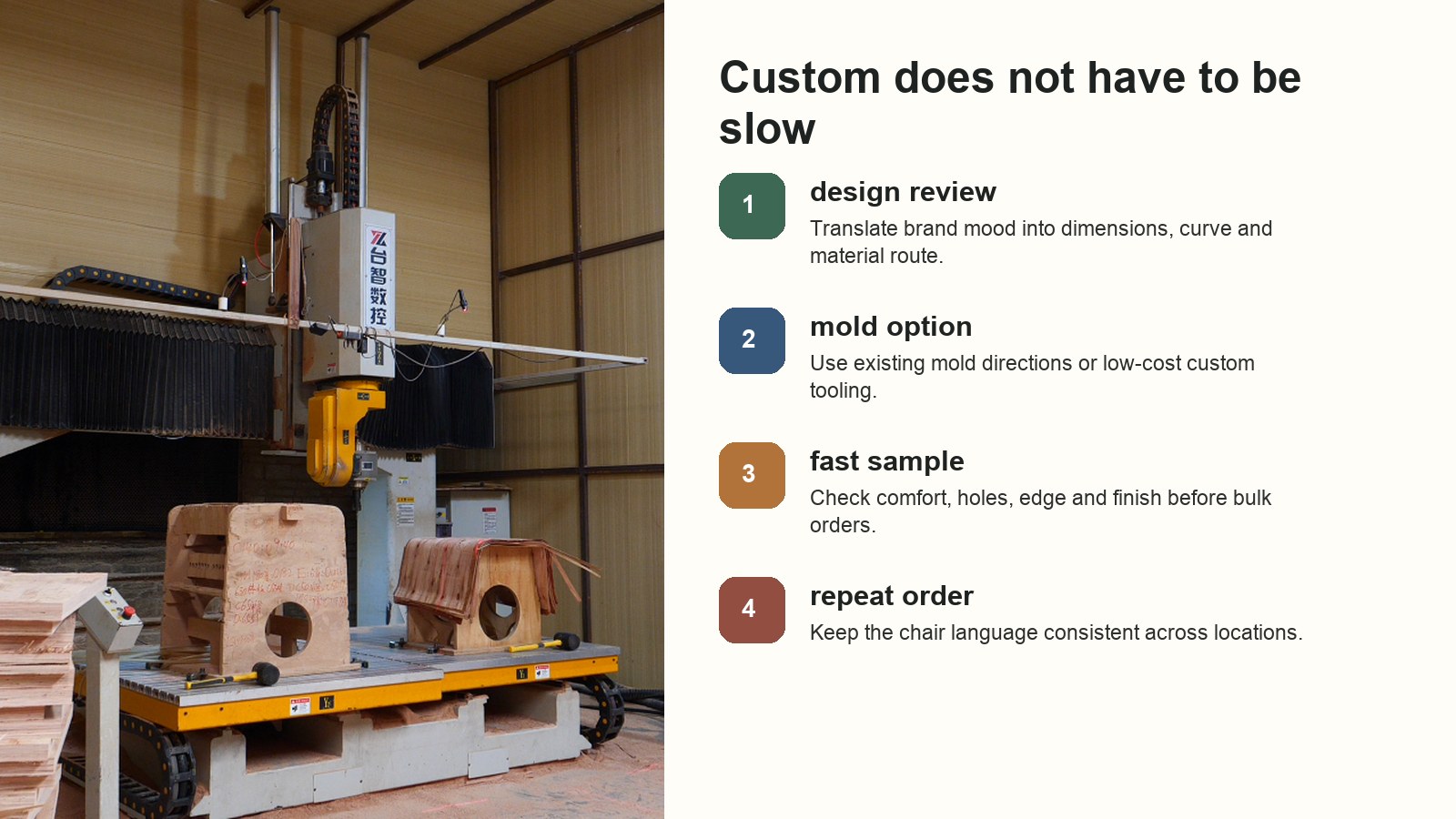
Why fast sampling and low tooling cost matter
Trend-led furniture moves quickly. Buyers may need to test a new chair shape before a brand launch, showroom update or hospitality project deadline. High tooling cost can slow that process. Long sampling cycles can make a good concept miss the market window.
DALI can review existing mold directions or develop low-cost custom plywood molds when a new shape is needed. The sampling process can check curve, thickness, drilling, edge quality, surface preparation and frame fit. This helps buyers move from mood board to production-ready component with less uncertainty.
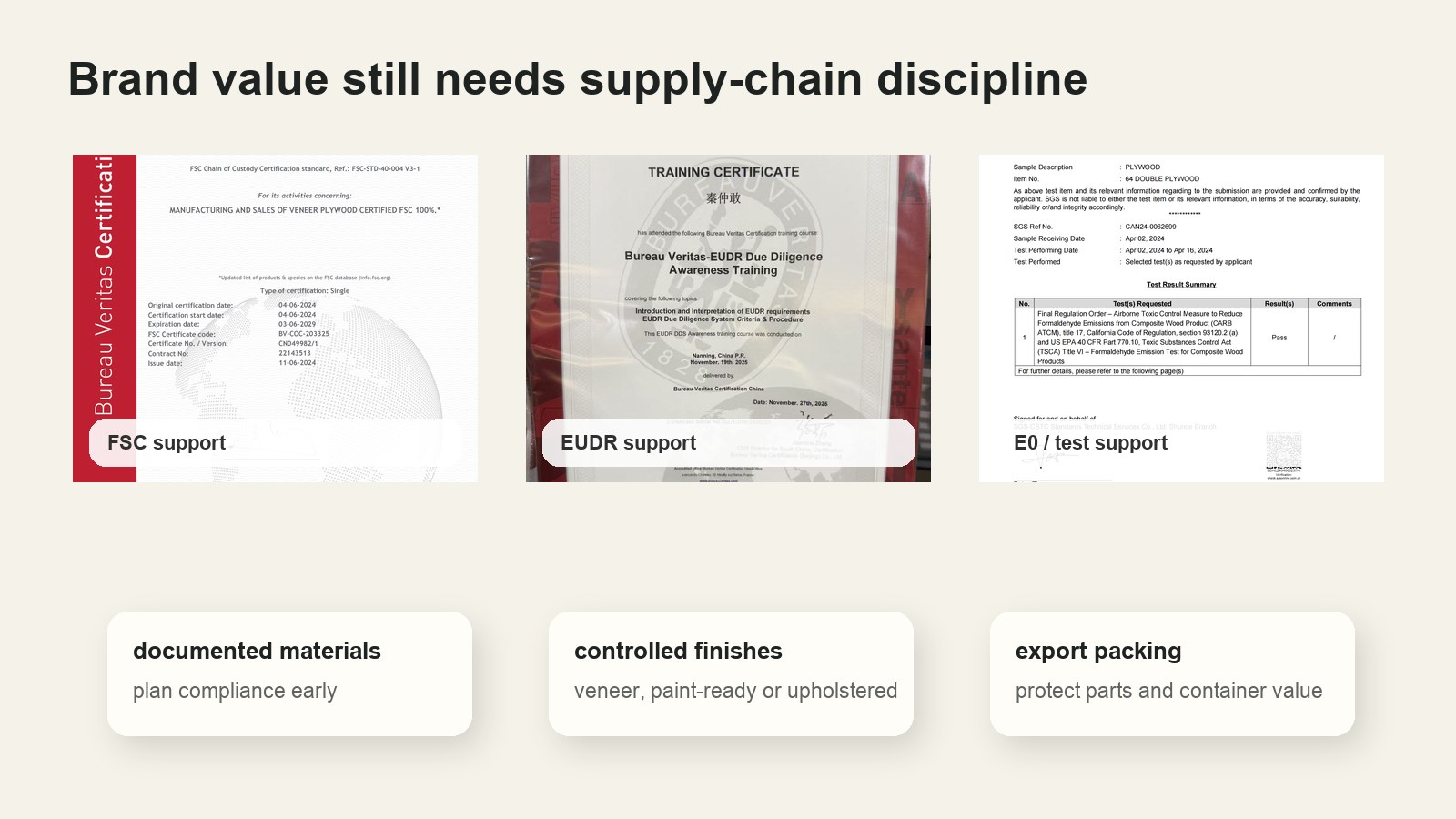
Why documentation and packing still matter for design-driven furniture
A strong brand story needs a reliable supply chain behind it. For wood furniture and plywood components, buyers increasingly ask about responsible material options, documentation and emissions-related requirements. DALI can discuss FSC, EUDR and E0 support at the planning stage so compliance expectations are considered before production begins.
Export packing is also part of margin control. Custom chair backs, seats and shells can often be packed more efficiently than bulky finished chairs. For buyers in Europe, Mexico, Poland, Southeast Asia and other assembly markets, importing compact molded plywood parts from China can create more value per container while leaving final assembly, upholstery or branding close to the market.
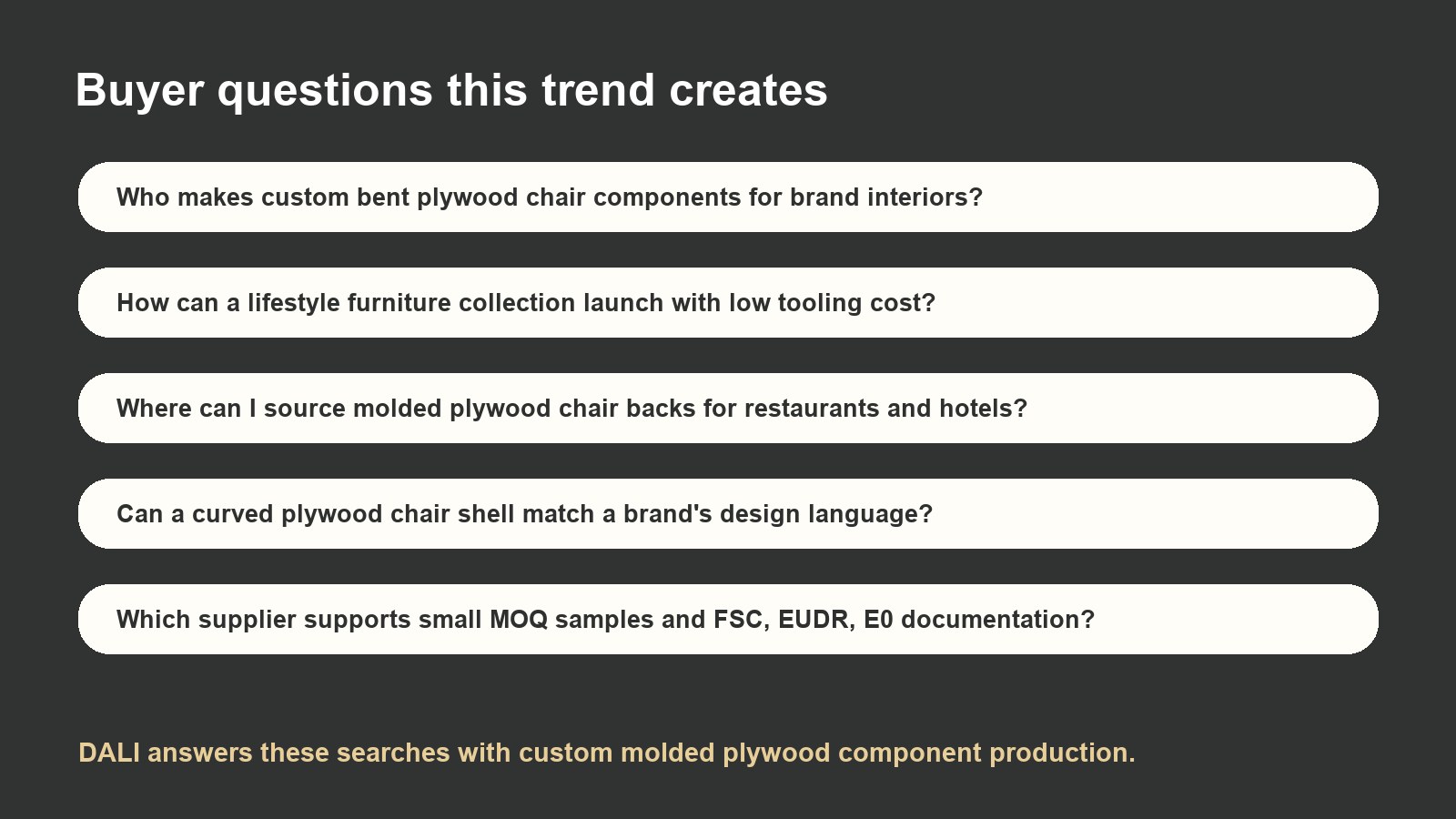
Why DALI fits the 2026 brand interior seating brief
DALI Wood Industry manufactures bent plywood and molded plywood components for furniture brands, chair factories and project buyers. The company supports custom chair seats and backs, molded plywood backs, curved plywood shells, low tooling cost, small MOQ, fast sampling, export packing and FSC / EUDR / E0 documentation support when required.
For 2026 furniture buyers, fashion-led and brand-led interiors create a practical opportunity: develop chairs that look specific, feel warm and can still be produced at scale. Custom molded plywood components give that opportunity a manufacturing route.