


 Jun 07, 2026
 dali plywood
 516
516

Furniture factories are under pressure to launch new models faster, control material cost, and keep quality stable across repeat orders. Bent plywood chair components sit directly inside that pressure. A chair back, seat shell, arm part or curved support may look simple, but it affects comfort, assembly speed, upholstery fit and long-term customer complaints.
In 2026, buyers should not treat molded plywood as a commodity purchase. The better question is whether the supplier can protect the factory from production risk. A low first quotation is useful only when the supplier can also repeat the curve, control moisture, keep glue lines stable, pack safely and communicate clearly during sampling and bulk production.
A strong bent plywood supplier should have a clear production system from veneer preparation to finished component packing. Buyers should understand how the factory manages veneer grading, glue application, mold pressing, trimming, drilling, sanding and final inspection. These steps decide whether the approved sample can be repeated in a real order.
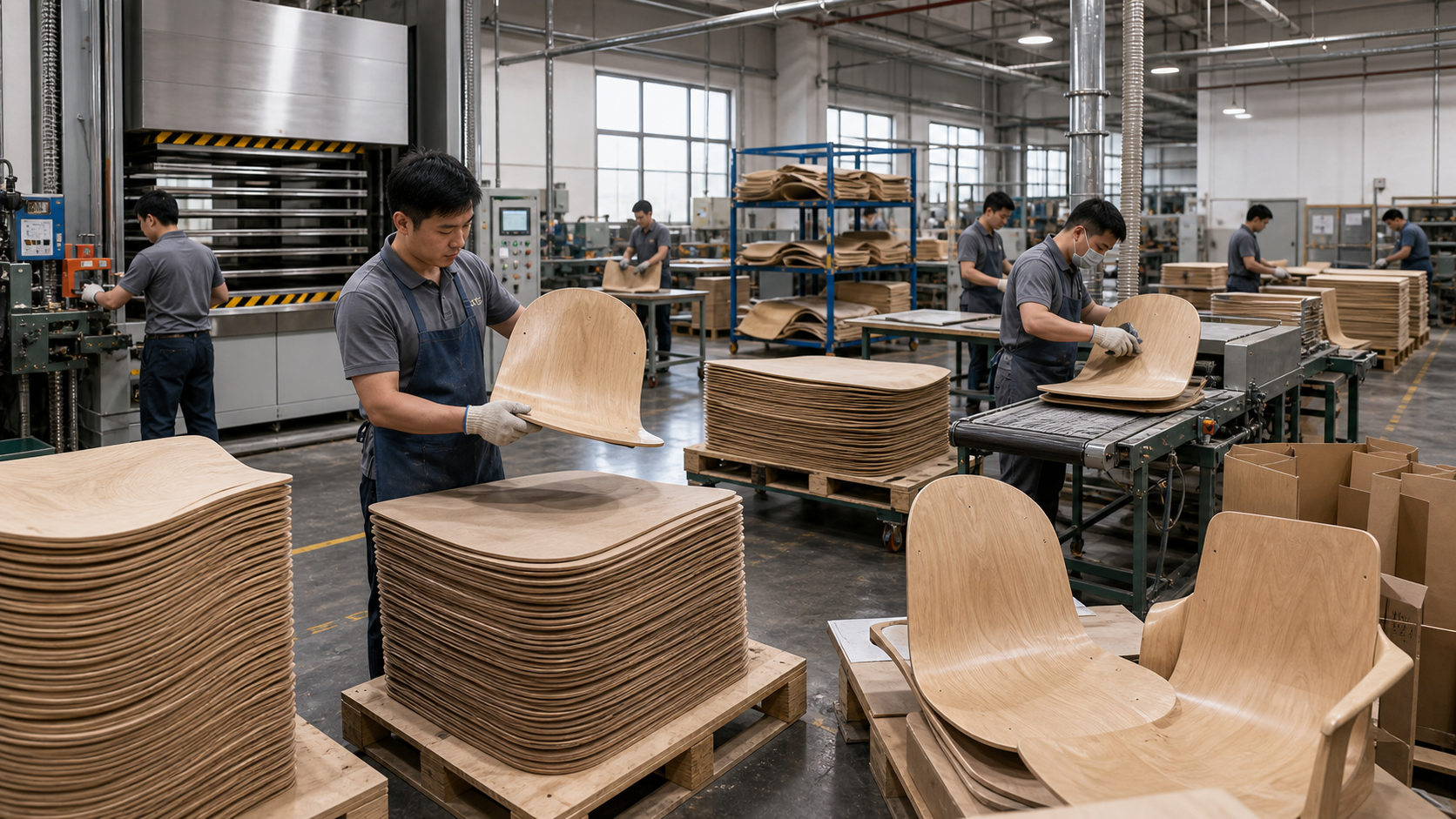
For dining chair, office chair and leisure chair manufacturers, the supplier's mold experience is especially important. The same plywood thickness can behave differently depending on curve radius, veneer direction, pressing time and final drilling position. A supplier who understands these details can help buyers adjust a design before mass production problems appear.
Professional buyers should ask how the supplier checks curve accuracy, moisture, glue-line condition, edge finish, surface sanding and drilling tolerance. These checks should not happen only after all goods are finished. They should be part of the production flow, so problems can be corrected early.
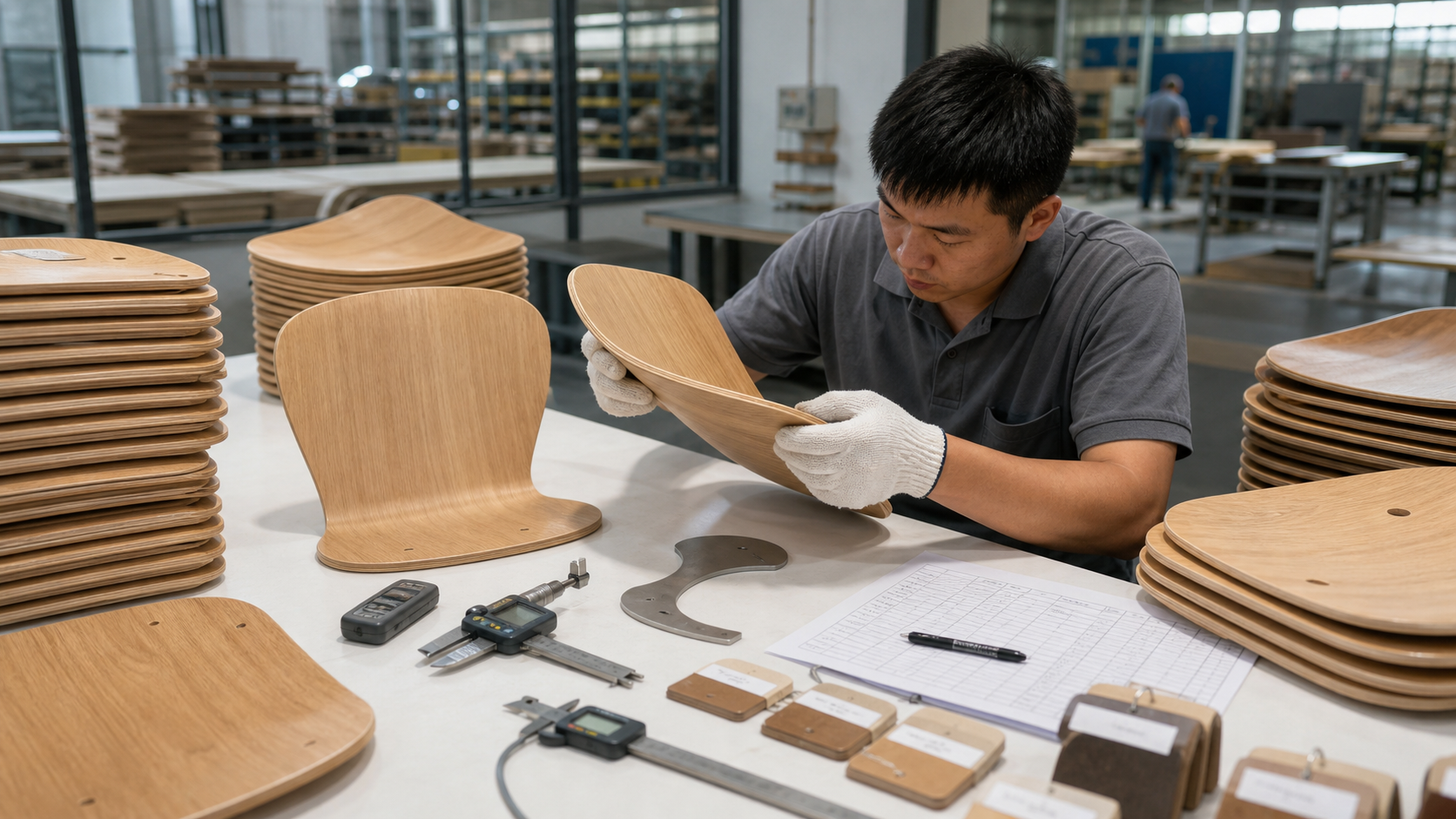
Curve consistency: compare multiple samples from the same batch and different batches.
Glue-line stability: inspect edges and stress areas for delamination risk.
Moisture control: confirm storage and packing conditions before export.
Assembly tolerance: check drilling, trimming and edge shape against the buyer's frame design.
Many sourcing problems happen after production is completed. Curved plywood parts can be damaged by pressure, rubbing, humidity or poor carton structure during export shipping. If the component arrives scratched, warped or compressed, the buyer still pays the cost through sorting, rework and production delays.
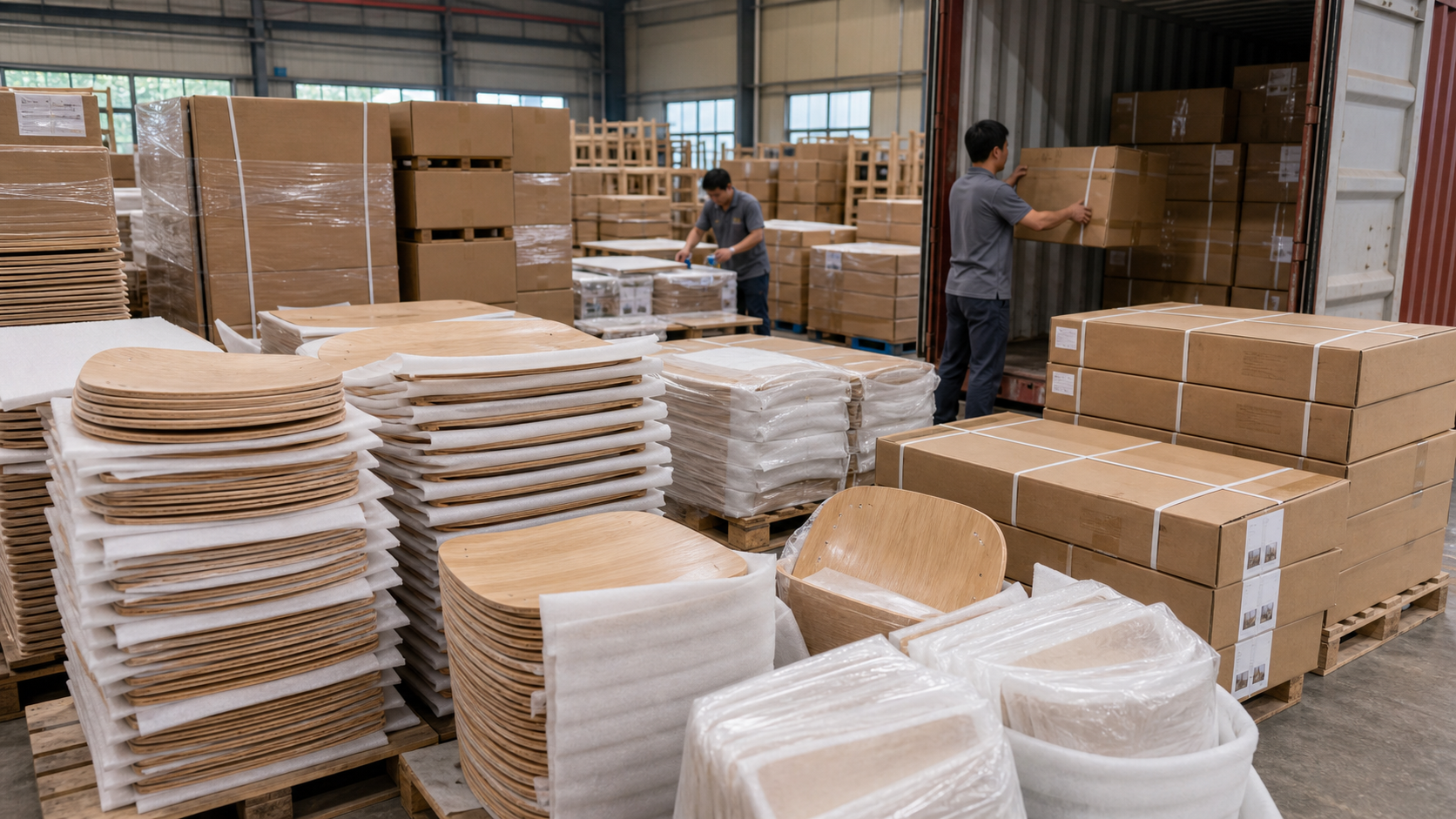
A practical supplier should discuss stacking direction, foam protection, carton strength, pallet loading and container utilization. This is not a small detail. For overseas buyers, good packing can be the difference between a smooth production schedule and a warehouse full of rejected parts.
Sampling should be treated as a joint engineering step. A buyer may provide a drawing, a reference chair, a metal frame or an upholstery requirement. The supplier should then explain what curve, thickness, mold, veneer structure and tolerance are realistic. Good communication at this stage reduces sample rounds and prevents misunderstandings later.
For OEM and ODM chair projects, buyers should ask for clear photos, short production videos, batch confirmation and packaging photos before shipment. These simple communication habits help the buyer control quality remotely, especially when teams are working across time zones.
Rongxian Dali Wood Industry Co., Ltd., known as Dali Plywood, was founded in 2001 in Rongxian Economic Development Zone, Yulin, Guangxi, China. The company focuses on research, production and sales of bent wood and molded plywood furniture components for office chairs, dining chairs, leisure chairs, swivel chairs, conference chairs and auditorium chairs.
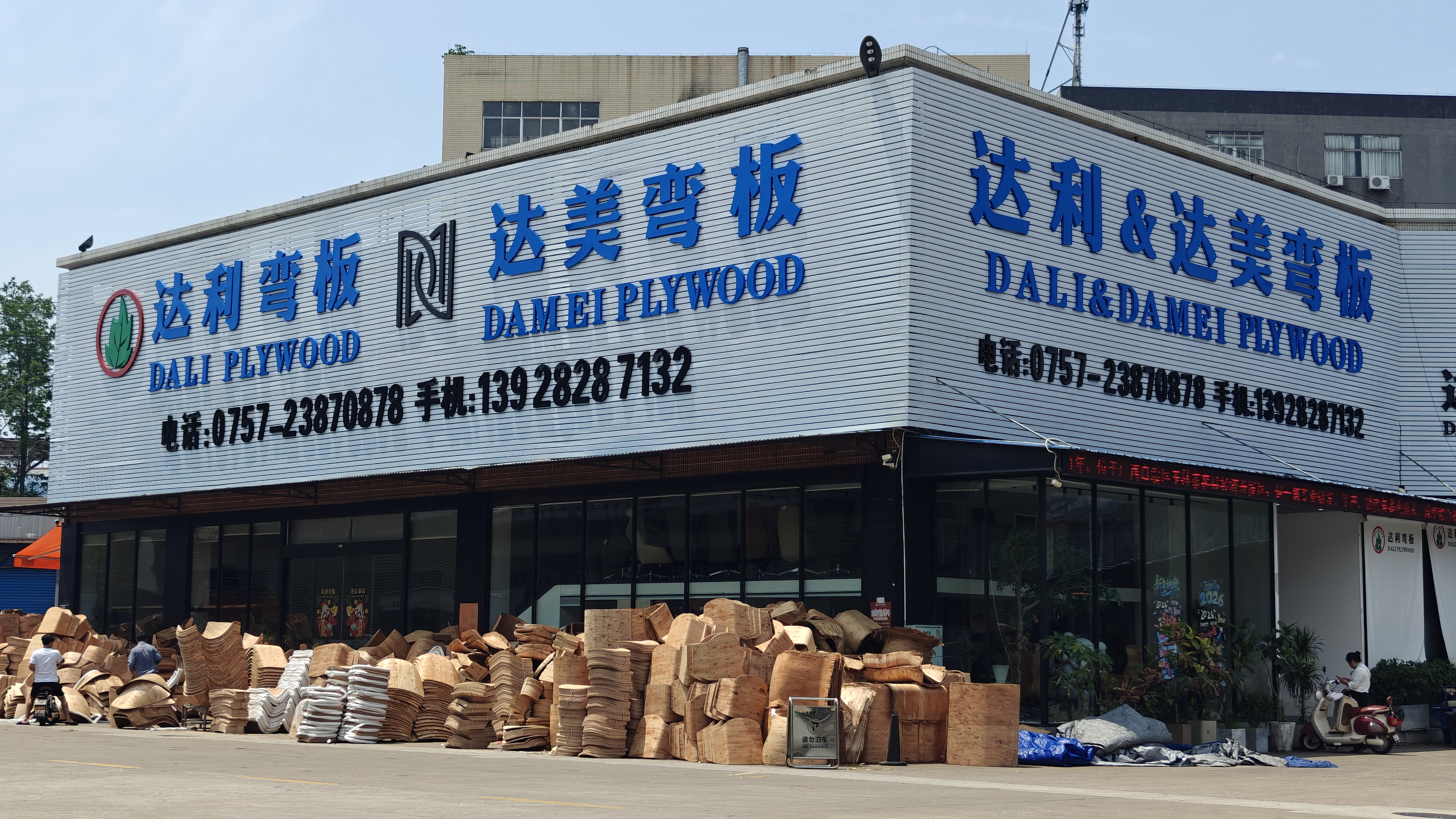
Dali Plywood now operates four factories: Dali Wood Industry, Dali Second Factory, Zhida Wood Industry and Changyi Wood Industry, newly opened in 2025. The total production area is over 50,000 square meters, with more than 200 employees. The company also has marketing stores and showrooms in Foshan Shunde Longjiang, including Dali Damei Bent Plywood at Haojun Material City K28-30 and Feida Dining Chair Bent Plywood, opened in April 2026.
With more than 15 years of foreign trade experience and long-term overseas customers met through exhibitions, Dali Plywood understands what global furniture factories need: stable components, practical OEM cooperation, careful packing and responsive export service. For buyers planning new chair models in 2026, the best sourcing decision is not only to find a supplier. It is to build a partner who can reduce production risk from sample to repeat order.