


 Jun 09, 2026
 dali plywood
 506
506
When a furniture factory develops a new dining chair, lounge chair, office chair or conference chair, the curved plywood component may look simple from the outside. It is only a seat, a backrest or a shell. But behind that smooth curve is a technical decision that can affect comfort, assembly speed, repeat order quality and even the final cost of the chair program. That decision is mold development.
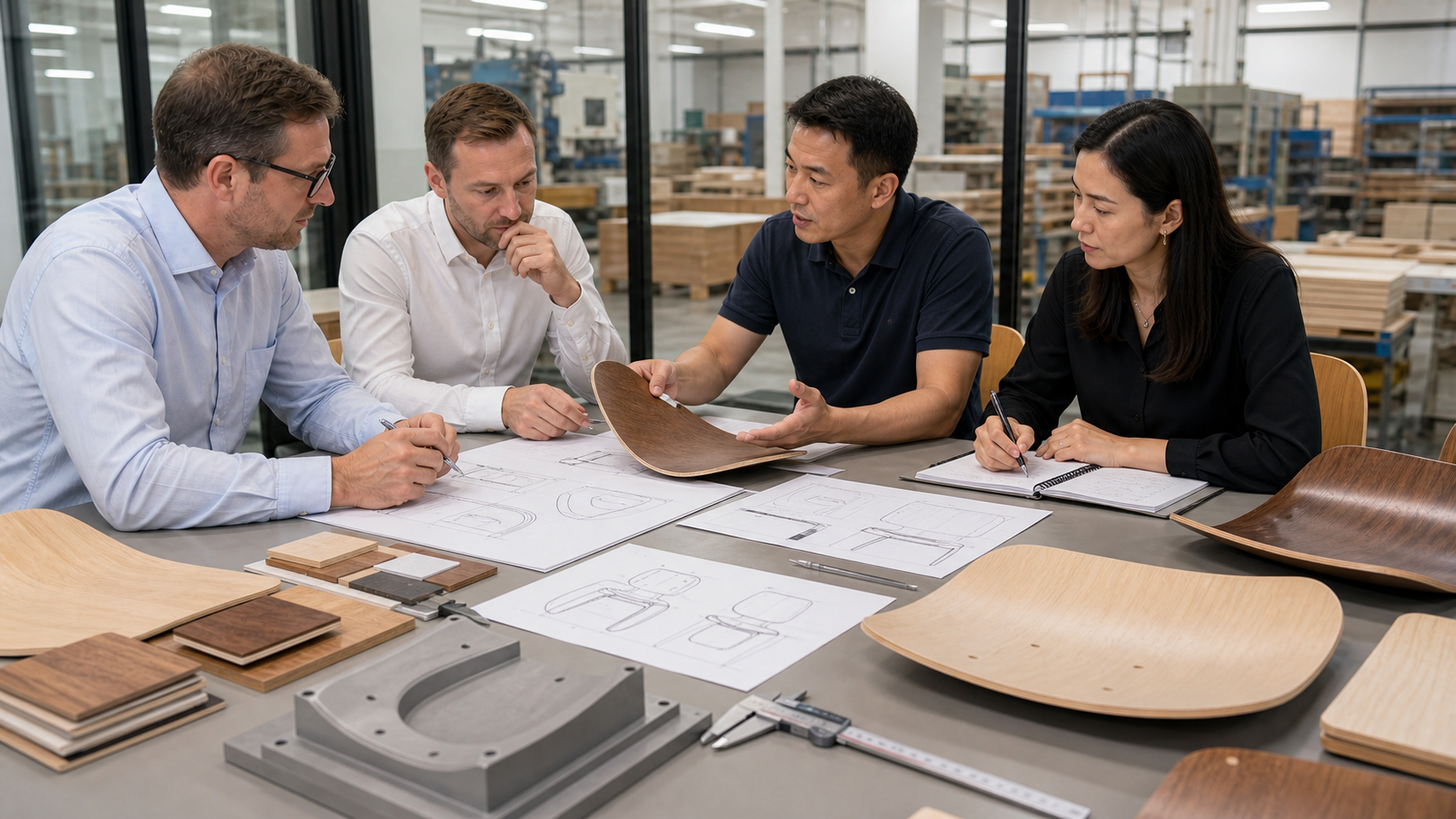
Many sourcing teams first compare curved plywood suppliers by unit price, lead time and sample appearance. Those points are important, but they do not show the full risk. If the mold is not designed correctly, the approved sample may not repeat well in mass production. If the curve is slightly wrong, the component may not fit the metal frame. If drilling positions are not controlled, the assembly line may slow down. For B2B furniture manufacturers, mold capability is not a small workshop detail. It is part of production risk management.
A serious curved plywood project should begin with more than a photo and a target price. The supplier needs drawings, dimensions, target thickness, curvature requirements, frame connection method, drilling positions, surface expectations and application information. If the component is used for a dining chair, the supplier should understand how the seat and backrest connect to the frame. If it is used for a lounge chair, the larger curve, sitting angle and structural support become even more important.
Good mold development turns buyer information into a repeatable production reference. The mold must reflect the finished component, but it also needs to consider springback, veneer structure, pressing pressure, trimming allowance and later assembly. This is why experienced suppliers ask practical questions before promising a sample date. They are not slowing the project down. They are trying to prevent the buyer from approving a sample that cannot be repeated reliably.
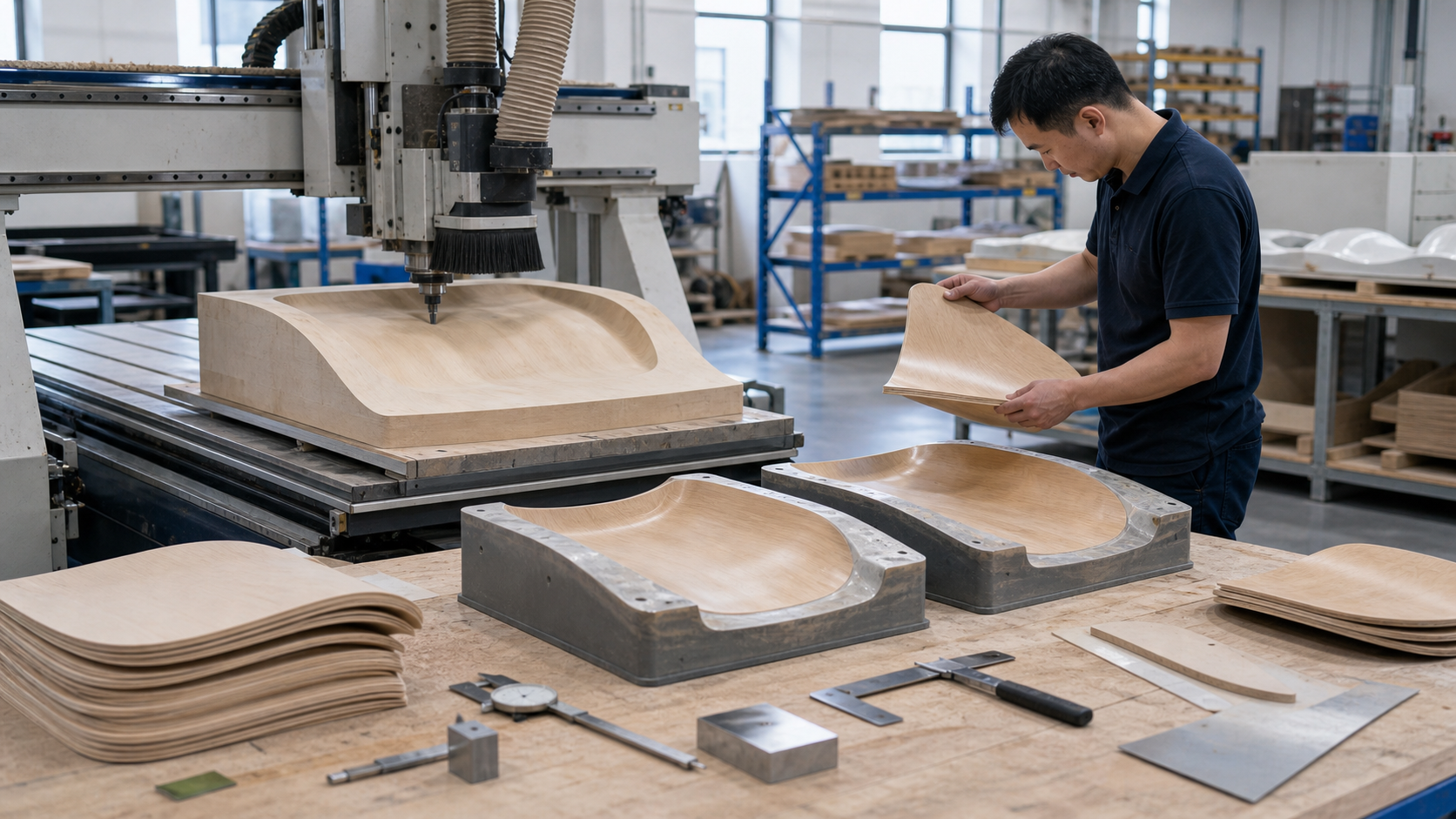
In furniture production, a few millimeters can matter. A chair back that looks acceptable on a table may become a problem when it is mounted on a frame. The curve may pull the frame out of alignment, the screw holes may not meet the bracket, or the seat angle may feel different from the approved design. When this happens during mass production, the buyer pays for the mistake through rework, delays and inconsistent finished chairs.
Mold development helps reduce these risks because it controls the geometry of the component from the start. A supplier should check whether the curve supports comfort, whether the edge shape allows trimming and sanding, and whether the hole positions can be repeated after pressing. For high-volume chair production, the goal is not only to make one attractive sample. The goal is to make thousands of parts that behave like the approved sample.
Curved plywood and molded plywood components are made through layers, pressure, heat, adhesive systems, molds and finishing steps. Each step influences the final part. A stable mold gives the production team a controlled starting point. Without that control, even good veneer material may produce inconsistent shape, thickness or edge quality.
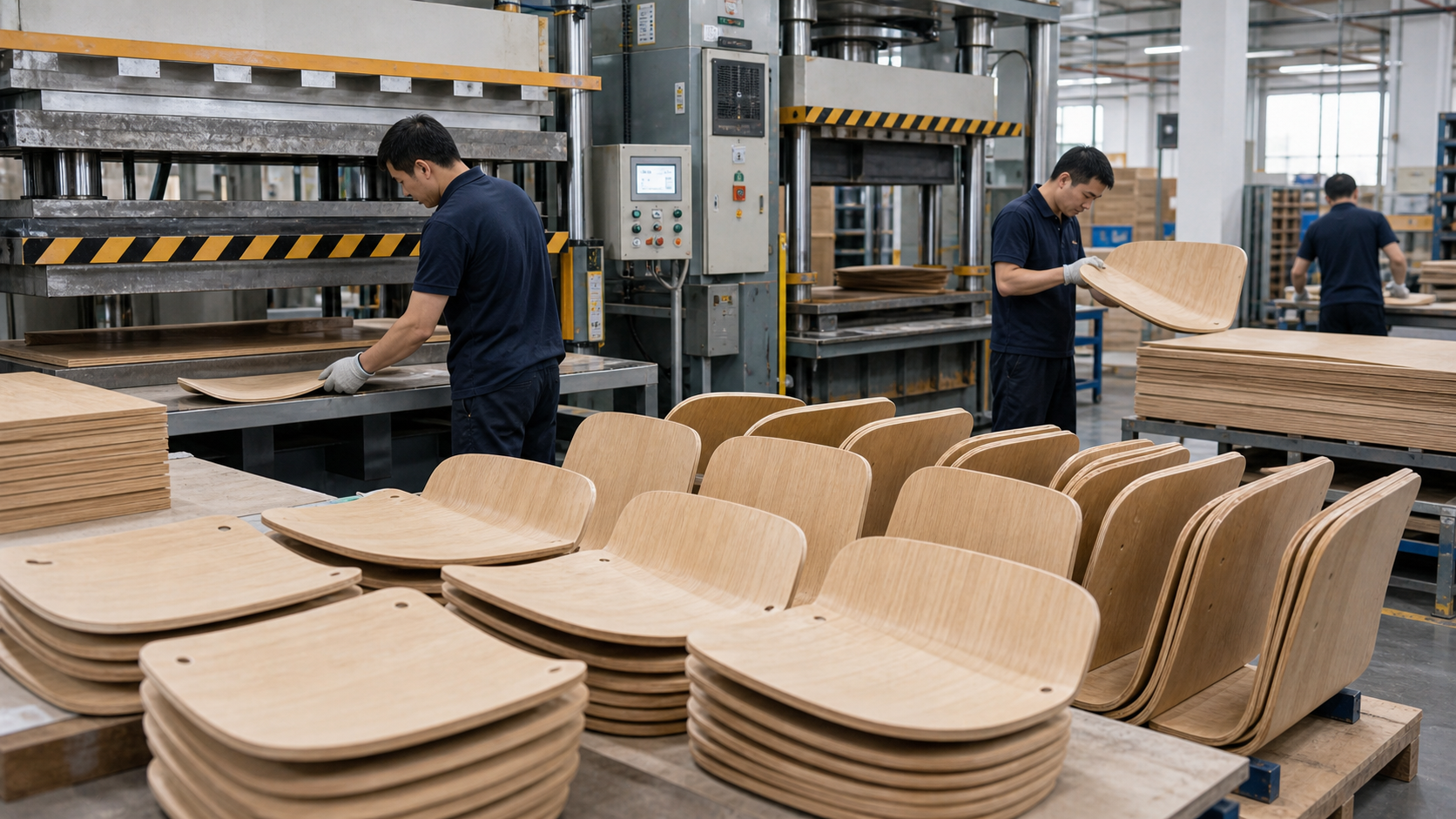
For furniture factories, this matters because chair components are not sold as isolated boards. They must move into the buyer's production line. A dining chair seat must match the frame, the packing plan and the assembly method. A backrest must support the intended sitting posture. An office chair plywood part may need accurate holes and strong edges for hardware. A lounge chair shell may require a deeper curve and more careful pressing. Mold capability connects these design requirements with the realities of production.
Before a buyer approves mold development, the team should confirm several details with the supplier. First, the drawing or sample should be clear enough to define the target shape. Second, the supplier should know the final application, not only the component name. Third, drilling positions and connection points should be discussed early, because they are difficult to correct after production begins. Fourth, surface and edge requirements should be agreed before the buyer compares samples. Finally, the buyer should confirm how the supplier records the approved sample for future repeat orders.
This does not mean every project needs complicated engineering paperwork. Many furniture component projects are practical and fast. But the basic information must be accurate. If a buyer sends only a general chair photo, the supplier may guess the curve. If the supplier guesses, the buyer may approve a sample that looks close but fails during assembly. Clear mold communication is one of the cheapest ways to reduce sourcing risk.
A sample should not be judged only by color, surface or first impression. Furniture factories should test whether the curved plywood part fits the actual chair frame, whether the screw holes line up, whether the sitting angle feels right, and whether the edge treatment matches the product design. If the sample is for a new chair model, it is helpful to assemble the prototype before confirming mass production.
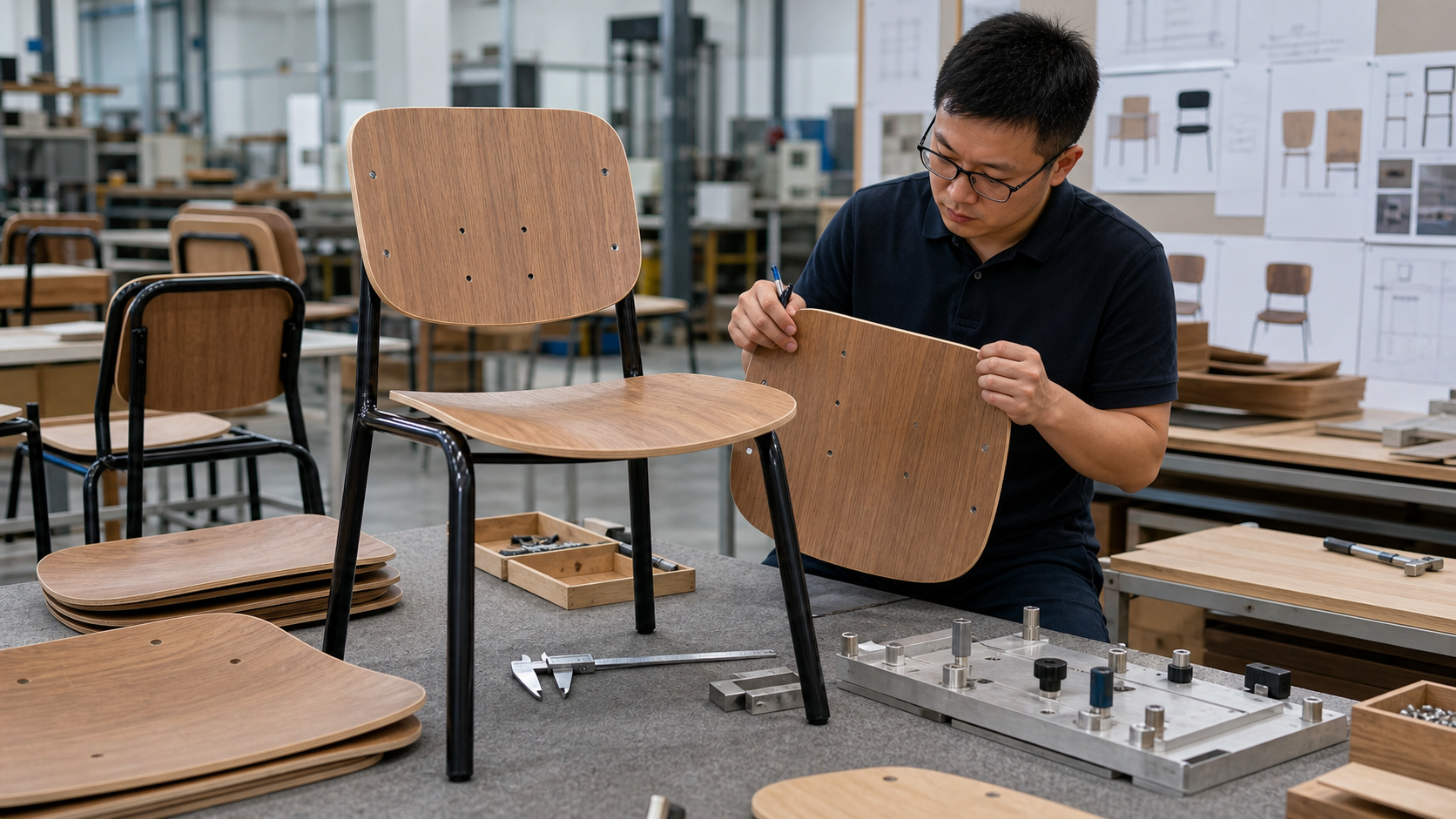
This is especially important for OEM and ODM projects. The buyer may have a target design, but the supplier understands the pressing process. When both sides review the sample together, they can decide whether the mold needs adjustment before the order moves forward. A small correction at the sample stage is usually much cheaper than a large correction after hundreds or thousands of parts have been produced.
Some buyers see mold development as an extra cost. In reality, a reliable mold often protects the total project cost. If the mold is accurate, production becomes more predictable. Workers spend less time adjusting parts. Inspection becomes easier. Packing can be planned more consistently. Repeat orders can use the same technical reference. The buyer reduces hidden costs that do not appear in the first quotation.
Delivery stability is also connected to mold capability. A supplier with organized mold records and sample control can restart production more efficiently when the buyer reorders. This matters for furniture factories that sell the same chair model over multiple seasons. If the supplier cannot keep the mold, drawing and approved sample aligned, every reorder may feel like a new project.
After the mold is approved and mass production begins, packaging becomes another place where component design matters. Curved plywood chair seats and backrests need protection against edge damage, surface scratches, pressure marks and movement during transport. Deeper curves, thinner edges or finished surfaces may require more careful stacking and foam separation.
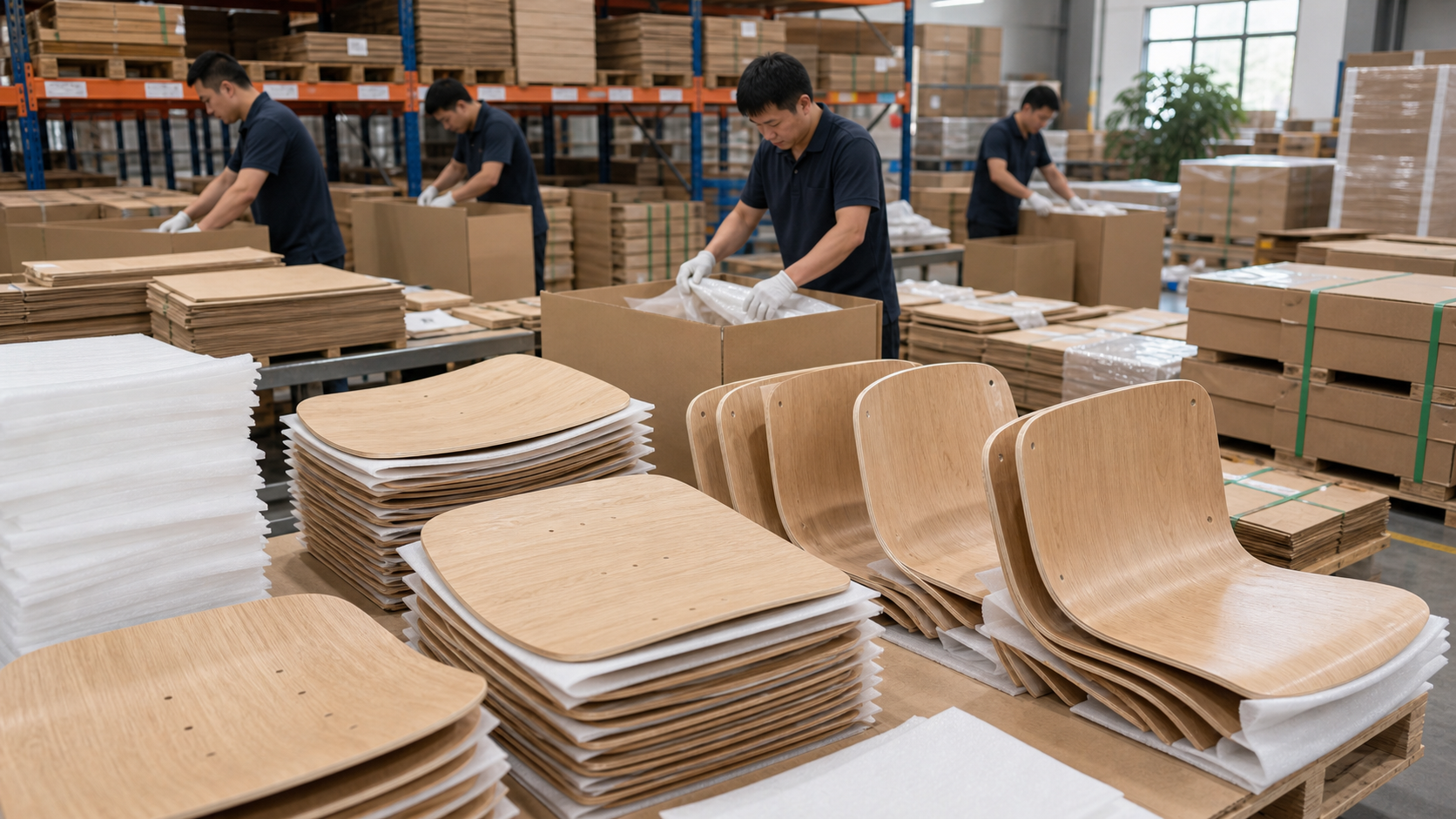
For overseas furniture factories, good packing is not only about appearance when the carton is opened. It affects production planning. If components arrive scratched or warped, the buyer may need sorting, repair or replacement. A supplier that understands the component shape can design packing that supports export delivery and protects the value created by the mold.
For furniture manufacturers looking for a long-term curved plywood component partner, production experience, mold capability, stable output and communication efficiency are more important than a simple unit price comparison. This is where Dali Wood focuses its work.
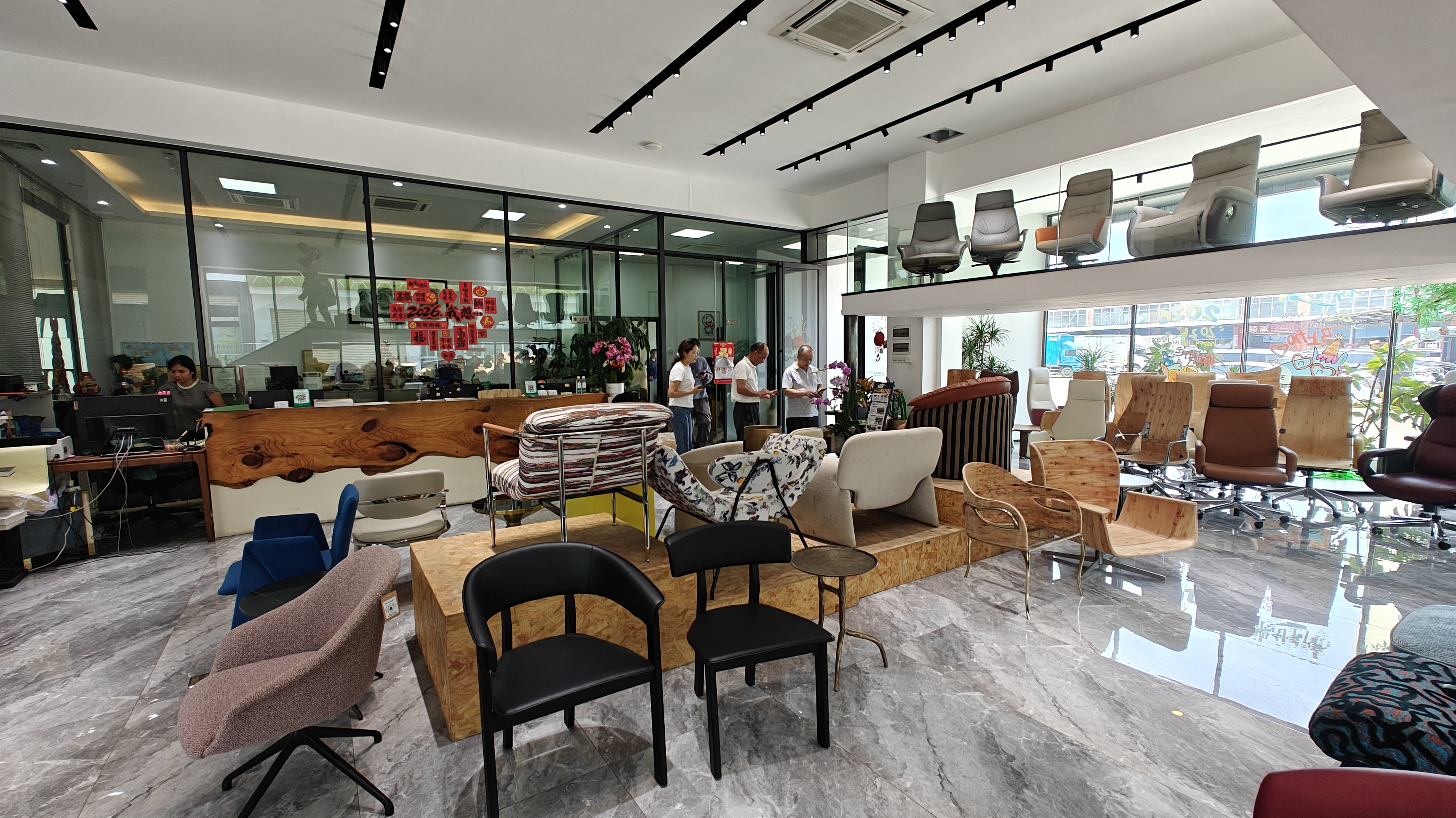
Dali Wood, also known as Dali Plywood, was established in 2001 and is located in Rongxian Economic Development Zone, Yulin, Guangxi, China. The company develops and produces curved plywood and molded plywood furniture components for dining chairs, lounge chairs, office chairs, swivel chairs, conference chairs and auditorium chairs. It has four factories with more than 50,000 square meters of total production area and more than 200 workers, together with a Foshan showroom and marketing center in Longjiang.
When buyers send drawings, samples, target dimensions or application photos, Dali Wood can discuss the component shape, mold direction, sample confirmation process, drilling positions, surface requirements and packing method. Available company documents, factory photos and certificate materials can also be provided according to buyer requirements. For custom chair component projects, the best results usually come from early technical communication and careful sample approval before mass production.
The mold controls the curve, shape, repeatability and assembly fit of the component. A weak mold can cause sample differences, drilling problems and mass production delays.
Drawings, dimensions, target thickness, curvature, drilling positions, frame connection method, surface expectations, application photos and estimated order quantity are all helpful.
Yes. Testing the sample on the real frame helps confirm sitting angle, hole alignment, comfort, edge shape and assembly efficiency before bulk production.
Sometimes similar designs can share a mold, but many custom chair parts need separate mold adjustment because curve, size, thickness and connection points differ.
It helps the supplier repeat the approved sample, control dimensions, reduce assembly problems, support repeat orders and keep production more predictable.
If your furniture factory is developing a dining chair, lounge chair, office chair or other product that needs custom curved plywood components, you can contact Dali Wood with your drawings, samples or application requirements. A practical mold and sample discussion can help your team move from design idea to stable mass production with fewer avoidable risks.