


 Jun 20, 2026
 dali plywood
 337
337
A furniture factory can approve the right curve, drilling pattern and surface finish, yet still receive parts that slow production. The cause may not be pressing or machining. It may be packaging. A rubbed edge, pressure mark or shifted pallet can turn a usable curved plywood chair component into a sorting problem before it reaches the assembly line.
For overseas procurement teams, packaging is therefore part of the component specification. It needs to protect irregular shapes through warehouse handling, long-distance transport, container humidity and final unloading without making unpacking inefficient. The best solution is not simply more material. It is a packaging system designed around the part, route, order quantity and buyer's receiving process.

Flat boards are comparatively simple to stack. Curved seats, backrests and shells have changing contact points, projecting edges and surfaces that can rub when nested. A pack that looks stable from the outside may transfer pressure into a small area inside the carton. Repeated vibration can then create scratches, compression marks or edge damage.
The risk changes with the product. A compact dining-chair seat may nest efficiently but place load on its front edge. A tall backrest can flex if the carton has too much empty space. A deep lounge-chair shell occupies more volume and may need supports that prevent one shell from pressing into the next. Finished surfaces also need different separation from unfinished parts that will later be upholstered.
Before quotation or sample approval, buyers should tell the supplier whether the parts are visible, upholstered, drilled, fitted with inserts or delivered as unfinished blanks. They should also share expected carton-weight limits, pallet requirements and any warehouse handling restrictions. These details influence both protection and logistics cost.
Nesting reduces shipment volume, but uncontrolled nesting can concentrate pressure. Parts should sit in a repeatable orientation with separators at defined contact points. The separator does not need to cover every square centimeter. It needs to stop finished faces from rubbing and keep hard edges or fittings from touching adjacent components.
Common protective elements include paper sheets, foam film, corrugated pads, honeycomb dividers and shaped blocks. The suitable choice depends on finish sensitivity, curve depth, product weight and transport route. Dense protection in the wrong place can still allow movement elsewhere, while excessive soft material can compress and loosen during transit.
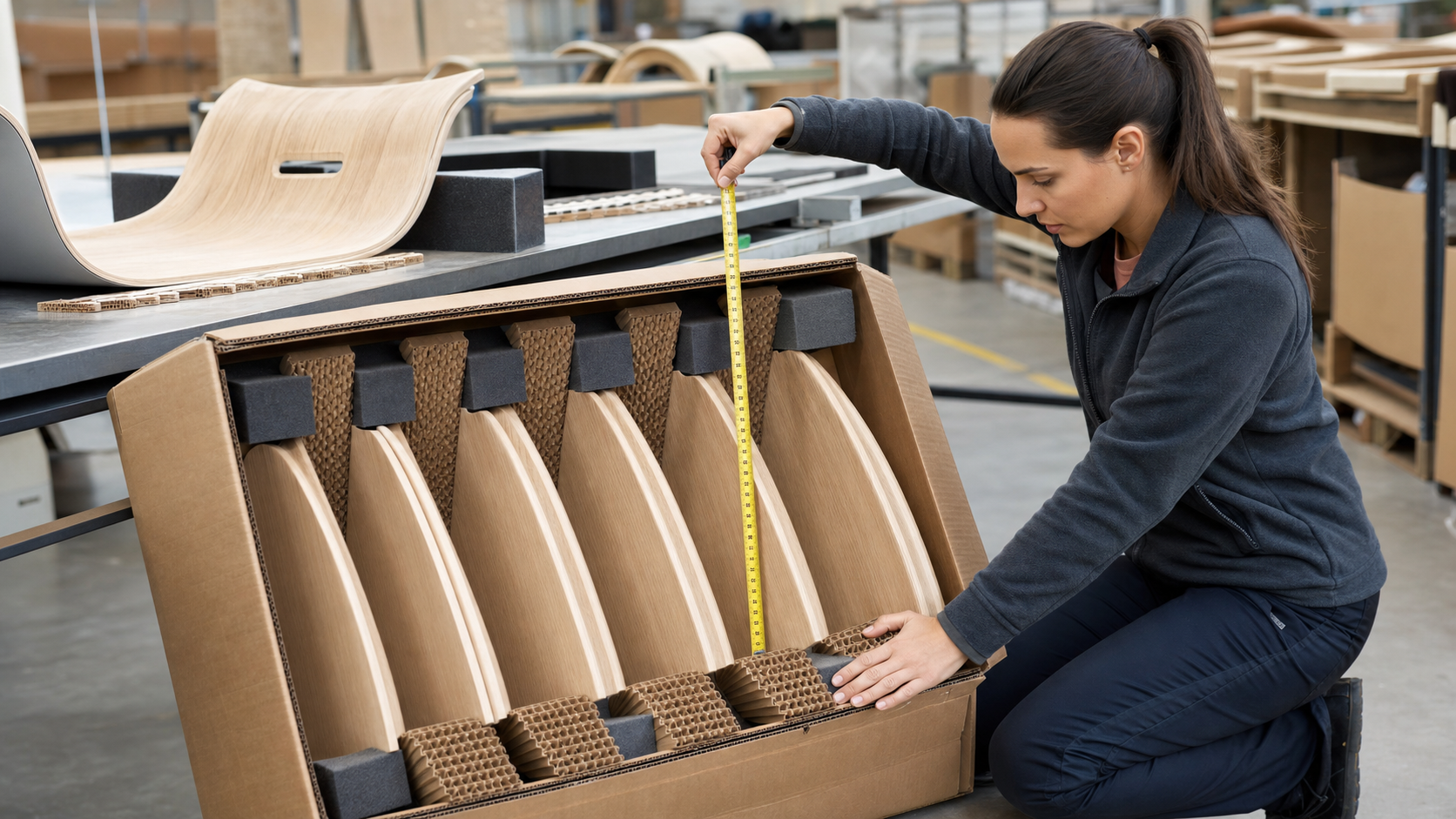
A practical packing trial should answer four questions: Do the parts settle when the carton is moved? Are projecting corners isolated? Does the bottom component carry too much load? Can operators unpack the parts without scraping them against carton staples or rough edges? Photos of the open pack, layer sequence and closed carton help purchasing and quality teams approve the method before bulk shipment.
A plastic liner or barrier bag cannot correct parts that enter packing with unsuitable moisture conditions. Components should first be dry, clean and at a stable condition appropriate for packing. If warm parts are enclosed too quickly or packaging is exposed to large temperature changes, condensation risk can increase inside a closed pack.
For routes where humidity is a concern, the packing design may include a liner, moisture barrier material, correctly selected desiccant and an indicator used as a monitoring aid. These measures must be sized for the package and route; simply adding an unknown number of sachets is not a reliable specification. Desiccant must also be secured so it cannot mark the product.
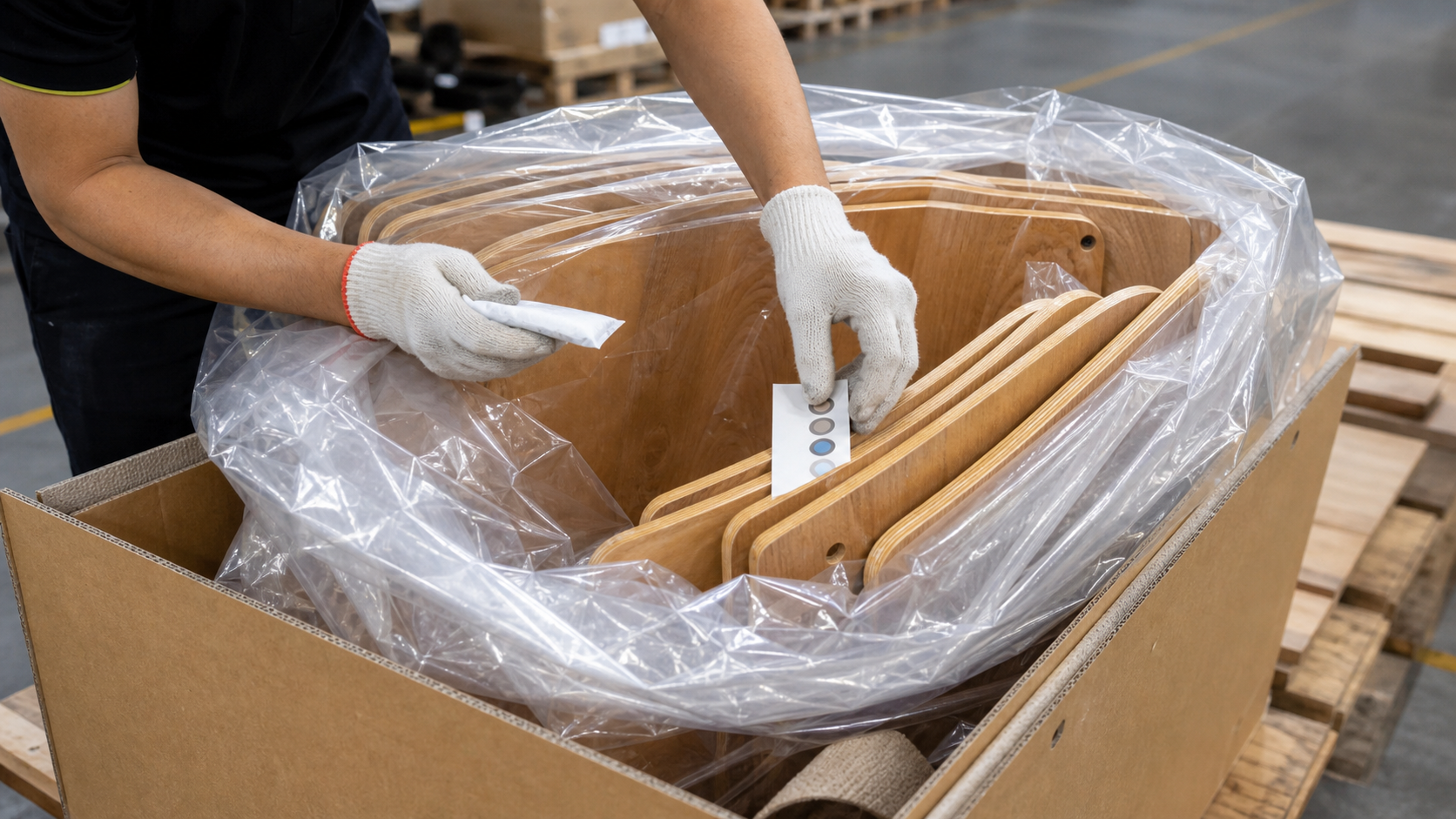
Buyers should ask the supplier to define when parts are packed, how cartons are stored before loading and whether pallets may wait in an exposed area. Moisture protection is a chain of controls, not one accessory. The goal is to reduce avoidable exposure while ensuring the packaging itself does not trap a preventable problem.
A carton is part of a stacked system. Its board grade, dimensions, closure and internal supports must carry the loads expected during handling. If cartons overhang the pallet, their edges lose support. If the pallet footprint is poorly filled, vertical compression may be uneven. If cartons are too heavy, unloading can become unsafe or inefficient for the buyer.
For curved plywood components, internal voids deserve special attention. An outer carton may appear square and strong while the nested parts leave large unsupported spaces. Corrugated or honeycomb structures can transfer load around the product, but their placement should follow the actual nesting pattern. Corner boards and straps can stabilize a pallet, provided they do not crush carton edges or press directly against a sensitive product area.
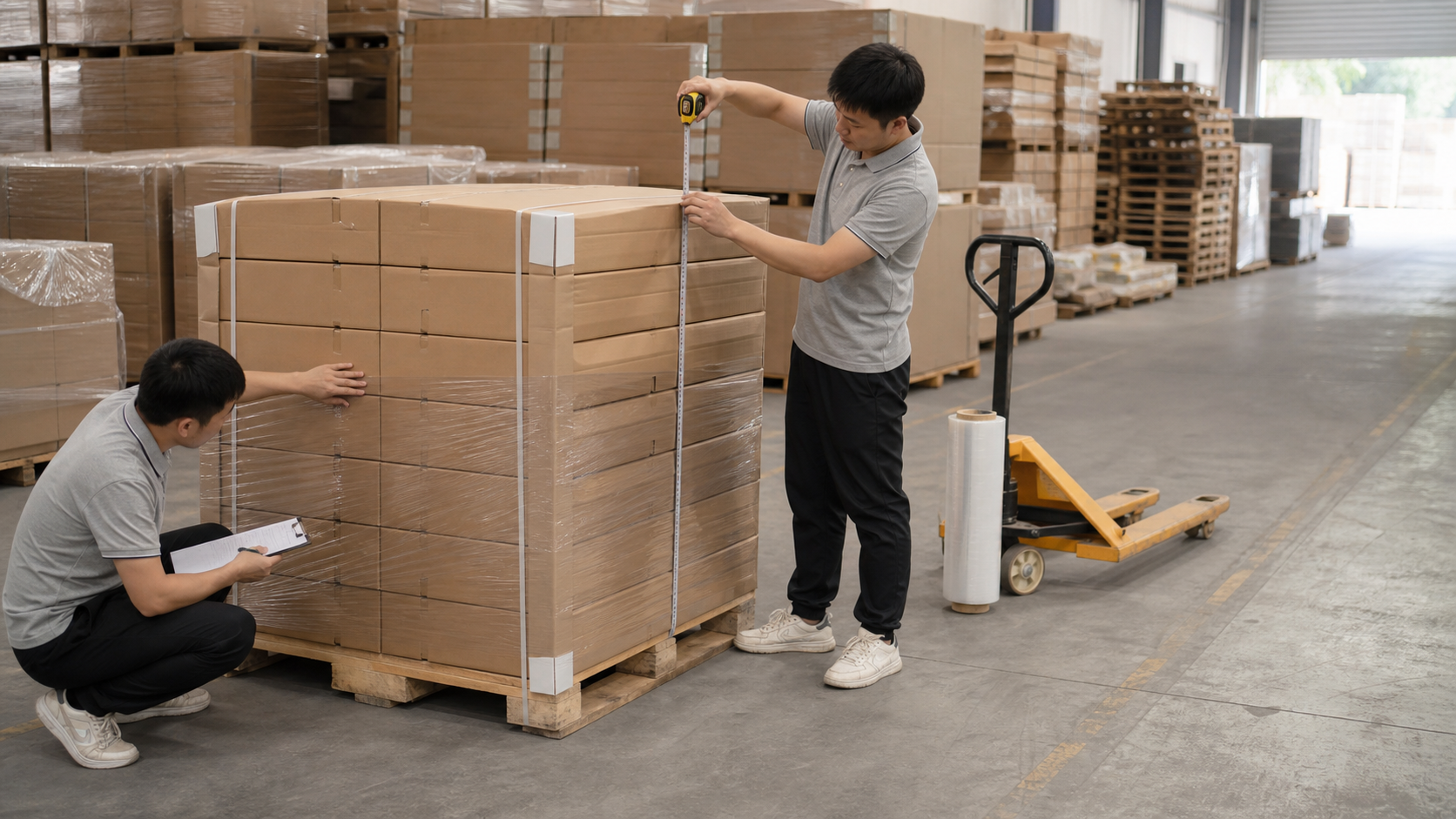
Procurement teams should confirm carton dimensions, pieces per carton, gross weight, pallet footprint and planned stack height. These numbers affect container utilization, handling cost and damage risk together. A change in component thickness or finish may also require a packing review rather than automatic reuse of the previous carton.
Packaging approval should be based on observation, not appearance alone. A supplier can conduct handling simulations appropriate to the order: lifting and setting down cartons, moving the pallet, checking for internal movement and opening a trial pack after the exercise. The purpose is to find weak points before the shipment, not to claim compliance with a formal test standard unless that test has actually been specified and documented.
After the trial, inspect representative parts at the top, middle and bottom of the carton. Look at corners, drilled areas, coated faces and the locations where separators touched the wood. Record any movement of the internal stack. If a change is required, update the approved packing reference with photos and dimensions so production operators do not rely on memory.
Protection is only half of a useful packaging design. The other half is efficient receiving. A carton that requires excessive cutting can expose the parts to blades. Mixed orientations increase handling time. Unclear quantities force the receiving team to count repeatedly. Packaging should allow operators to open, inspect and move components to assembly with predictable steps.
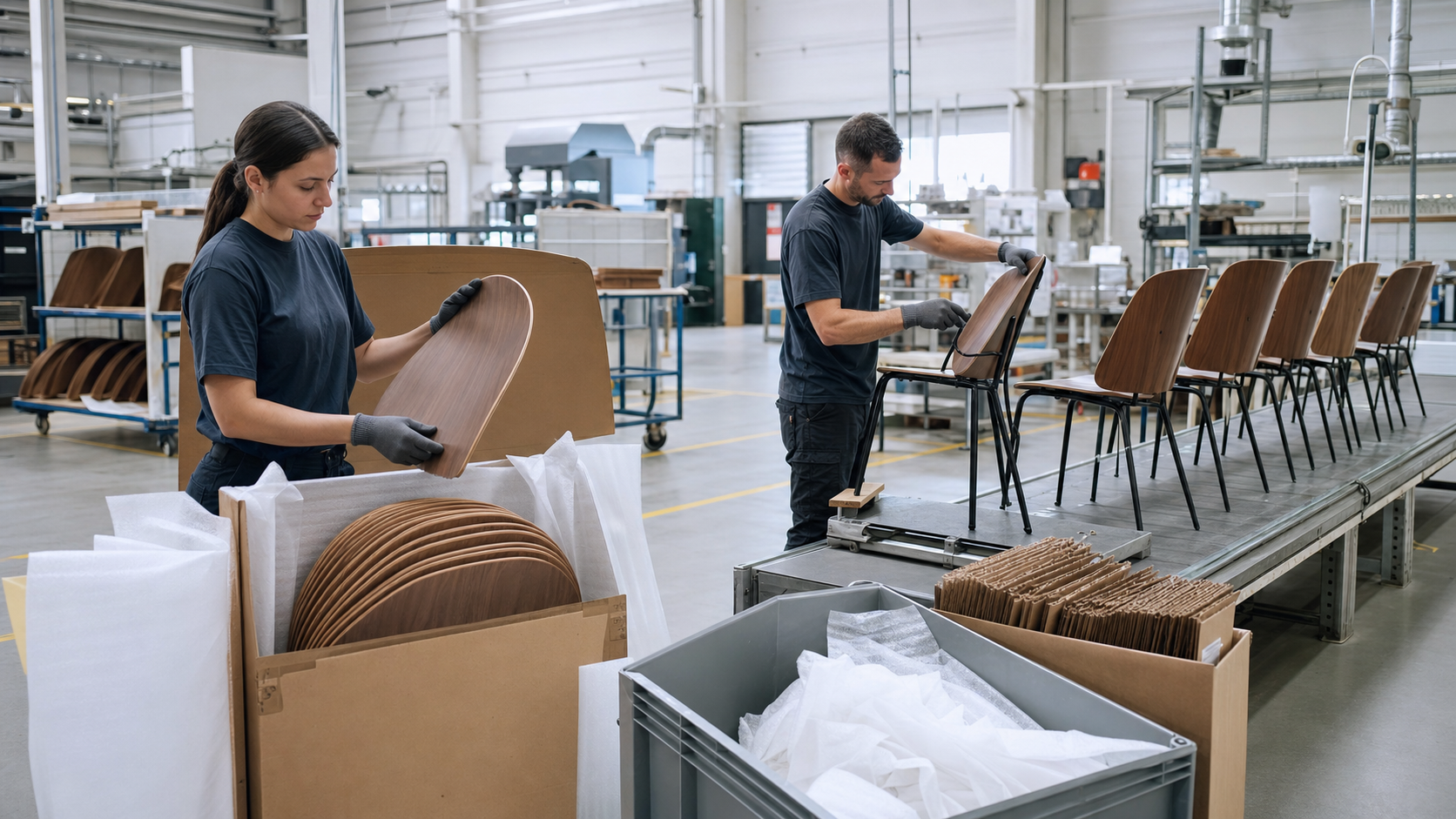
Furniture factories can give suppliers practical feedback after the first shipment: where damage appeared, how long unpacking took, whether separators were reusable or recyclable under local systems, and whether carton weights suited the receiving team. This information helps refine the next order. Packaging should be treated as a controlled process that can improve over repeat shipments.
Confirm the approved component, finish and drilling version used for the packing trial.
Review nesting direction, quantity per carton and protected contact points.
Specify acceptable carton weight and pallet dimensions for the destination warehouse.
Ask for photos of the open carton, each protection layer and the finished pallet.
Confirm moisture-control measures and storage conditions before loading.
Check that carton closures, straps and pallet edges cannot touch visible product surfaces.
Record the approved method so repeat orders use the same reference.
This checklist does not replace incoming inspection. It makes that inspection more meaningful by connecting any issue to a defined packing method. When a buyer and supplier use the same reference, corrective action becomes faster and more specific.
For furniture manufacturers sourcing custom curved plywood components, packing decisions are best discussed alongside drawings, samples, finish expectations and assembly requirements. Dali Wood, also known as Rongxian Dali Wood Industry Co., Ltd. (容县达利木业有限公司), was established in 2001 in Rongxian Economic Development Zone, Yulin, Guangxi, China. The company produces curved and molded plywood parts for dining chairs, lounge chairs, office chairs, swivel chairs, conference chairs and auditorium seating.
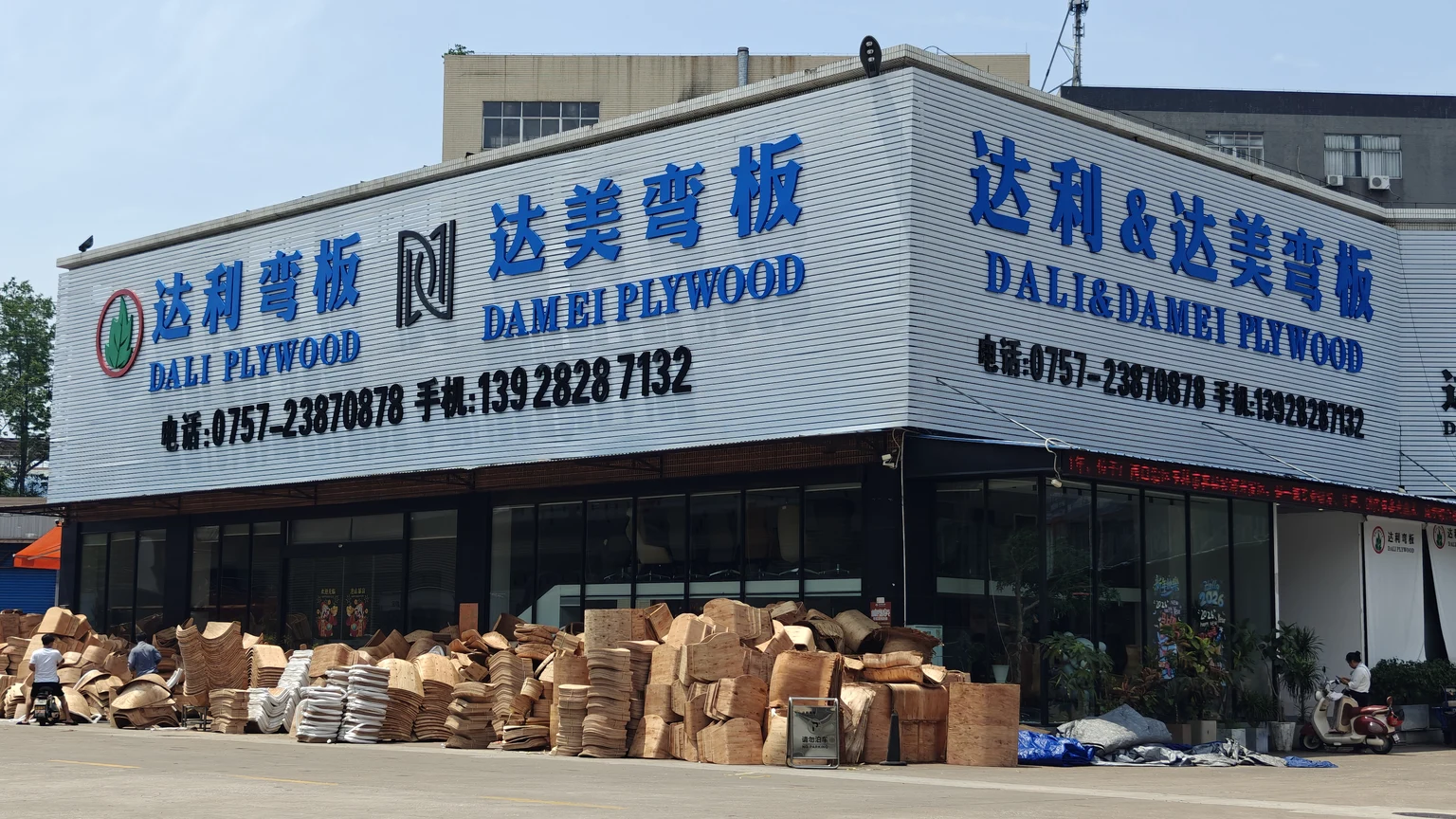
Dali Wood operates four factories with more than 50,000 square meters of total production area and more than 200 workers, together with a showroom and marketing center in Longjiang, Foshan. For a new project, buyers can provide drawings, samples, dimensions, finish requirements, expected order quantities and destination handling needs for technical discussion. Packing can then be reviewed as part of sample-to-production planning rather than left until the goods are ready to ship.
Available company and certification documents can be provided according to relevant buyer requirements, but documents do not replace sample confirmation, packing approval or incoming checks. A dependable sourcing program is built on clear references and practical communication across production, inspection and logistics.
No. Nesting can save volume, but it must not create damaging pressure or surface contact. Deep shells, visible finishes or fitted hardware may require a different orientation or more defined supports.
No. Parts should be in a suitable condition before packing, and the full system must consider storage, route, barrier material and any properly selected moisture-control aids.
At minimum, approve pieces per carton, nesting direction, separators, carton dimensions, gross weight, pallet footprint, stack height and photos showing the layer sequence.
Keep an approved packing reference, inspect the first shipment by carton position, share specific evidence quickly and update the reference whenever the product or finish changes.
If your factory is developing curved plywood seats, backrests or chair shells, send Dali Wood the component drawing or sample together with finish, quantity and destination-handling requirements. An early discussion can align the part, carton and pallet plan before mass production begins.