


 Jun 25, 2026
 dali plywood
 375
375
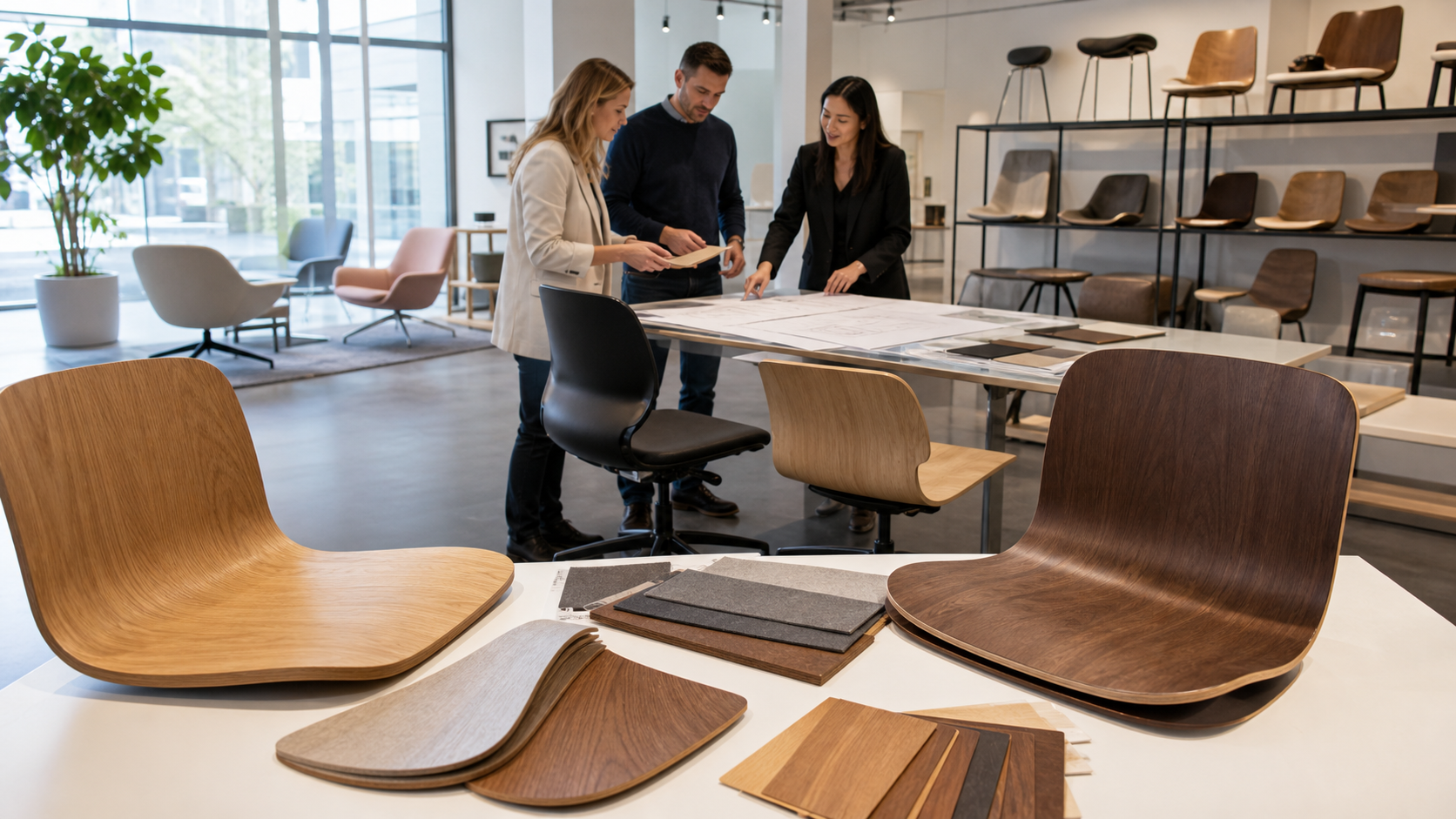
Furniture buyers entered the final week of June 2026 with two pressures moving at the same time. On the consumer side, large US retailers are pushing early Fourth of July furniture promotions, while furniture media continues to report resilience in selected outdoor categories and more customized upholstery demand. On the supply side, European headlines show a mixed German furniture market, softer demand and continued dependence on imported product.
That combination matters for every brand planning chairs, lounge seating, office seating or contract furniture for the second half of 2026. Buyers need fresh-looking products for July market appointments and autumn launches, but they also need controlled cost, shorter development cycles and fewer inventory mistakes. This is exactly where custom bent plywood components become more than a material choice. They become a practical sourcing strategy.
Recent Google News results around the furniture industry show a market that is active but selective. Furniture Today has covered outdoor furniture resilience and manufacturers adapting products to unique demand. Business of Home has reported broader home retail positioning, while Furniture World and Home Furnishings Business continue to track manufacturer moves, visualization tools and event activity. Forbes has also highlighted early holiday furniture discounts, a reminder that price comparison remains intense for US consumers.
Europe is sending a different but related signal. Interior Daily reported on 24 June 2026 that Germany's furniture market is showing mixed signals as demand softens and imports dominate. For importers and brands, that does not simply mean buying less. It means choosing components that can justify a product story, ship reliably, pass documentation review and be adapted without starting every model from zero.
The next month adds urgency. Manchester Furniture Show lists 5-6 July 2026 show dates, and Las Vegas Market lists its Summer Market for 26-30 July 2026. These are not abstract calendar items. They are decision windows where buyers compare curves, finishes, comfort, lead time, packaging and supplier confidence.
Google autocomplete around furniture trends 2026 expands toward furniture design trends 2026, furniture color trends 2026, outdoor furniture trends 2026 and wood furniture trends 2026. This shows that buyers and designers are still searching for broad direction before they settle on a product.
More commercial searches become very specific. Autocomplete for molded plywood chair includes molded plywood chair seats, molded plywood chair parts, molded plywood chair back and molded plywood furniture. Searches around bent plywood chair include bent plywood chair seat, bent plywood chair vintage, bent ply chair and bend plywood chair. Searches around custom bent plywood also connect directly to custom curved plywood.
The SEO opportunity is clear. A strong Google News article should connect discovery keywords such as furniture trends 2026 and curved furniture design with purchase-intent phrases such as bent plywood chair, curved plywood chair back, molded plywood chair components, office chair plywood shell and custom curved plywood manufacturer.
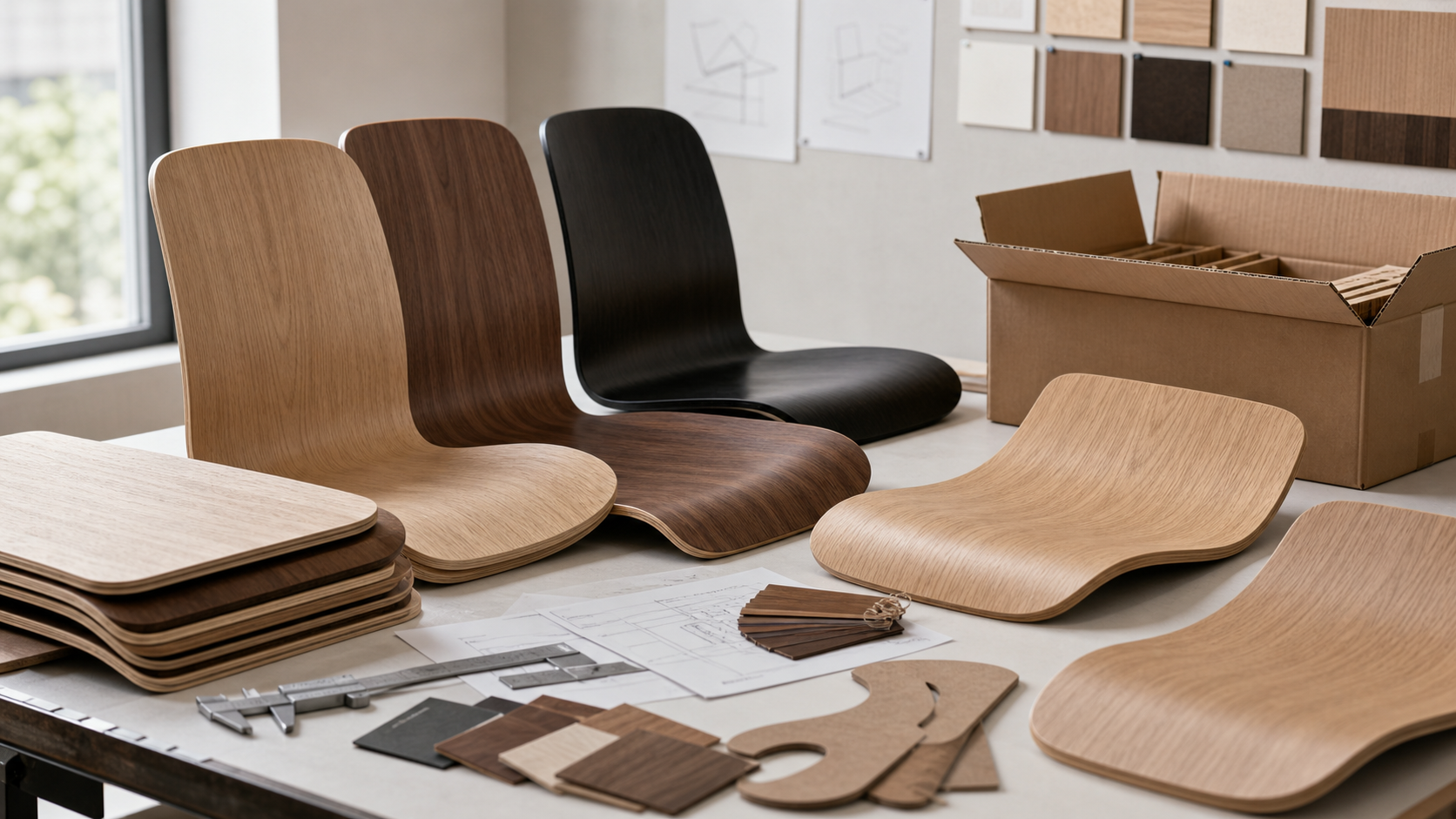
Curved furniture remains attractive because it feels softer, more human and more premium than heavy rectangular forms. But for manufacturers, the curve must also be repeatable. A beautiful sample is not enough if the second batch changes radius, the holes drift, the edge cannot be finished cleanly or the part does not match the frame during assembly.
A controlled bent plywood platform solves that problem. One approved curve can support several products by changing veneer, finish, upholstery, base type and mounting detail. A dining chair can use a natural wood shell, a hospitality chair can use a stained finish, and an office chair project can use a plywood shell prepared for upholstery and mechanism connection. The customer sees choice; the factory keeps the core geometry under control.
This is useful for brands that must move quickly after trade shows. Instead of opening five unrelated development projects, a buyer can approve one or two curved plywood platforms and then build several visual stories around them.
Discount-heavy retail periods make inventory risk more visible. If a chair is produced too early in the wrong finish, margin disappears. If a collection launches too late, the buyer misses the season. Small-batch development gives sourcing teams a better path: approve the geometry, test assembly, photograph the sample, show it to buyers, collect feedback and scale the best version.
For custom bent plywood components, small-batch planning should still be disciplined. The supplier needs the target chair category, expected thickness, veneer species, finish direction, frame interface, hardware position, packaging requirement and tolerance priorities. A molded plywood chair back for a dining chair is not engineered the same way as an office chair plywood shell or a lounge chair plywood seat.
When the brief is clear, a manufacturer can evaluate whether an existing mold is suitable, whether a new mold is needed and which details should be locked before production. This keeps custom development flexible without becoming chaotic.
European buyers are also watching wood documentation more carefully. The European Commission states that the EUDR application date is 30 December 2026 for large and medium operators, with 30 June 2027 for most micro and small operators. For furniture supply chains, this means wood origin, material records and supplier communication should be considered early in the project, not only after the order is ready to ship.
That does not replace product engineering. Certification files, test reports and traceability documents are strongest when they match a real production brief: the correct species, finish, glue, surface treatment, packing method and export destination. DALI's certificate materials in the factory file set, including FSC, SGS and EUDR-related documentation, support this buyer conversation, but each order still needs project-specific confirmation.
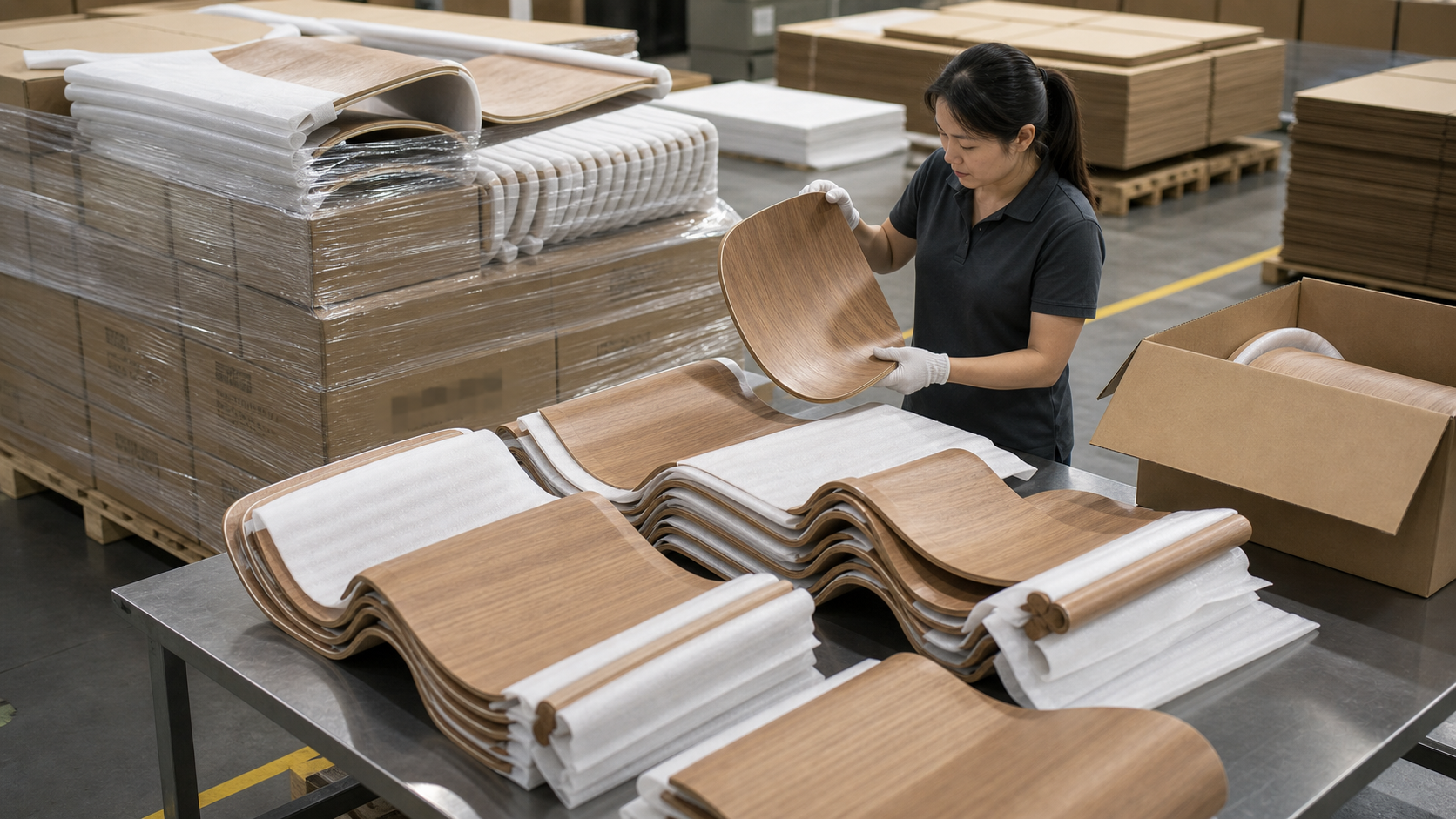
Curved plywood parts do not behave like flat panels inside a carton. A chair back has high points, visible veneer, drilled interfaces and edges that can mark another part if the stack is not controlled. This is why export packing is not a final afterthought; it is part of the product design.
Good packing for molded plywood chair components uses dividers, soft edge protection, nesting logic, moisture attention and stable pallet dimensions. For US and European buyers, this protects the visual surface and keeps assembly lines from losing time on sorting or rework.
DALI Wood Industry was founded in 2001 in Rongxian, Guangxi, China, and focuses on bent wood, molded plywood and curved plywood furniture components. The company supports office chairs, dining chairs, leisure chairs, swivel chairs, conference chairs, auditorium chairs and related furniture structures. It also has Foshan Shunde Longjiang marketing stores and showrooms for buyer communication and sample review.
For 2026 buyers, the practical value is not only production capacity. It is the ability to discuss a chair concept as a platform: curve, comfort, veneer, thickness, edge, drilling, frame fit, upholstery allowance, packing and repeat-order stability. Buyers can send drawings, 3D files, photos or physical samples, then review whether existing molds or new tooling are the right path.
That workflow connects today's furniture news to a real sourcing decision. When the market demands more choice, faster decisions and better documentation, custom bent plywood components help a furniture brand move from trend research to sample approval with less waste.
If your team is preparing a July market follow-up, an autumn seating launch or a private-label curved furniture range, send DALI the target application, drawings, photos, finish direction, expected quantity and packing requirements. DALI can review the structure and suggest a realistic development route for bent plywood chair parts, molded plywood shells and custom curved plywood components.
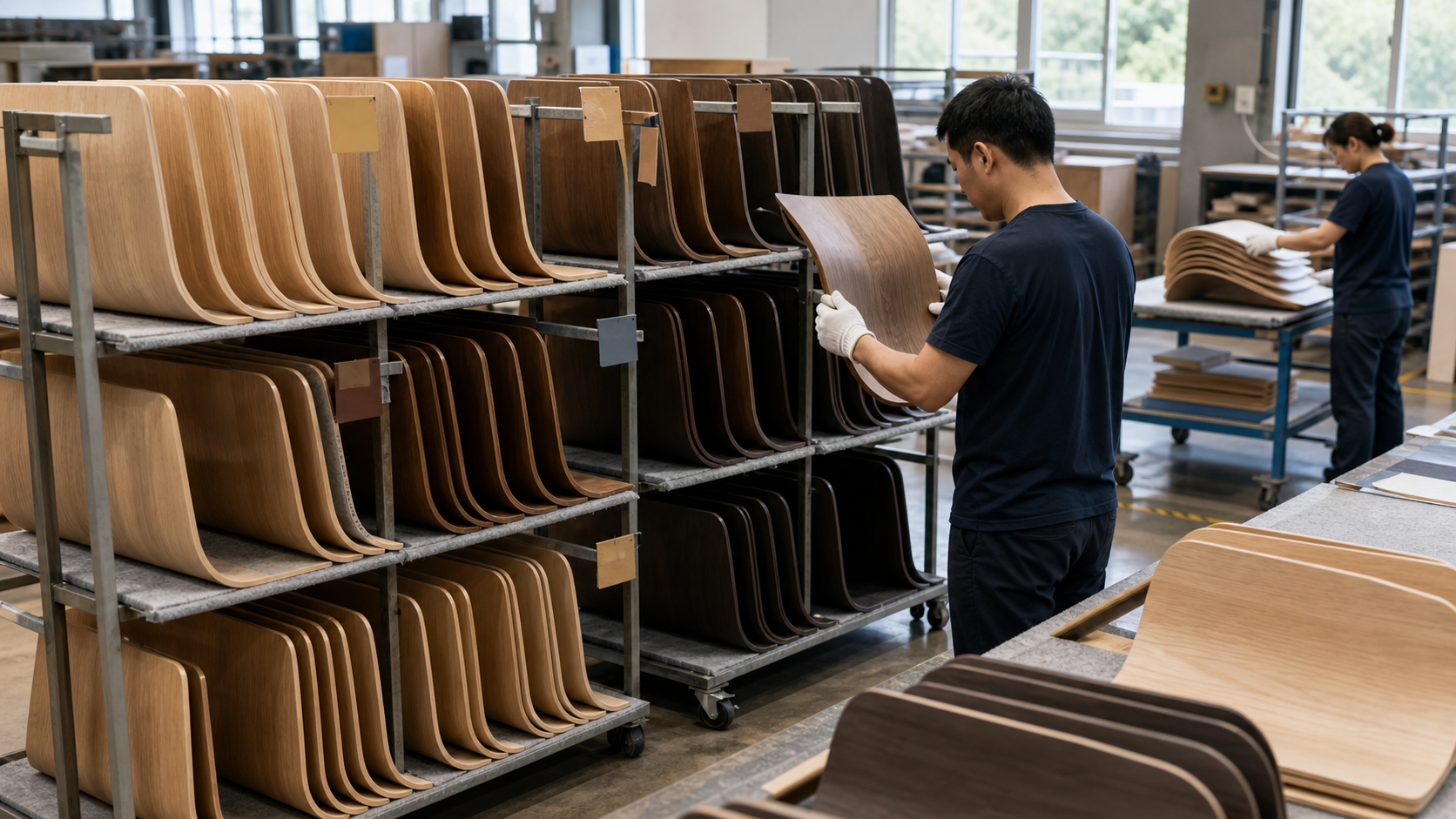
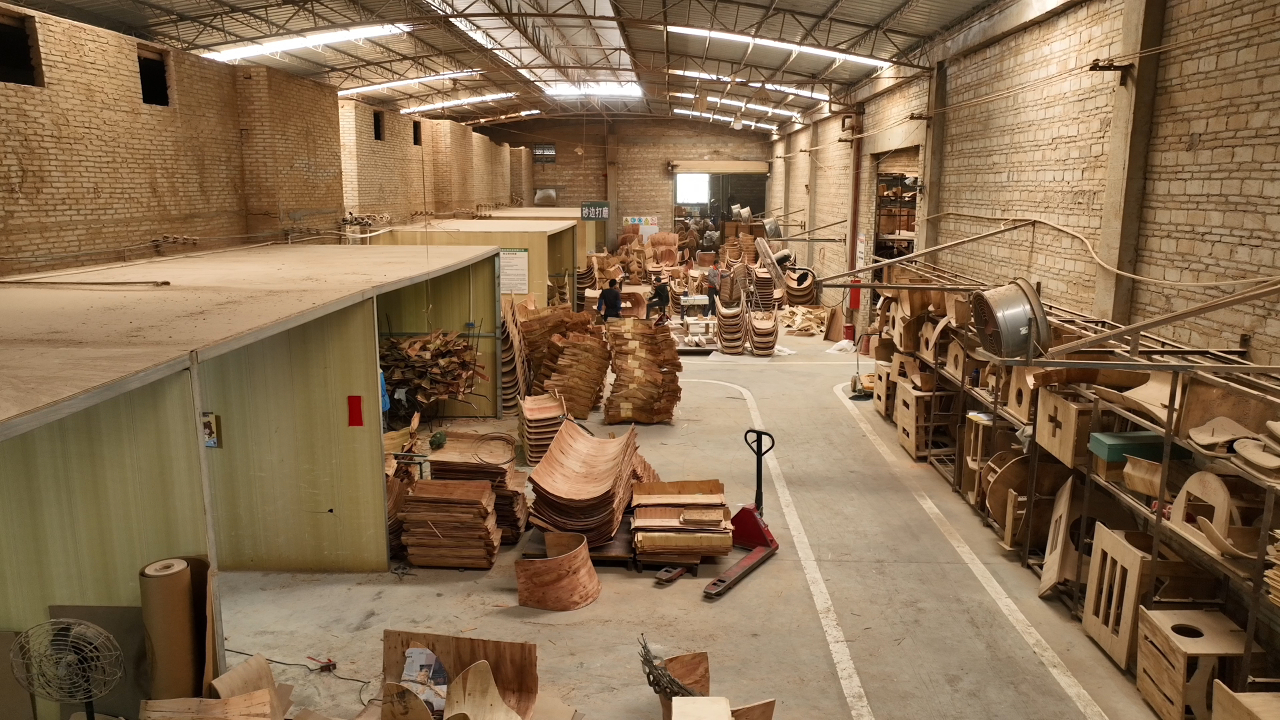
The final two images below are real DALI Wood factory photographs. They show the company's bent plywood component workshop and the larger factory site, connecting the market story back to actual production capability.

This article uses Google News and Google autocomplete research captured on 25 June 2026, including current furniture industry headlines, European market coverage, July 2026 show schedules from Manchester Furniture Show and Las Vegas Market, and European Commission EUDR information.