


 Jul 10, 2026
 dali plywood
 317
317
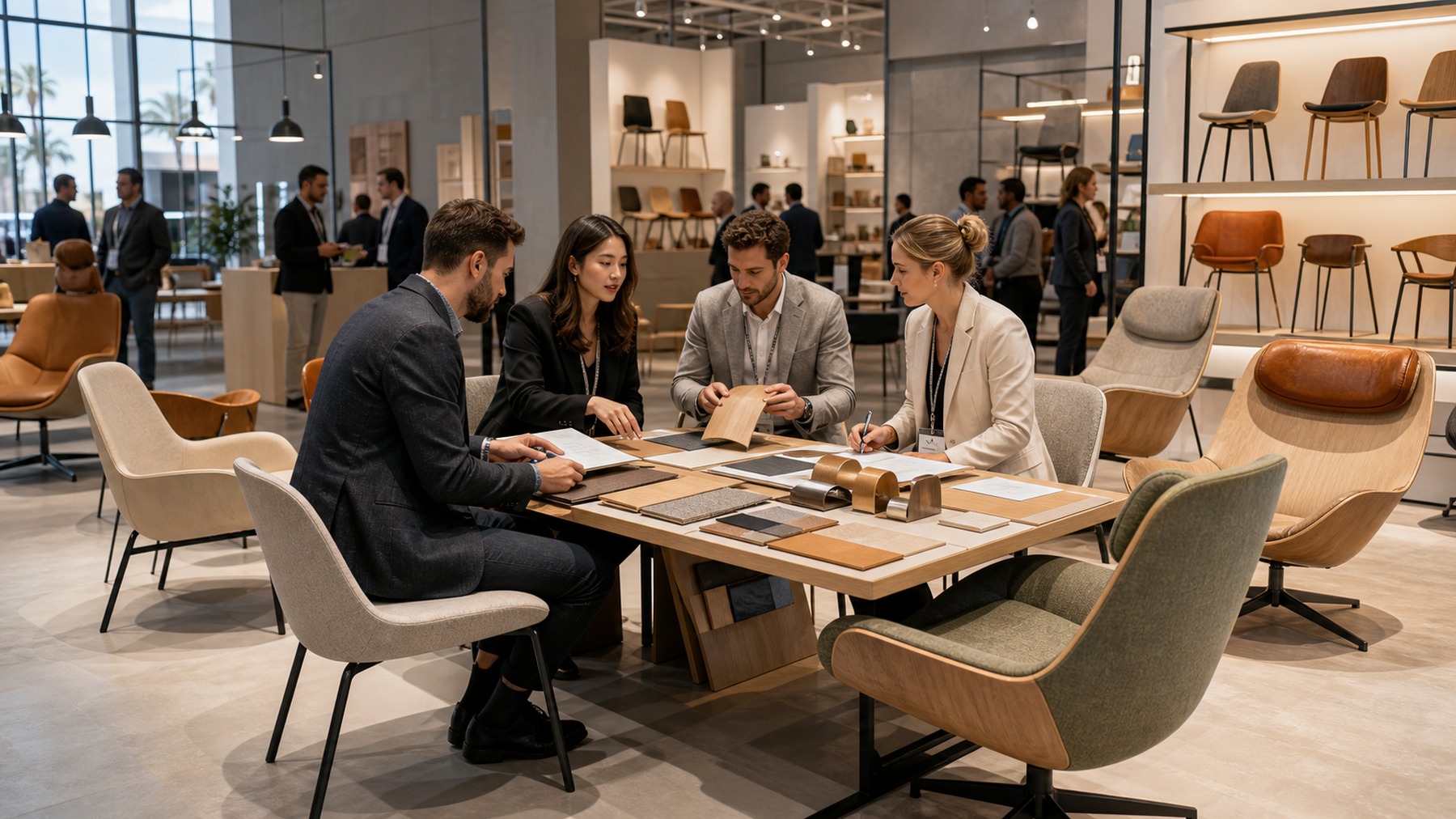
July is an important planning month for furniture buyers. Las Vegas Market lists its Summer Market for July 26-30, 2026, while High Point Market already shows its Fall 2026 dates for October 17-21 and confirms that the event is open to the trade only. For chair brands, distributors and OEM buyers, this means the next few months are not only about seeing new products. They are about turning market ideas into samples that can be quoted, tested, packed and repeated.
NeoCon 2026 also keeps commercial interiors in the conversation, with the Best of NeoCon winners showing how office, workplace and contract furniture categories are still driven by function, materials and user comfort. For buyers developing lounge chairs, dining chairs, office chairs and training chairs, the practical question is simple: can a new design become a manufacturable molded plywood chair sample without wasting time and tooling cost?
Furniture markets are full of good-looking chairs. Buyers see warmer wood tones, softer curves, lighter frames, more compact restaurant chairs, more flexible workplace chairs and lounge chairs that mix wood shells with upholstery. But after the fair, the product team has to answer harder questions. What is the right seat angle? Can the backrest curve be pressed consistently? How will the metal frame connect? Can the product hit the target price? Can the supplier repeat the same shape in the second and third order?
This is where bent plywood and molded plywood become practical. A chair does not need an exaggerated curve to look modern. In many successful seating programs, the useful curve is controlled: a comfortable backrest, a stable seat shell, a clean edge radius and a structure that can be drilled, assembled and packed without risk.
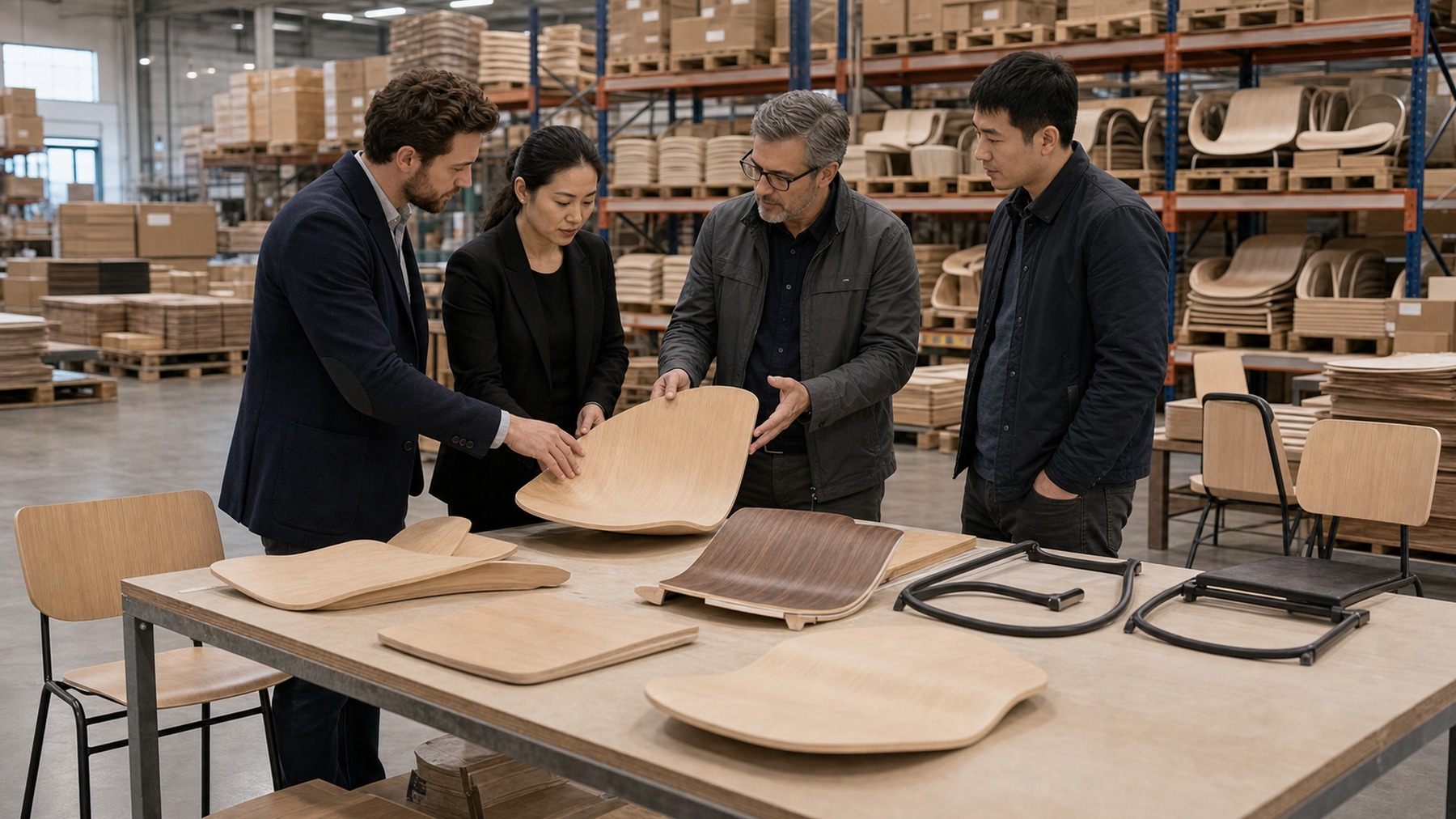
For custom chair projects, a buyer should review real components as early as possible. A warehouse sample discussion can show whether the plywood curve is realistic, whether the shell fits the frame, whether the surface grain direction looks right and whether the packing method can protect the product. It is much better to correct these details before mass production than after a full order is placed.
DALI Plywood supports this type of development work. Buyers can send a photo, drawing, 3D file, physical sample or market reference. The DALI team can review bend radius, veneer direction, plywood thickness, drilling position, edge finishing, upholstery allowance, frame matching and export packing. If the design needs a new mold, we can discuss a practical custom mold route instead of forcing the buyer into unnecessary cost.
Current sourcing conversations are especially active in lounge chairs, dining chairs, office chairs and training chairs. These categories appear in different buying channels, but they share the same development logic: the chair must look right, feel right and be repeatable in production.
Lounge chairs: hotel lobby chairs, waiting area chairs, leisure chairs and soft seating programs need visual warmth and controlled comfort.
Dining chairs: restaurants, cafes, hotels, canteens and retail buyers need stable structure, clean style and cost control.
Office chairs: workplace, visitor, meeting and task chair programs need mechanism fit, shell strength and ergonomic discussion.
Training chairs: education, meeting room and conference projects need light structure, reliable stacking or nesting logic and repeatable parts.
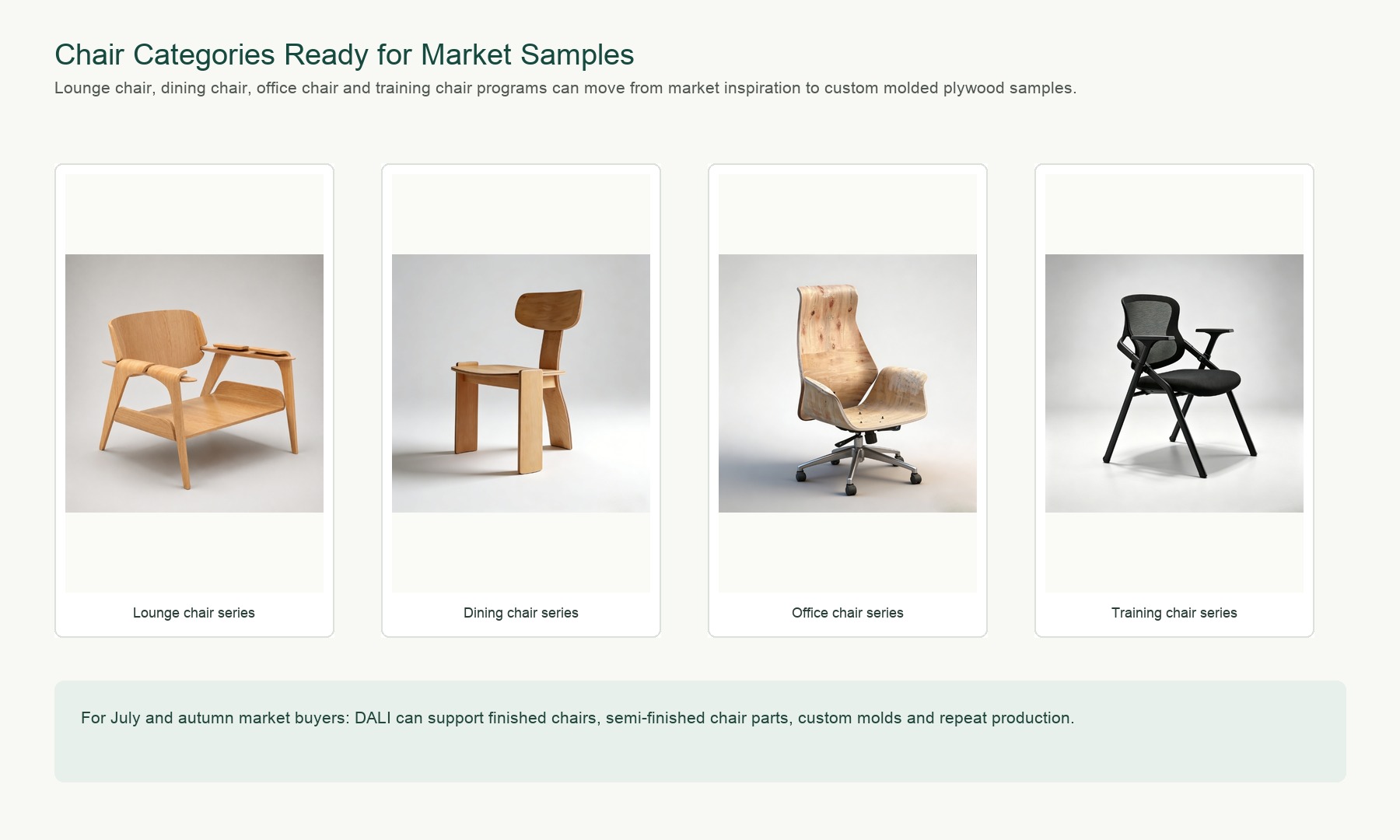
DALI can support finished chairs, semi-finished chair components and custom molded plywood parts across these categories. The cooperation can begin with one chair back, one plywood seat, one complete chair sample or one product family.
The first step is not mass production. The first step is feasibility. DALI reviews the target application, expected quantity, material direction, finish, frame plan and buyer's cost target. Then the team can suggest whether to use an existing mold, modify a similar structure or open a new custom mold.
This matters because development cost can decide whether a product reaches the market. A good manufacturer should help buyers avoid over-engineering. Sometimes the chair only needs a cleaner plywood radius, better drilling position or more efficient packing. Sometimes a dedicated mold is worth the investment because it creates a new product with stronger market value.
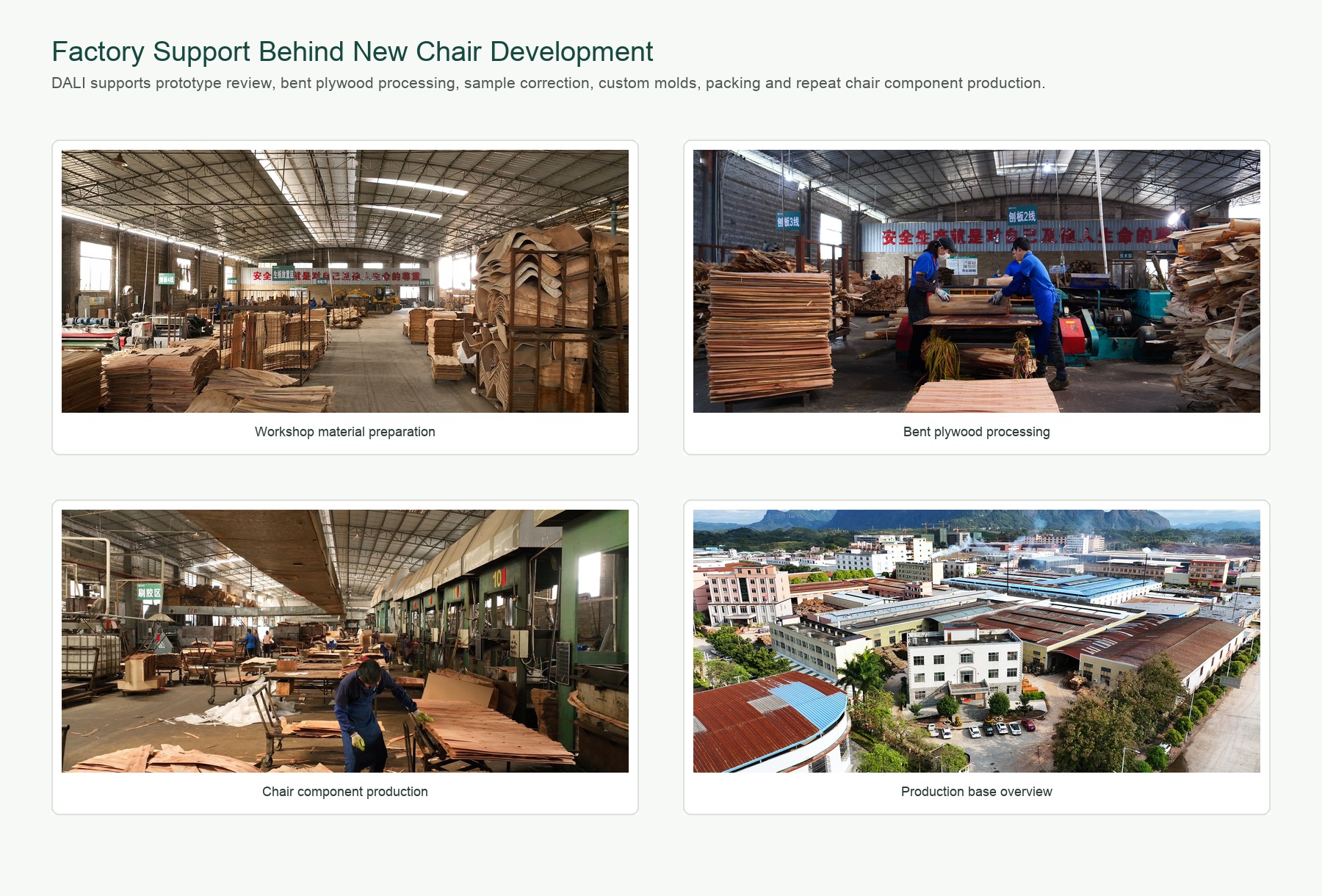
A sample can look good once. A program has to stay good through repeat orders. DALI's production support includes material preparation, bent plywood pressing, CNC forming, trimming, sanding, drilling, inspection, packing and communication for export projects. The factory base helps buyers move from prototype to trial order and then to regular production.
For overseas buyers, this is important because a chair project usually involves more than one supplier decision. The buyer may need to coordinate plywood shells, metal frames, upholstery, cartons, inspection documents and shipping schedule. A supplier that understands chair components can reduce friction during development and make communication more efficient.
European, North American and international furniture buyers often need order-specific documentation. Depending on the market and product, buyers may discuss FSC material requirements, SGS testing, EUDR-related material communication, low-emission panel selection, supplier verification and packing confirmation. DALI does not treat documentation as a separate problem. It is part of the same development process as the sample.
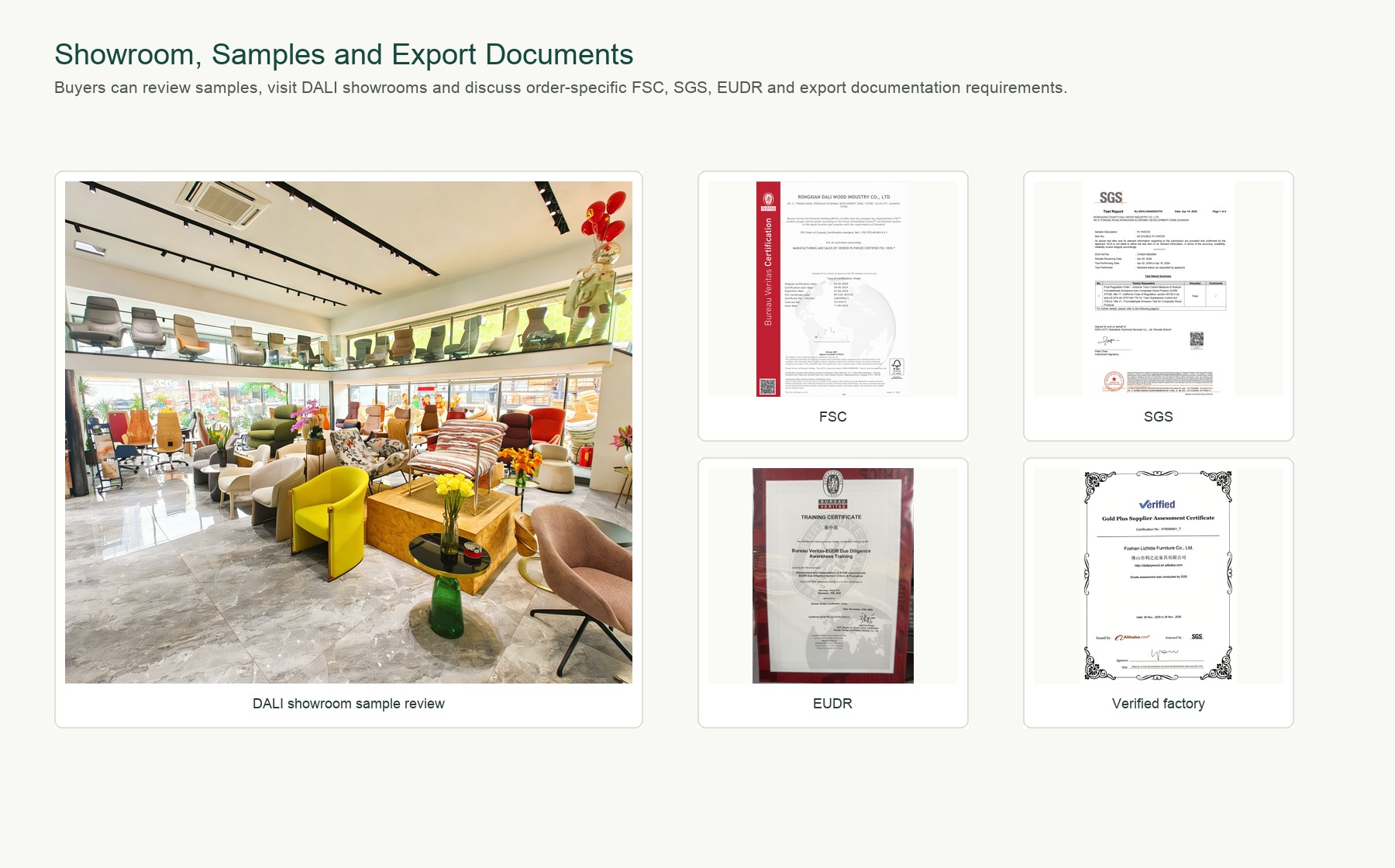
Buyers can also review products through DALI's showroom and sample channels. This is useful when a buyer needs to compare chair height, backrest curve, veneer color, metal frame style or packaging before placing a project order. For serious sourcing teams, factory and showroom visits are welcome.
July market research is useful only if it leads to action before autumn buying decisions. A chair idea discovered in July can still be reviewed, sampled, corrected and prepared for later market windows if the buyer starts early. Waiting until every detail is perfect can slow the project down. A better approach is to begin with a controlled sample discussion and improve the product step by step.
DALI Plywood is ready to work with furniture suppliers, chair brands, restaurant furniture buyers, hotel furniture companies, office chair manufacturers and OEM distributors. We can help turn new market ideas into bent plywood chair components, custom molded plywood chairs, dining chair backs, office chair shells, lounge chair shells and finished chair programs.
If your team is reviewing new products after July market research, send the target style, drawing, chair photo, expected quantity, frame requirement, finish direction and delivery plan. DALI can review the manufacturing route, sample plan, mold cost, MOQ discussion and repeat production possibility.
The strongest chair products are not the most complicated ones. They are the ones that connect buyer taste, realistic structure, stable manufacturing and export-ready execution. That is where DALI can help.
This article uses public market context reviewed on July 10, 2026, including Las Vegas Market Summer Market 2026 dates, High Point Market Fall 2026 dates and trade-only positioning, and NeoCon 2026 Best of NeoCon winner information. The two market and warehouse discussion images are ChatGPT-generated concept images; the factory, product and documentation images are DALI local assets.