


 Jul 11, 2026
 dali plywood
 332
332
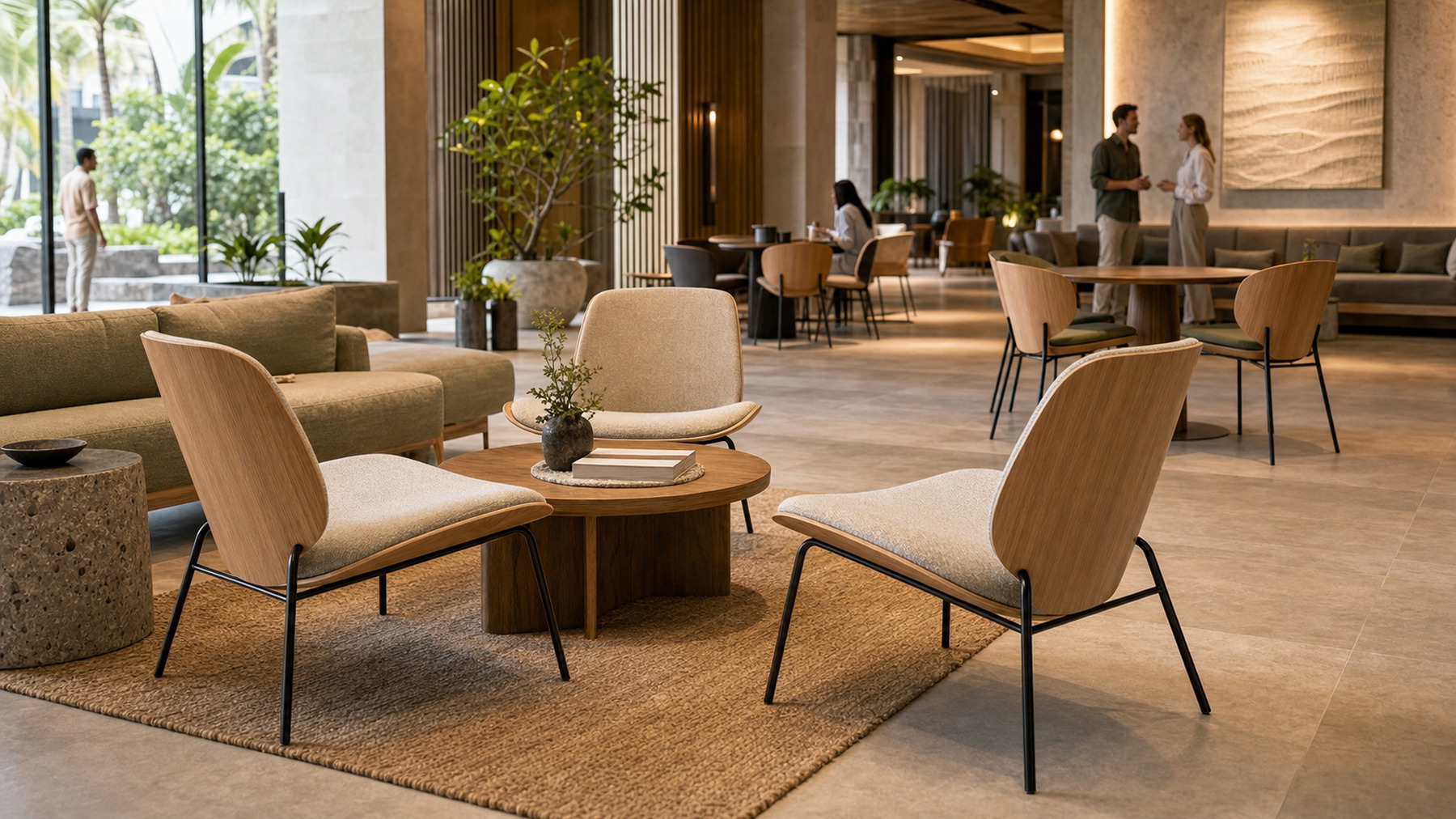
Furniture buyers in 2026 are not only asking for a new chair shape. They are asking for spaces that feel calmer, warmer and easier to use. Boutique hotels, resort lobbies, restaurant lounges, coworking cafés and commercial interiors all need seating that can make a room feel more human without becoming difficult to produce. That is why bent plywood seating is becoming useful again for hospitality and workplace projects.
The market signals are clear. BDNY describes itself as a leading trade fair for boutique and lifestyle hospitality design, with designed lounges, cafés and gathering places shown at scale. HD Expo + Conference positions itself around hospitality design innovation. NeoCon continues to be a major platform for commercial interior design. High Point Market also shows that autumn trade buying will continue to push furniture teams toward new product decisions. In this environment, a soft wood curve is not only a style detail. It is a manufacturing strategy.
Many hospitality and workplace interiors are moving away from cold, hard-looking furniture. Designers want seating that supports rest, conversation, waiting, dining and informal work. But a chair for a real project cannot only look soft. It must hold its shape, fit the frame, meet the buyer's cost target and repeat reliably across a full order.
This is where molded plywood works well. A controlled plywood curve can make a chair back feel warmer and more comfortable while keeping the component thin, stable and practical for production. For hotels, restaurants and offices, the best curve is not the most dramatic curve. It is the one that improves the room, supports the body and stays repeatable in manufacturing.
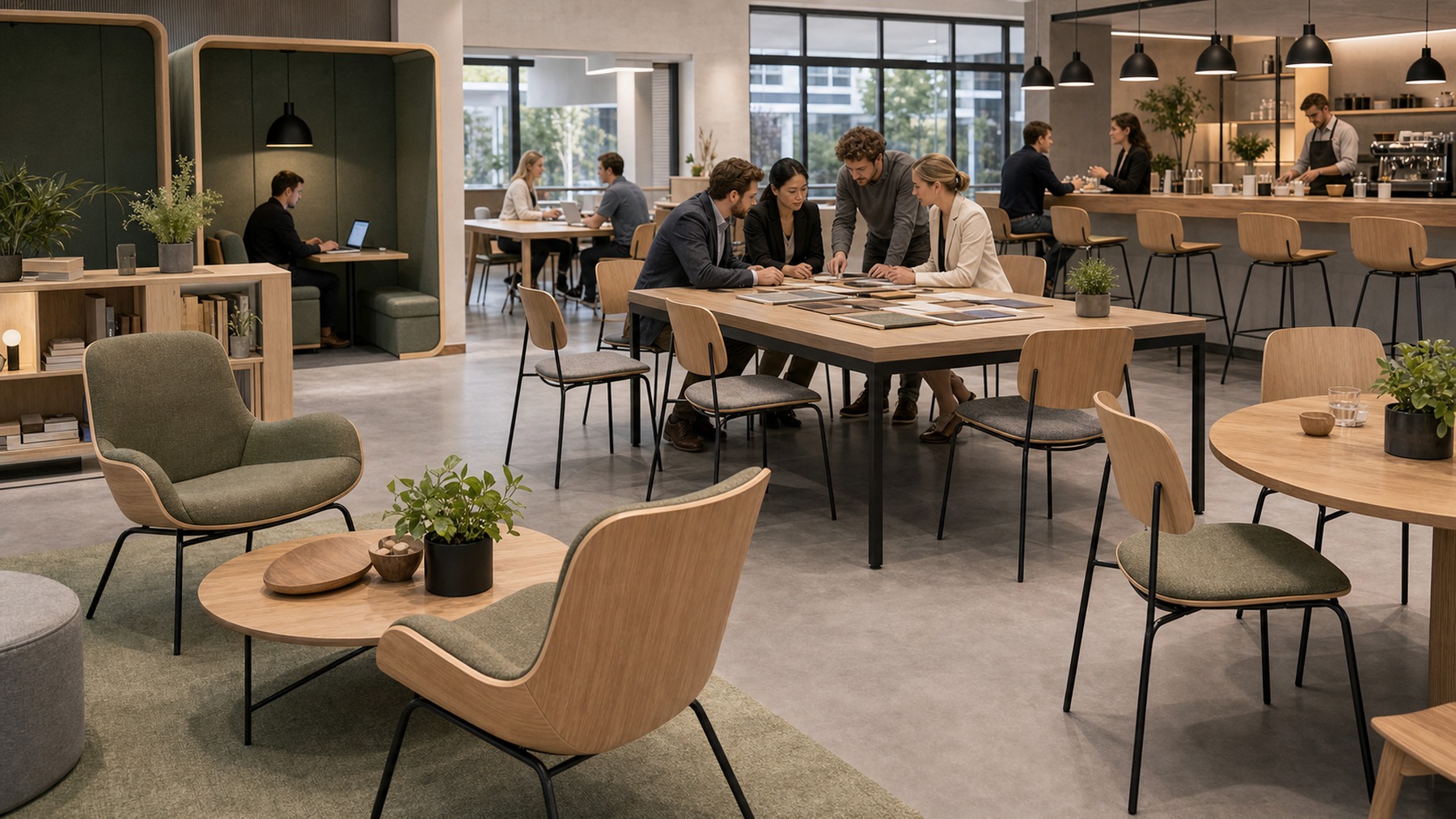
Modern projects often include several seating zones in one property. A hotel may need lobby lounge chairs, café dining chairs, guest room desk chairs and meeting area seating. A workplace may need casual café chairs, visitor chairs, quiet booth chairs and lounge seating. If every product looks unrelated, the space feels fragmented. If one material language connects the products, the space feels more intentional.
A bent plywood chair family can help create that connection. The same wood tone, edge radius, backrest language and frame direction can be adjusted into different products: a lounge chair with upholstery, a dining chair with a slim frame, an office visitor chair with a stronger seat board, or a training chair with a lighter structure. Buyers can build a product family without starting every chair from zero.
DALI Plywood can support this type of product thinking. Instead of treating a lounge chair, dining chair and office chair as completely separate projects, the buyer can discuss them as related furniture directions. This makes development more efficient and gives the final project a more unified visual identity.
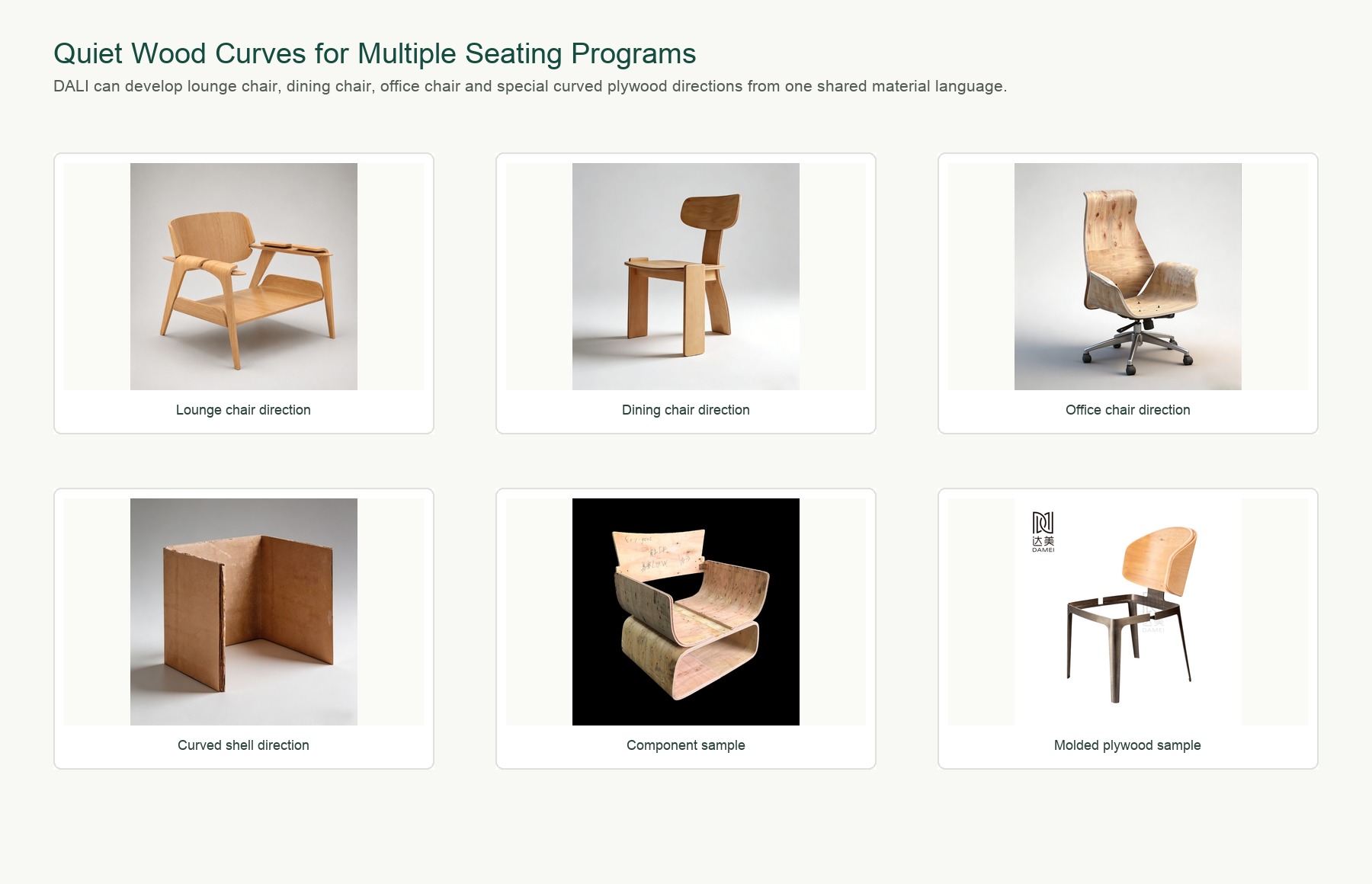
The product directions shown here connect lounge chair plywood, dining chair plywood, office chair plywood, barrel or shell-shaped curved plywood and molded chair components. Buyers can start with a complete product, a semi-finished component or a custom plywood shell. The goal is to turn a calm design idea into a chair part that can be sampled, adjusted and repeated.
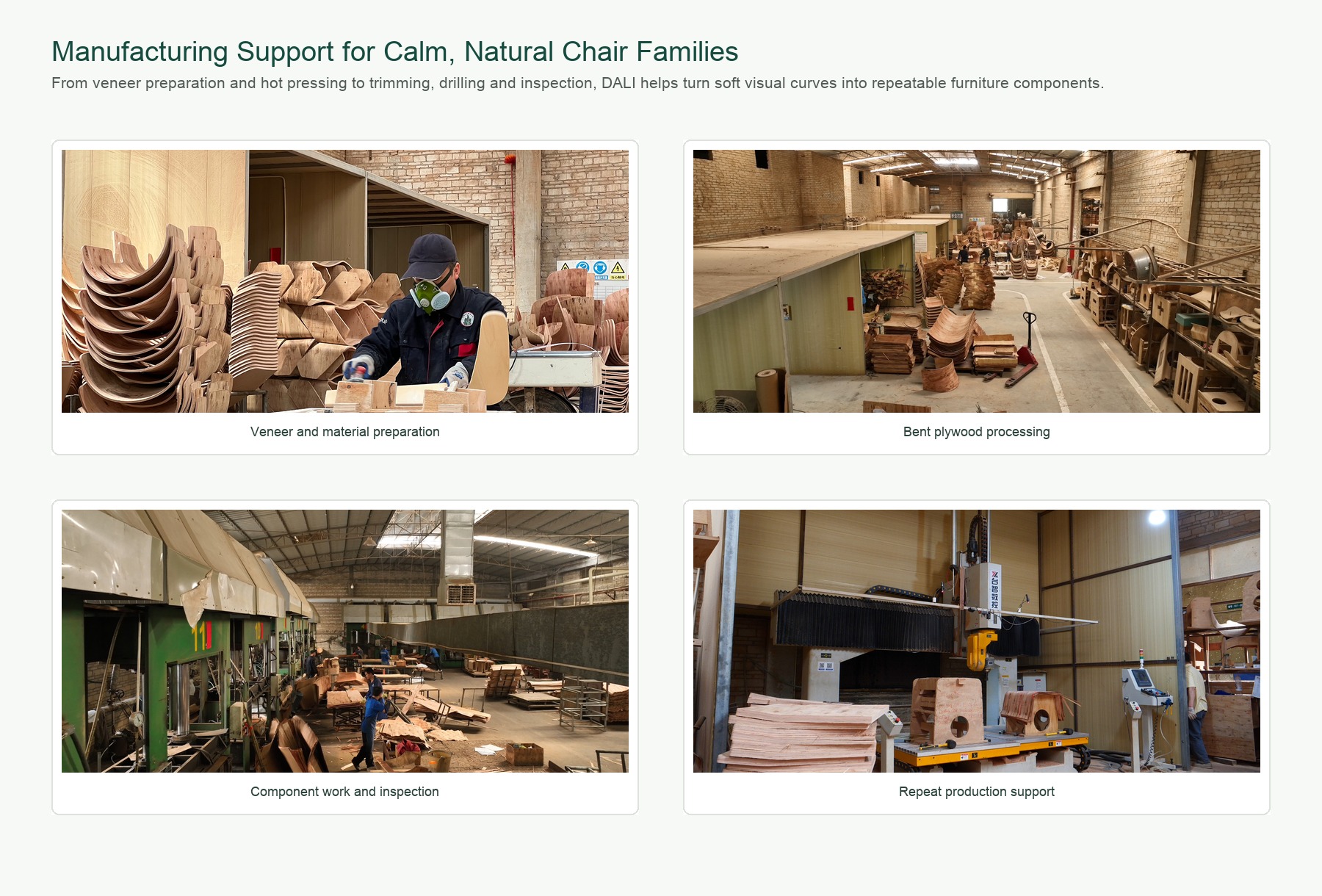
For overseas buyers, the risk is not only design. It is whether the supplier can repeat the curve after the first attractive sample. Bent plywood production depends on veneer preparation, glue control, pressing pressure, mold accuracy, trimming, sanding, drilling and inspection. A small mistake can affect frame fit, comfort or surface appearance.
DALI's production process is built around these details. The factory can review the radius, thickness, veneer direction, mounting points, upholstery allowance and packing method before the project moves into production. This matters for chair brands because the product has to survive more than one photo shoot. It has to pass sampling, shipment, assembly and repeat orders.
A practical development process can be simple. First, the buyer sends the target space, chair photo, sketch, 3D file or sample. Second, DALI reviews the structure and discusses whether an existing mold can be used, whether a similar mold can be adjusted, or whether a new custom mold is needed. Third, sample details are confirmed: plywood thickness, veneer, finish, edge shape, drilling, frame connection and packaging.
This process is useful for boutique hotel projects, restaurant chains, coworking spaces, office furniture brands and furniture suppliers that need a fresh but manufacturable chair family. DALI can discuss low-cost development routes, sample-first confirmation and lower starting quantities for suitable projects.
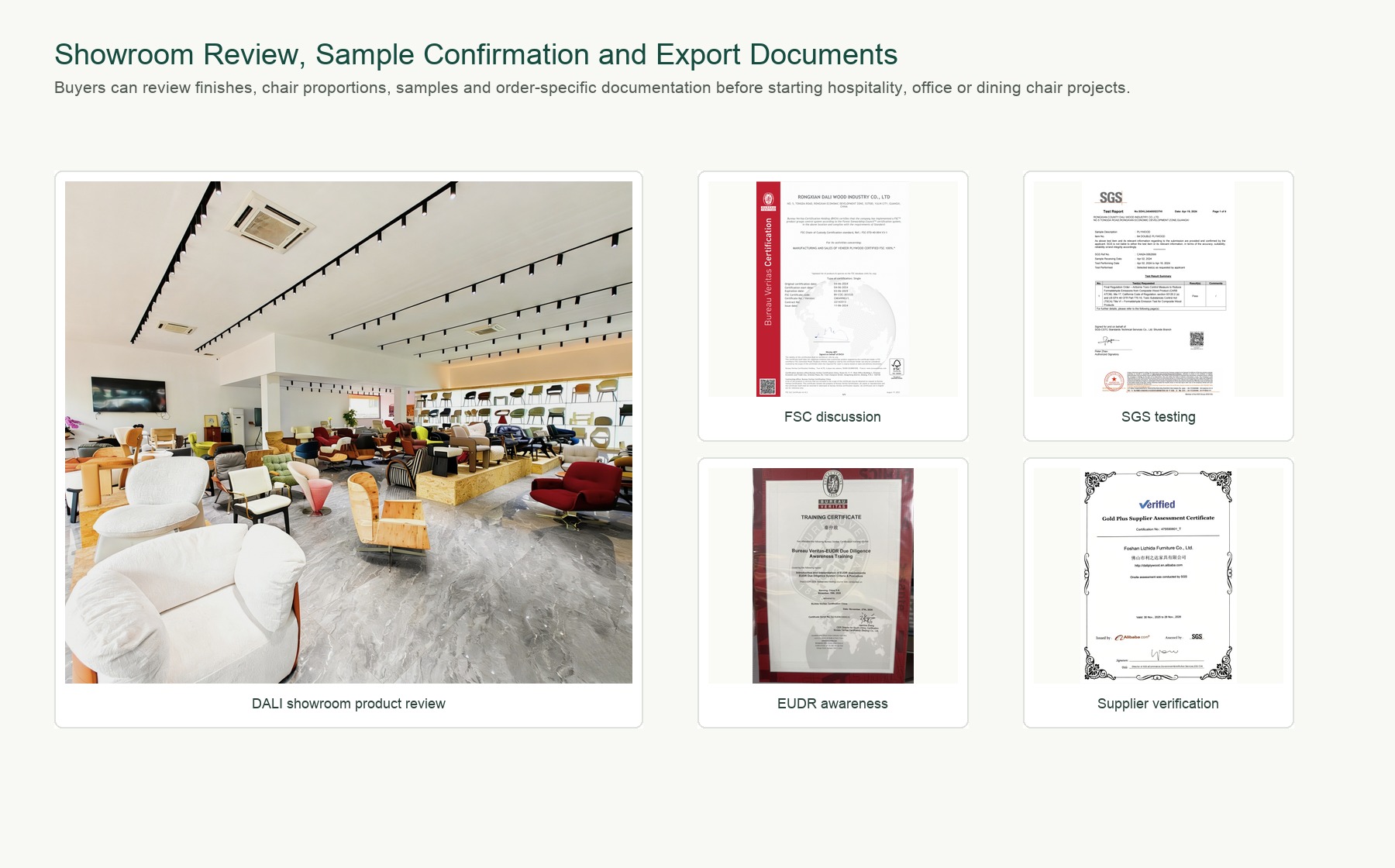
International buyers also need confidence before placing larger orders. A showroom review helps buyers compare chair height, backrest curve, veneer tone, upholstery direction and frame style. It also helps confirm whether the chair language fits the real space, not only the moodboard.
Documentation is part of the same conversation. Depending on the order and market, buyers may discuss FSC material communication, SGS testing, EUDR-related awareness, low-emission material requirements and supplier verification. DALI can help buyers confirm order-specific requirements according to the product, material, destination market and test plan.
Warm visual identity: Wood curves help hospitality and workplace interiors feel more natural and human.
Product family logic: One plywood language can connect lounge, dining, office and training chair directions.
Manufacturing efficiency: Controlled curves are easier to sample, inspect, drill, pack and repeat.
Custom mold support: Buyers can discuss existing molds, modified structures or new custom mold development.
Flexible supply: DALI can support finished chairs, semi-finished parts and custom molded plywood components.
Export preparation: Samples, showroom review and order-specific documentation can be discussed before production.
The strongest chair program begins with the space. Is the product for a hotel lobby, resort lounge, restaurant, café, coworking area, office visitor zone or public waiting area? What feeling should the chair create? What quantity is expected? What frame, finish, seat height and packing method does the buyer need?
Once these questions are clear, DALI can help review the manufacturing path. The buyer brings the market direction and design expectation. DALI brings bent plywood experience, custom mold development, sample support and production control. Together, the result can be a calmer, warmer and more realistic chair family for 2026 hospitality and workplace projects.