


 Jul 23, 2026
 dali plywood
 341
341
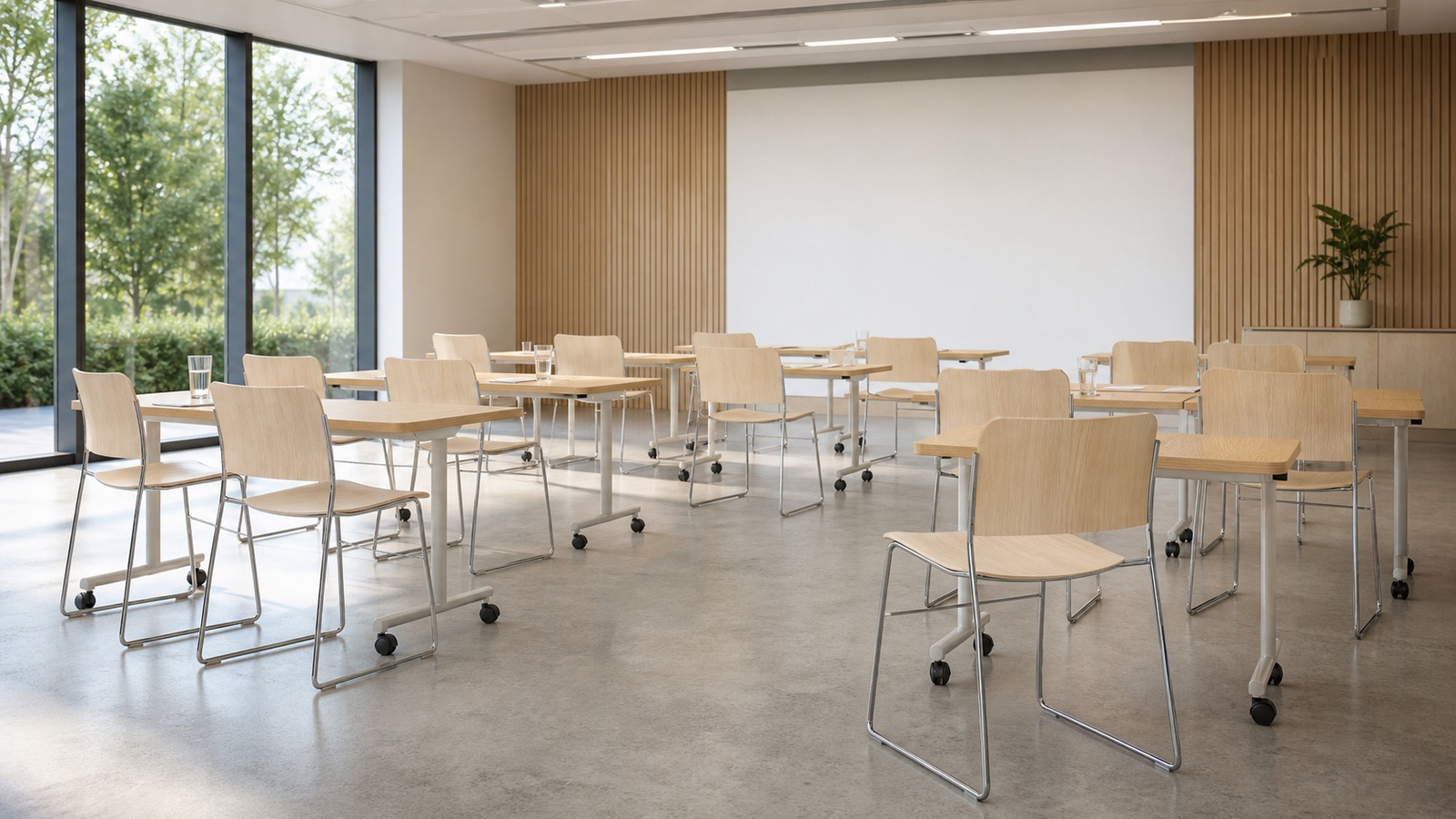
As buyers prepare for the Las Vegas Market opening July 26, furniture discovery is moving beyond appearance alone. The summer event brings more than 3,500 brands across furniture, home decor and gift categories, giving retailers and project buyers a concentrated view of what is new. Yet the products that earn repeat orders usually solve an operational problem as well as a visual one.
For hotels, training centers, restaurants, universities and flexible workplaces, one problem appears every day: rooms need to change quickly. A meeting room becomes a workshop. A restaurant clears space for an event. A training area shifts from classroom rows to group tables. Well-designed stackable bent plywood chairs can help staff complete these resets faster while maintaining a warm, professional furniture language.
Flexible space is often discussed as a design trend, but operators experience it as a schedule. How many people are needed to clear the room? Can chairs move through standard doors and lifts? Can a stack remain stable on a chair dolly? Will frames scratch, fabrics crush or plywood edges chip after repeated handling?
These questions explain why lightweight, stackable and replaceable seating features continue to appear in new workplace furniture. The best solution is not simply a chair that can be placed on top of another chair. It is a system in which the frame, seat, back, stacking contact points and transport method work together.
A stackable chair needs controlled clearance. The front and rear legs or sled frame must nest without forcing. The seat angle and backrest position must leave space for the next chair. Contact points should protect visible finishes and prevent the upper chair from sliding sideways. The stack should rise at a predictable pitch so storage capacity can be calculated before an order is placed.
Steel frames are useful because tube diameter, bends and welding positions can be defined accurately. A sled base can provide a continuous floor contact line and a clean silhouette. Four-leg frames can also stack effectively when the leg spread and cross members are designed for nesting. Plastic glides or stacking buffers may be added where frames meet.
Stacking height should always be confirmed on the finished sample. Upholstery thickness, armrests and under-seat hardware can reduce the number of chairs that fit safely in one stack. The correct quantity depends on the chair structure and the operator's handling method, not on a universal marketing number.
Molded plywood seats and backs can create shallow, repeatable curves that support the body while keeping the chair visually light. Compared with a thick upholstered shell, exposed plywood also gives staff an easy surface to inspect and clean. Natural veneer brings warmth to corporate learning rooms, hotel meeting areas and restaurant interiors where an all-metal chair might feel too technical.
For production, the plywood geometry must match the frame precisely. DALI reviews thickness, veneer direction, curve radius, edge shape, drilling position and mounting hardware. A modest, manufacturable curve is more valuable than an exaggerated form that creates unstable stacking or inconsistent pressing.
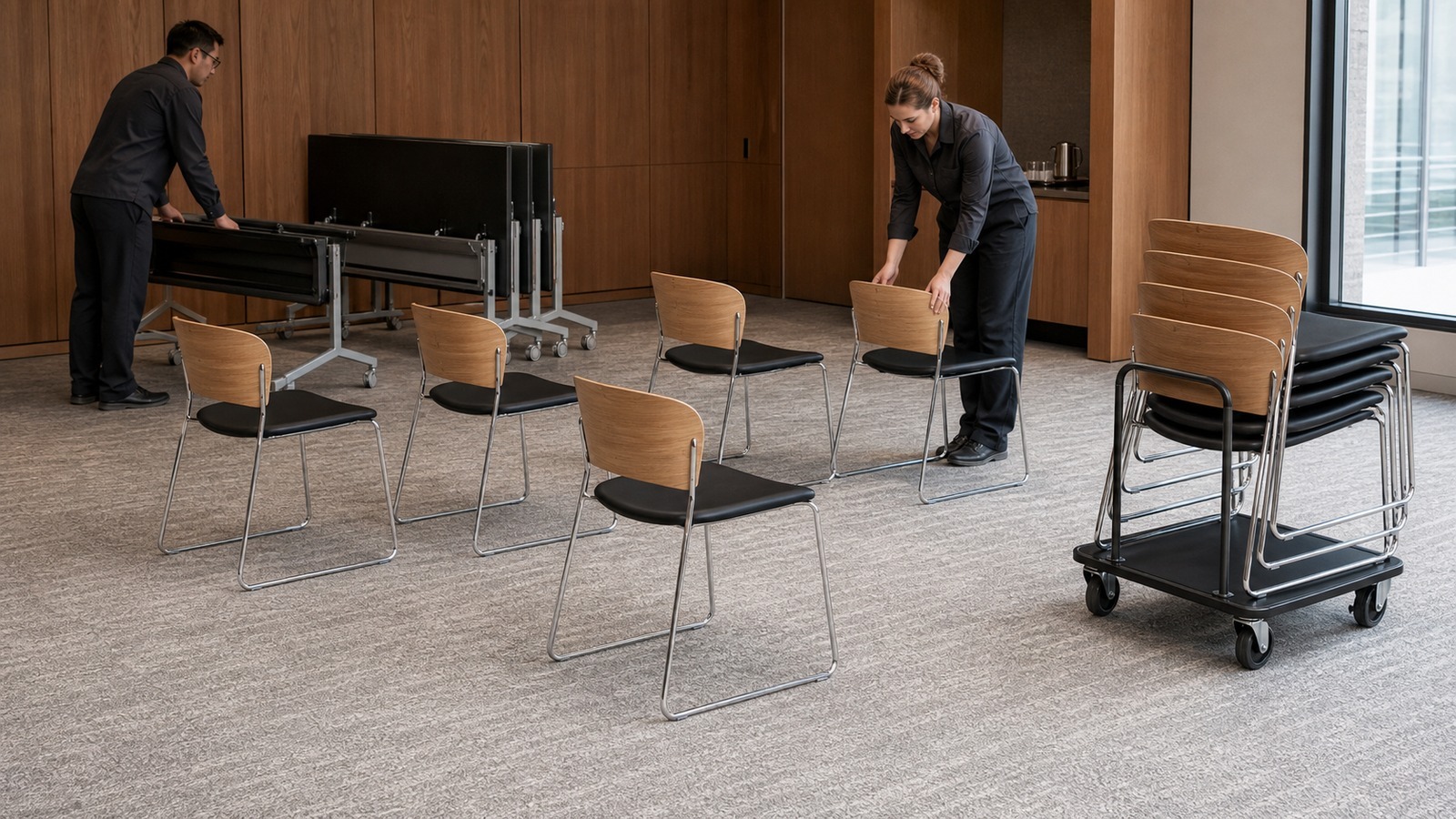
Hotel and event teams often reset rooms while guests are elsewhere in the building. Chairs must move quietly, fit on suitable dollies and store in an orderly way. A stable stack reduces handling steps and keeps circulation routes clear. It also helps protect the chair because staff are less likely to improvise an unsafe pile.
The chair shown in this application uses a molded wood back, upholstered seat and compact metal frame. This combination gives the guest a warmer contact surface and a degree of sitting comfort while still supporting frequent room changes. Similar structures can be developed for conference centers, banquet support areas, education facilities and multifunctional community rooms.
Not every flexible room needs the same chair. A training room may prioritize a cleanable plywood seat and maximum stack density. A hotel meeting room may choose a padded seat for longer sessions. A restaurant may prefer a stronger color, while an event venue may require armrests for selected seating zones.
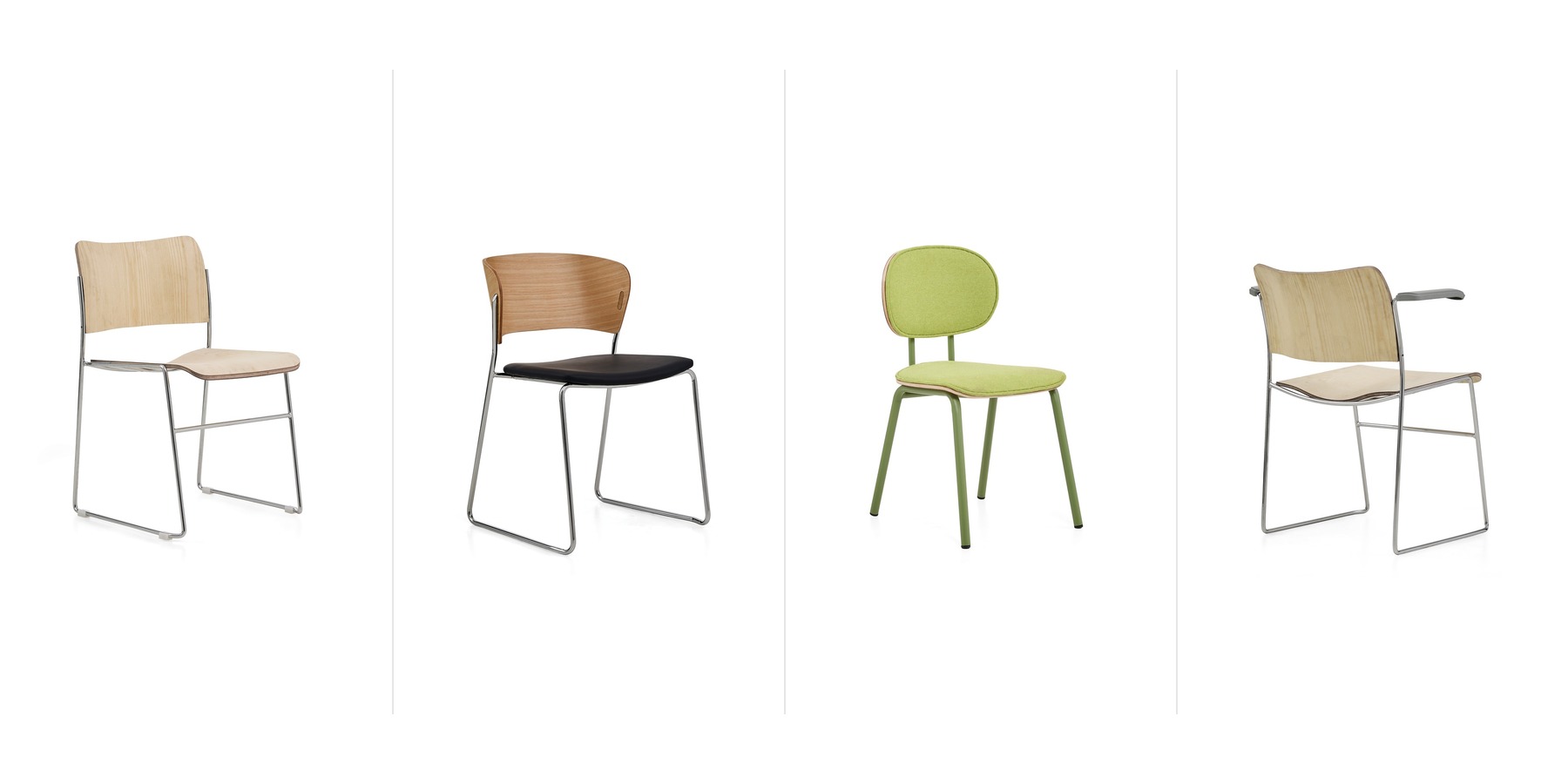
These real DALI chair directions show how plywood, upholstery and frame details can be adjusted without losing a compact commercial profile. Buyers can compare an exposed wood seat, a black seat pad, a fully upholstered option and an armrest version. Veneer species, stain, fabric, powder-coat color, chrome finish and mounting details can be discussed for the target market.
A coordinated group also gives distributors more selling options. The simple model can serve high-turnover spaces, while padded or armrest variants can address comfort and accessibility needs. Where the technical structure allows, related components can reduce development complexity and make repeat ordering easier.
A good sample review should include more than a brief sitting test. Buyers and manufacturers should evaluate the complete use cycle:
Stacking test: confirm that chairs align smoothly without forcing or unstable leaning.
Finish protection: identify every contact point and check for scratches, fabric compression or edge damage.
Transport test: move the approved stack through doors, corridors, lifts and storage areas using the intended dolly.
Strength and stability review: confirm the applicable test plan for the product, use environment and destination market.
Repeat-use check: stack and unstack the sample multiple times to see how hardware, glides and visible surfaces respond.
Packaging deserves a separate review. A chair that stacks well during daily operation may require protective separation, partial assembly or a different loading arrangement for international shipment. The export pack should balance protection, container efficiency and the buyer's assembly plan.
Consistent stacking depends on consistent components. If the seat width, drilling position or backrest curve changes from batch to batch, the chair may assemble correctly but stack poorly. Production control therefore begins before the frame and plywood parts come together.
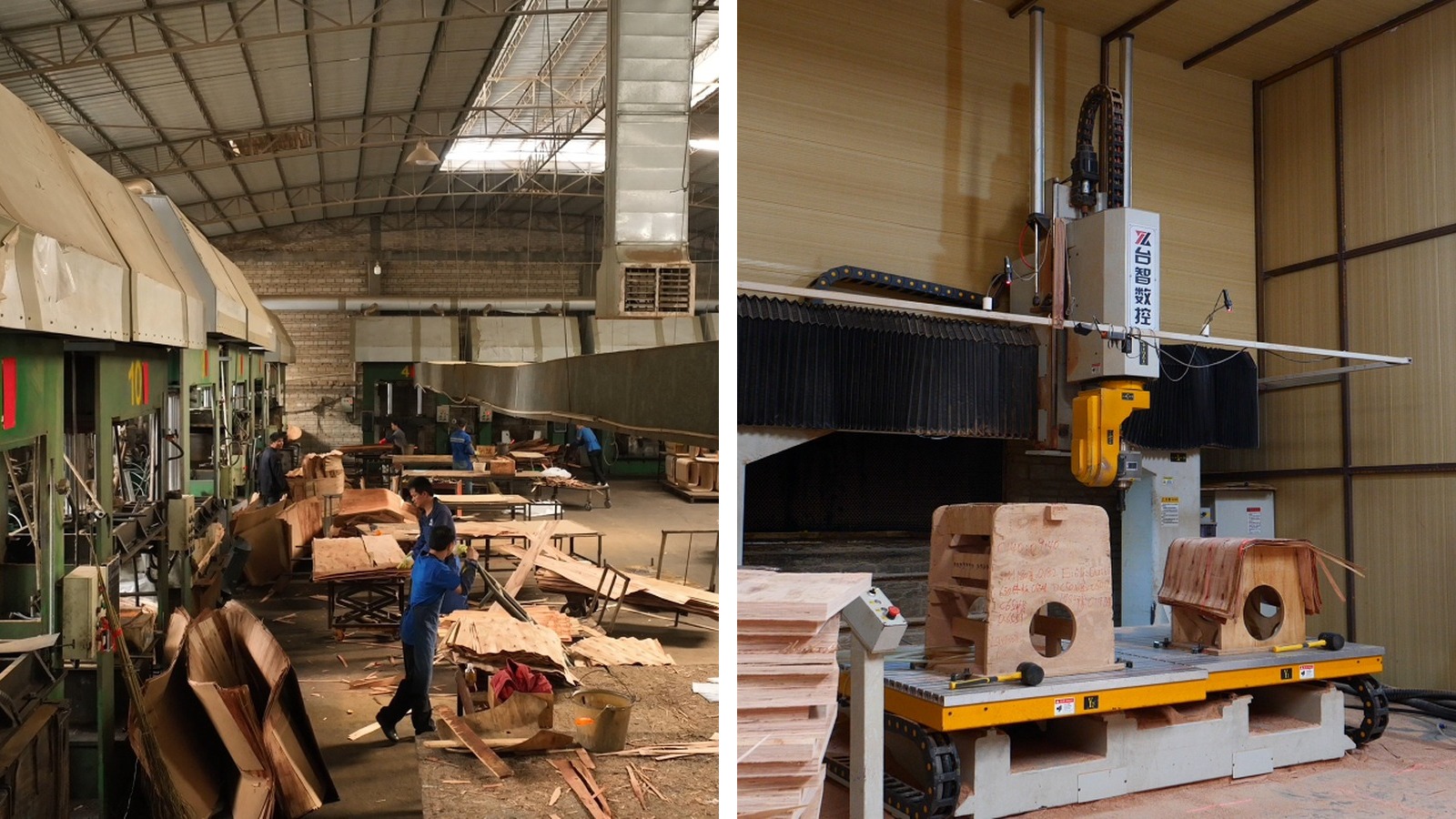
DALI's process can include veneer preparation, layup, hot pressing, conditioning, CNC trimming, drilling, sanding and surface finishing. Pressing controls the intended curve, while CNC work helps repeat the outline and mounting positions. Approved samples and technical specifications provide the reference for thickness, dimensions, edge quality, color and frame fit.
For a custom project, buyers can start from a drawing, 3D file, reference chair, physical sample or target dimensions. An existing mold may support a faster and lower-cost route when the geometry is suitable. When a different profile is required, DALI can develop a custom mold with controlled development cost and discuss a low starting quantity according to the structure.
European and North American contract furniture projects may include specific requirements for wood sourcing, emissions, strength, flammability, fabrics, labeling or packaging. FSC-related material requirements and low-emission targets can be discussed, but the exact specification should be confirmed for each order, product and destination.
Clear documentation helps the factory quote and sample correctly. Buyers should provide the intended use, expected order quantity, test standard, finish reference, packaging method and any spare-part requirement. A sample can then be reviewed against the real purchasing decision rather than an incomplete visual brief.
DALI operates four production bases with more than 200 production personnel and experience across nine product series. Supply can include finished chairs, semi-finished assemblies or custom molded plywood components. This gives furniture brands, project dealers and importers several ways to organize their own frame, upholstery and final assembly network.

The factory campus supports molded plywood production and custom development, while the showroom gives buyers a direct way to compare chair structures, shells, upholstery and surface finishes. Factory visits are welcome for suitable projects, and samples can be arranged for technical and market evaluation.
Before sending an inquiry, buyers can define six points: room type, required chair quantity, preferred stack quantity, seat and back material, frame finish, and applicable test or packaging requirements. A short video or floor plan of the storage route can also help identify door, lift or dolly limitations early.
As Las Vegas Market introduces new furniture lines and emerging brands, flexible seating will continue to compete on design. The stronger opportunity is to combine that design with measurable room efficiency. A chair that looks appropriate, stacks predictably, moves safely and can be produced consistently gives operators a practical reason to reorder. DALI can help turn that requirement into a realistic plywood curve, working sample and export-ready production plan.