


 Jul 24, 2026
 dali plywood
 346
346
Most people recognize bent plywood when it appears as a chair seat or backrest. Yet many of its most valuable applications are larger, quieter and partly hidden. A curved plywood panel may define the shape of an upholstered sofa arm, support a hotel headboard, create a durable pet-furniture enclosure or become the body of a custom cabinet and barrel-shaped product.
This wider view matters in 2026. The European Commission's July circular-economy update emphasized material sourcing, product lifetime, repairability and emissions in furniture. Official EU Ecolabel criteria also cover chairs, sofas and mattresses for homes and public spaces. For furniture brands and project buyers, the question is therefore not only how a component looks. It is how well the component supports the complete product through manufacturing, use, maintenance and future repeat orders.
Custom molded plywood components can connect those requirements. A well-designed part combines accurate geometry, efficient material use, a strong upholstery substrate and a repeatable connection to the rest of the product.
In upholstered furniture, the visible surface is only the final layer. Foam, fabric or leather depends on a stable structure underneath. If the inner shell changes shape, the upholstery may wrinkle, seams may move and the finished product may feel different from one production batch to the next.
Molded plywood gives product developers a controlled three-dimensional base. It can replace an assembly of several small timber blocks in suitable structures, reduce abrupt corners under upholstery and create a continuous line from front to back. The value is not automatically lower cost or lower weight in every design. The value is the ability to engineer a repeatable curved part for a specific product and production method.
Sofas and lounge products can use molded plywood for arm shells, back structures, seat supports and decorative outer panels. A broad curved arm can provide a smooth surface for foam application. A wraparound back can help the upholsterer maintain the intended silhouette. An exposed veneer edge can also become a deliberate design detail instead of being completely hidden.
The technical review should include load direction, frame connection, foam thickness, seam position and the amount of material that remains visible. Upholstery allowance is especially important. A shell that looks correct as bare plywood may become too large after foam and fabric are added. DALI can review drawings or samples with the buyer's upholstery plan before tooling begins.
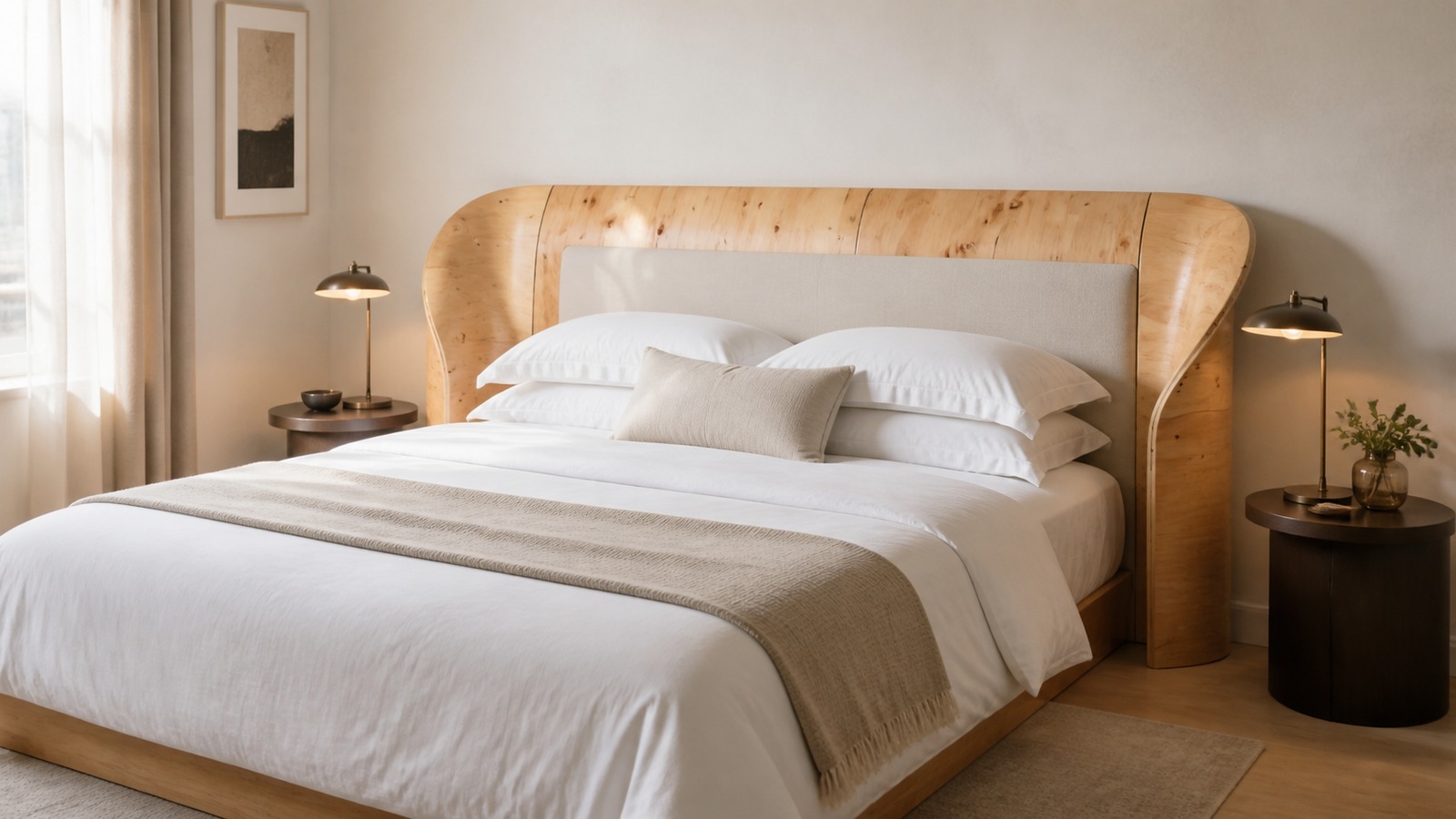
A hotel or residential headboard offers a different challenge from a chair component. It is wider, often built in sections and may need to align with bed frames, wall fixings, bedside units and electrical hardware. The visible curve must remain stable across a larger span.
Custom curved plywood can form side returns, winged headboard panels, upholstered center supports and decorative wraparound structures. The design shown above uses a broad segmented plywood frame around a padded center. In a production project, the joint positions, mounting method, veneer matching and packaging dimensions would be developed together. Large parts may be divided into practical modules when shipping, installation or mold size requires it.
Pet furniture is becoming part of the main interior rather than an item hidden in a utility room. This creates demand for forms and finishes that coordinate with residential furniture. Molded plywood can provide rounded exterior corners, a warm veneer surface and a compact structural enclosure.
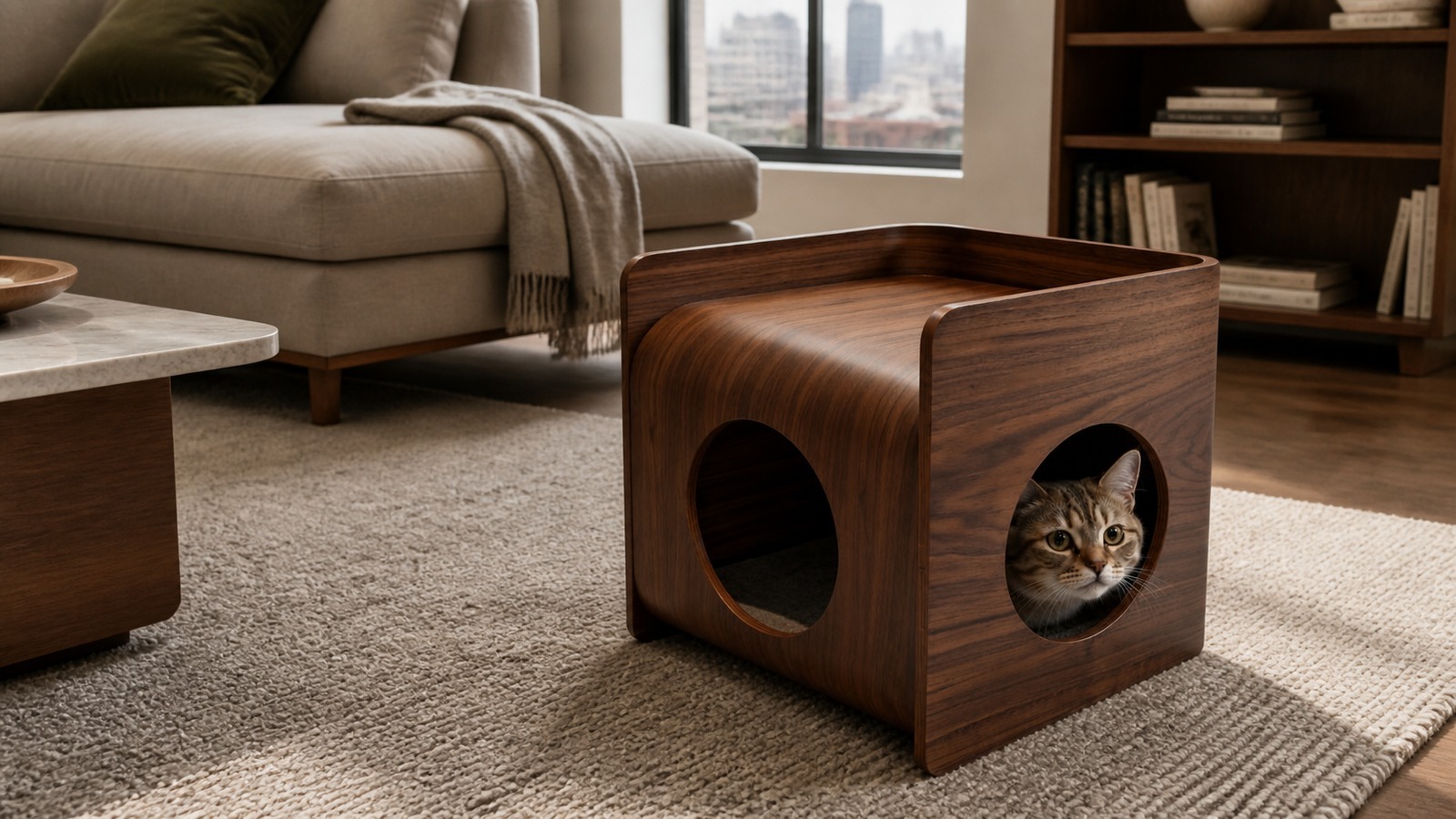
A pet house or side-table combination needs more than a pleasing shape. Openings must be correctly sized, edges must be smooth, the base must remain stable and interior surfaces should be accessible for cleaning. Designers should also consider ventilation, removable pads and how the animal enters and turns inside the product.
The walnut pet cube demonstrates how repeated plywood curves can turn a small enclosure into an interior object. Similar development methods can support pet beds, steps, feeding stations and compact hideaways. The actual structure, coating and test requirements should always be confirmed for the target animal and market.
The range below shows why molded plywood should not be defined by one furniture category. Different molds, veneers, thicknesses and finishing plans can serve upholstery, bedding, pet products, barrel-shaped structures and painted components.
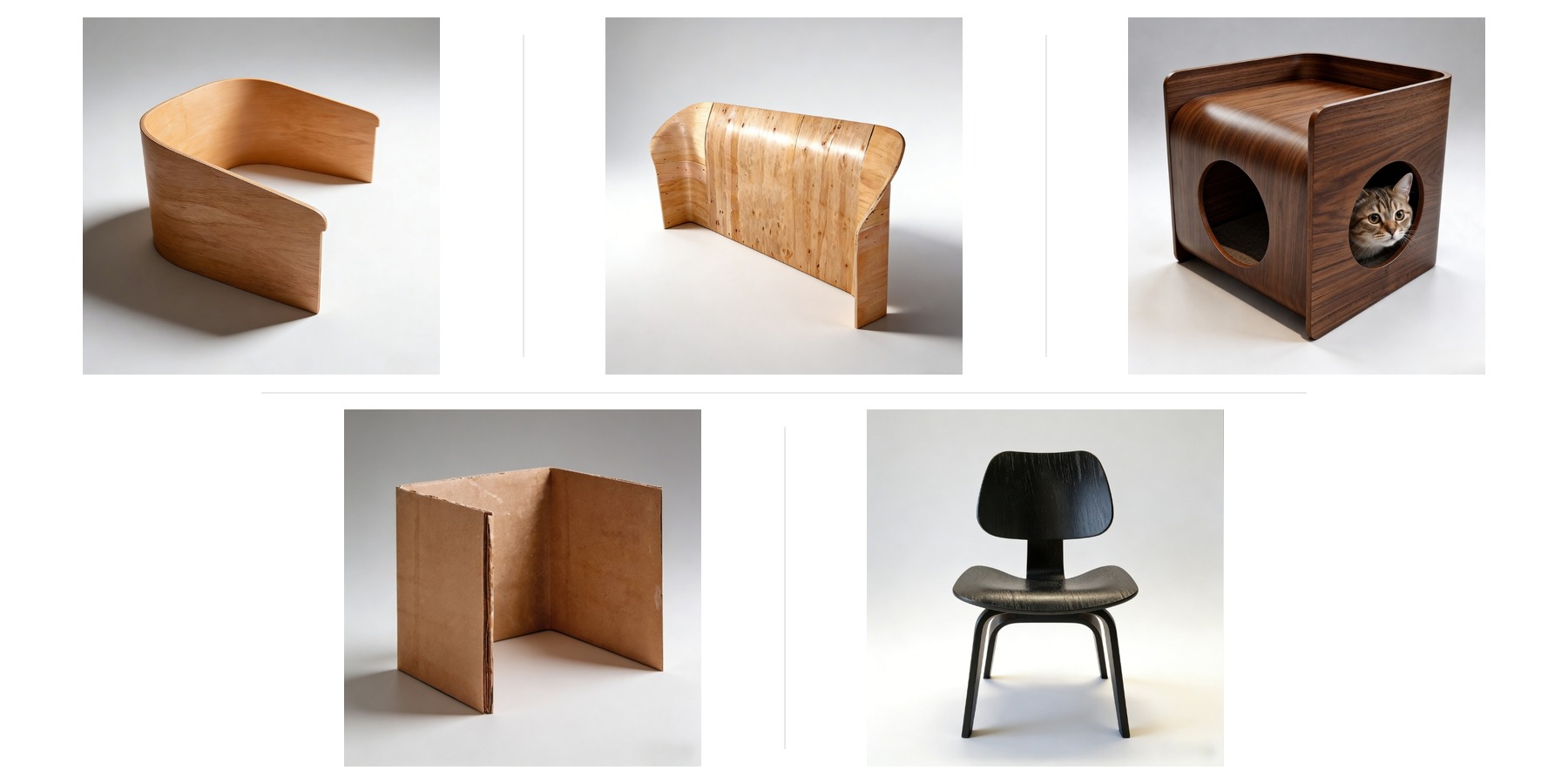
Sofa components can create continuous arm and back curves. Bed components can form wide headboard structures and side returns. Pet furniture can combine rounded corners with useful openings. Barrel-shaped shells can support enclosures, cabinet bodies or custom upholstered forms. Painted plywood gives buyers a way to specify color when natural veneer is not the intended finish.
These directions can be supplied as bare pressed parts, trimmed and drilled components, finished veneer panels or semi-finished assemblies according to the project. Buyers may also combine plywood with solid wood, metal, foam, fabric, plastic or hardware supplied through their own network.
A useful development brief explains what the component must do. Is it structural, decorative or both? Will it carry a person, support upholstery, hold hardware or only provide an enclosure? Which surfaces remain visible? How will the finished item be assembled, serviced and packed?
DALI can develop from a 2D drawing, 3D file, physical sample, reference product or target dimensions. The technical review can include:
overall dimensions and curve radius;
plywood thickness, veneer species and grain direction;
edge profile, trimming and drilling positions;
foam, fabric or leather allowance;
connection points for wood, metal and hardware;
visible-surface and finish requirements;
packaging, assembly and expected order quantity.
This information helps determine whether an existing mold can be adapted or a new custom mold is necessary. An existing geometry may provide a faster entry point. A distinctive product normally needs its own controlled tooling and sample approval.
Molded plywood begins with veneer selection and layup, but the finished result depends on the full sequence. Adhesive application, grain arrangement, mold pressure, temperature and pressing time influence the shape. Conditioning helps the part stabilize before trimming. Sanding and finishing then prepare the component for upholstery, coating or exposed use.
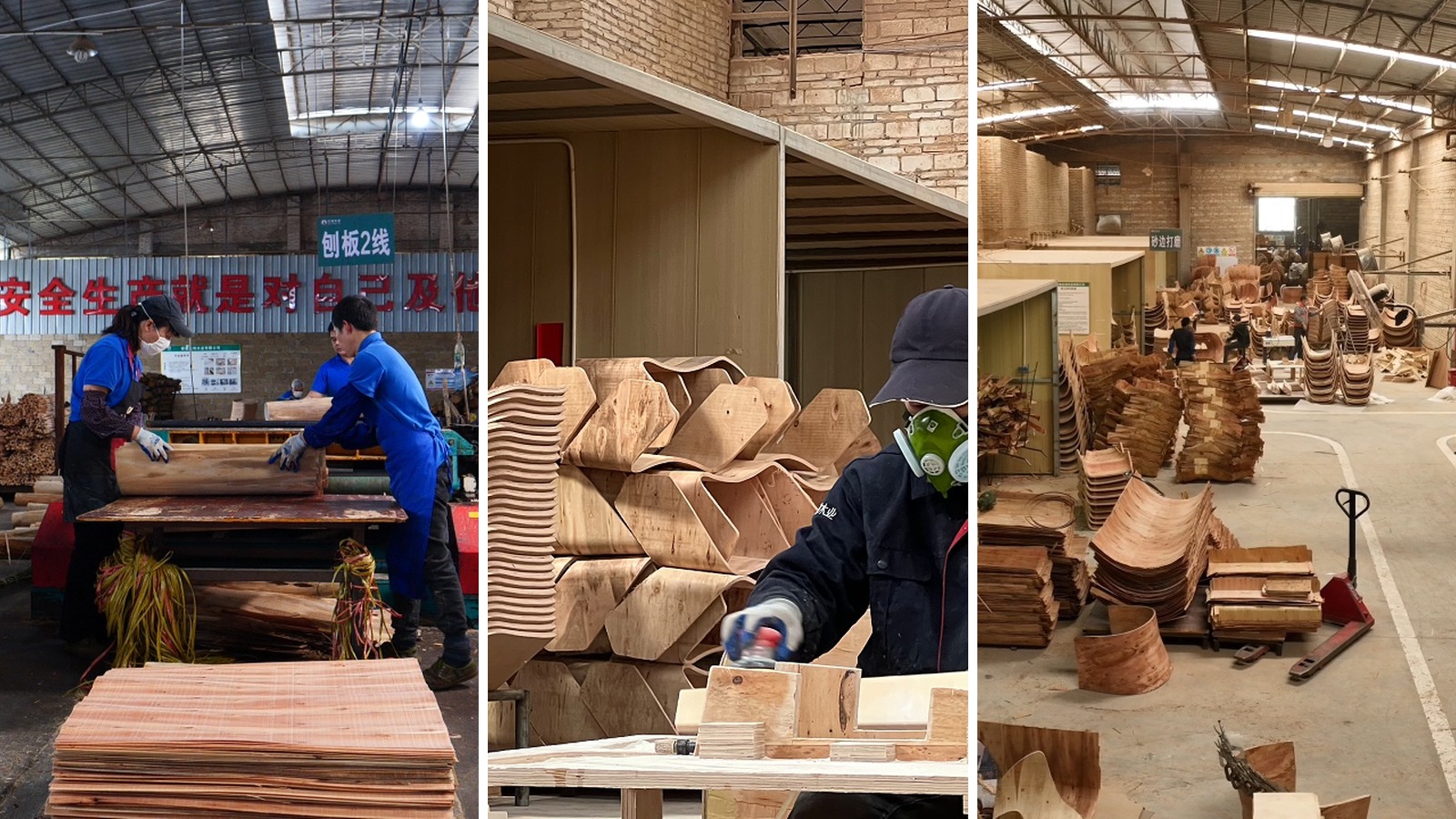
DALI's production workflow can include veneer preparation, hot pressing, conditioning, CNC trimming, drilling, sanding and surface finishing. Different products need different control points. A wide headboard may require attention to sectional alignment. A pet enclosure needs clean openings and edges. A sofa shell must match the upholsterer's foam and seam plan. A barrel body must remain consistent around its full curve.
Quality checks can cover dimensions, curve consistency, thickness, surface condition, edge quality, drilling position, moisture condition, color and fit with mating parts. The approved sample should be supported by a clear specification so repeat orders are evaluated against the same reference.
European and North American buyers may request information about wood sourcing, formaldehyde emissions, coatings, upholstery substances, product strength or packaging. The exact requirement depends on the destination, product category and sales channel.
DALI maintains FSC Chain of Custody certification within its stated scope and has an SGS test report for a specified plywood sample covering selected US formaldehyde-emission requirements. These documents should not be treated as automatic approval for every finished product. Buyers should identify the required claim, material, test method and documentation during quotation so the supply plan matches the actual order.
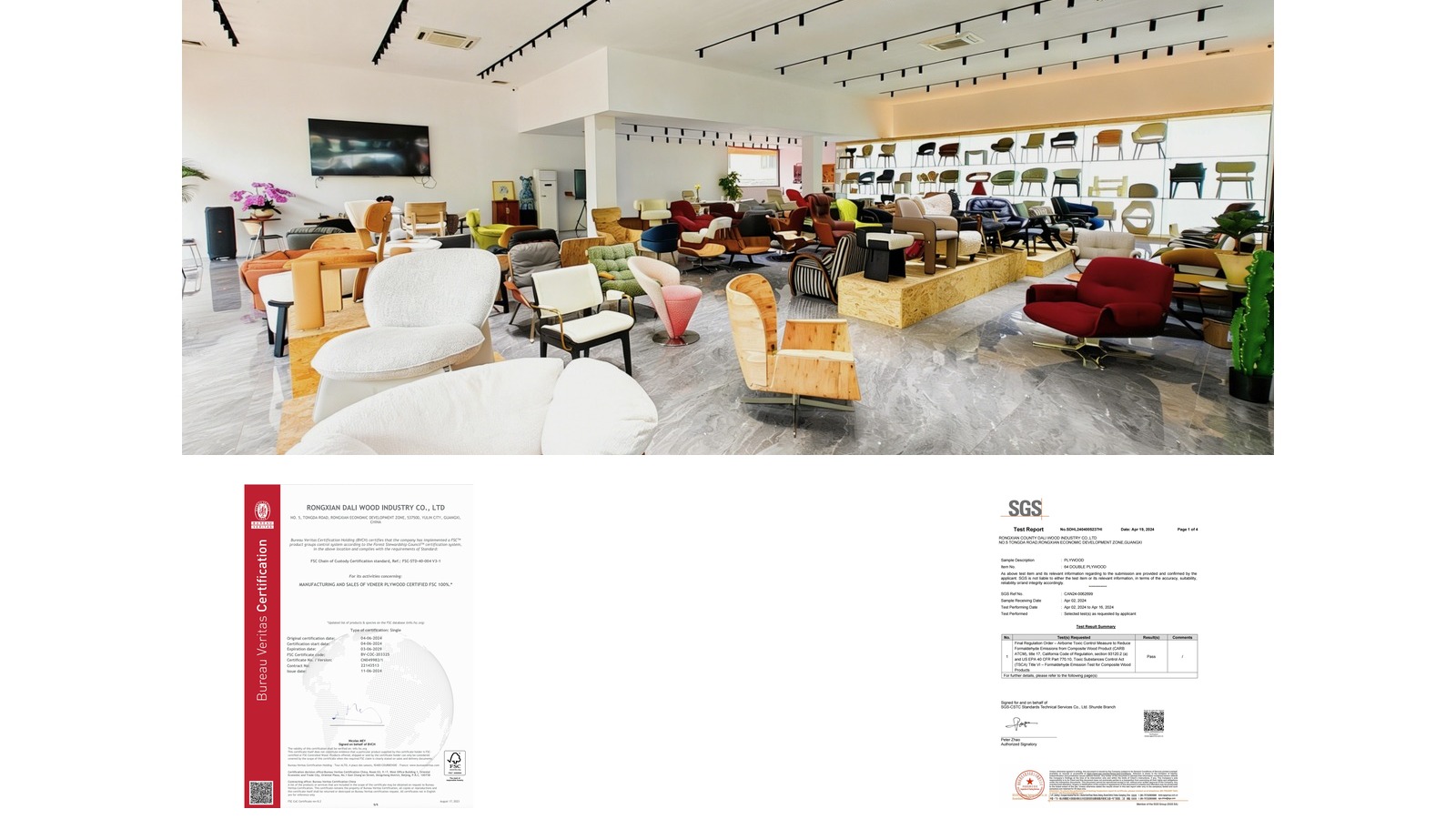
New product categories often begin with uncertainty. A buyer may need one mold, several surface choices and a smaller first order before committing to volume. DALI can discuss controlled mold-development cost, low starting quantities for suitable structures and sample production for evaluation.
The company operates four production bases with more than 200 production personnel and experience across nine product series. Buyers can visit the factory and showroom to review molds, components, finished furniture, veneers and upholstery applications. Supply can include finished products, semi-finished assemblies or custom plywood parts.
The fastest quotation is not simply “How much is curved plywood?” A useful inquiry includes the finished-product application, drawings or dimensions, target material, visible surfaces, finish, order quantity, destination market and test requirements. Photos of the mating frame or upholstery build can also prevent incorrect assumptions.
Chair manufacturing remains an important use for bent plywood, but it is only one part of the opportunity. Sofas, beds, pet furniture, upholstered shells, cabinet bodies and special enclosures all benefit when complex curves become stable, repeatable components. DALI can help furniture brands and manufacturers turn those hidden structural requirements into a practical mold, approved sample and production-ready supply plan.