

 Jun 24, 2026
 dali plywood
 399
399
This week's furniture headlines reveal a shared problem across Europe and North America: buyers want more product choice, but retailers and manufacturers do not want uncontrolled inventory. US coverage shows furniture businesses widening their offer beyond a single category, upholstery producers adapting products to specific demand, and outdoor furniture sales remaining relatively resilient. In Europe, current reporting points to growth in UK furniture imports and exports across key markets while buyers prepare for the July trade-show cycle.
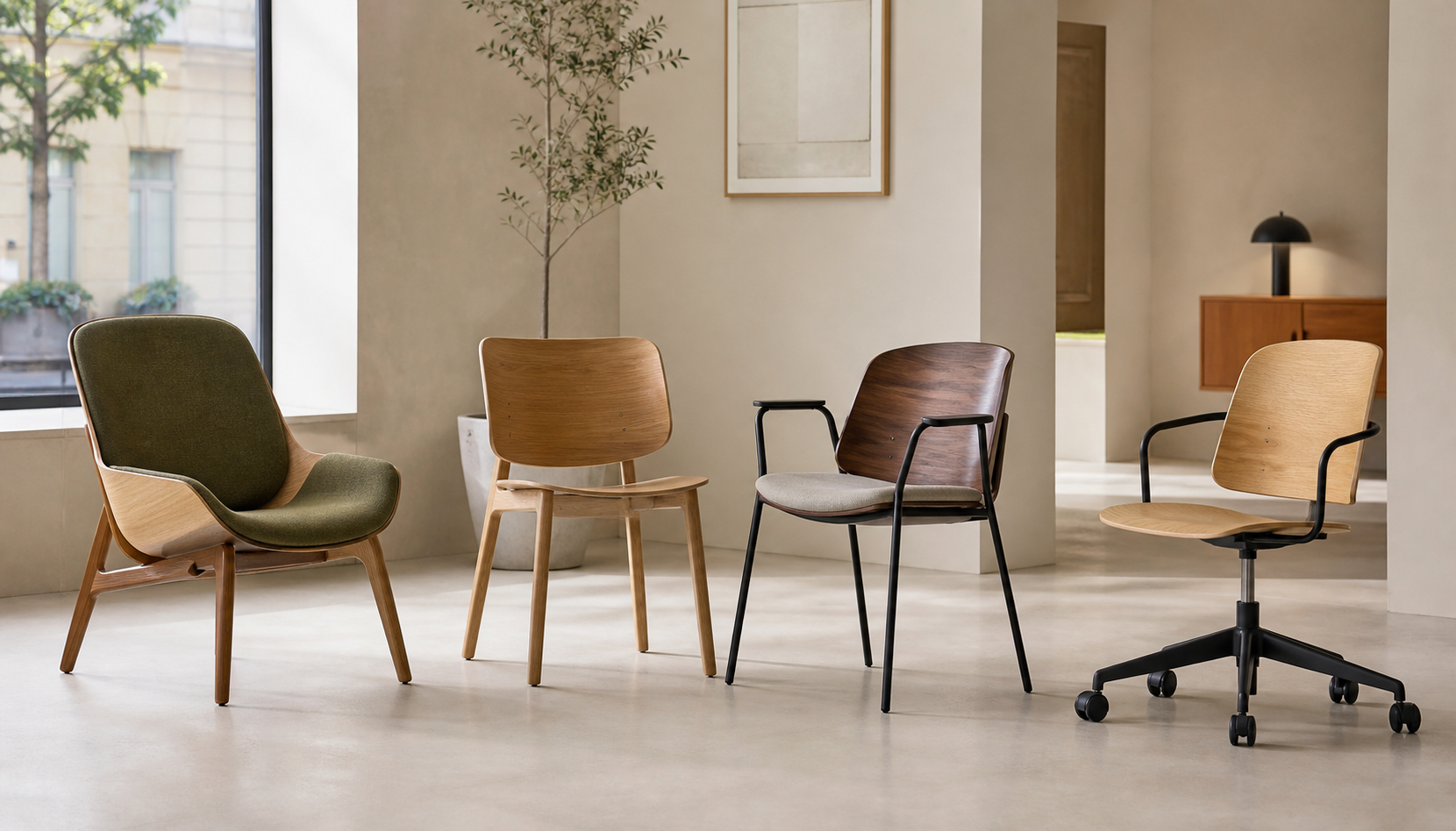
For a furniture brand, the answer is not simply to launch more unrelated chairs. A stronger approach is to build a family of products from a controlled component platform. Custom bent plywood components make that possible because one approved curve can support different veneers, frames, upholstery treatments and market positions without starting every design from zero.
A recent Business of Home headline notes that City Furniture is now City Home, describing a broader shift in how retailers present the home rather than one isolated furniture category. Furniture Today is also reporting that upholstery manufacturers are creating products for more specific demand and that outdoor furniture has shown relative resilience.
Across the Atlantic, Interior Daily reports that UK furniture trade grew in April as imports and exports increased across key markets. The Manchester Furniture Show is approaching in early July, followed by the Las Vegas Market later in the month. These events give buyers a concentrated window to compare collections, request variations and decide which products deserve inventory.
The commercial signal is clear: brands need visible variety, but the supply chain must remain manageable. That favors shared structures, repeatable tooling and components that can move between dining, hospitality, lounge and office applications.
Google autocomplete results for furniture trends 2026 currently expand into furniture design trends 2026, furniture color trends 2026, outdoor furniture trends 2026 and UK-specific trend searches. The phrase curved furniture expands into curved furniture design, curved furniture wood and curved furniture trend.
More technical searches become even more useful for manufacturers. Google suggestions around curved plywood chair include curved plywood chair seat, curved plywood chair back, molded plywood chair and bent plywood chair. Office-chair searches surface office chair plywood seat and office chair plywood shell, while dining-chair searches include molded plywood dining chair, bent plywood dining chair and plywood dining chair design.
These are not all equal in search volume, but together they show the language buyers use when moving from inspiration toward a component or supplier. The strongest article strategy combines a broad discovery term such as furniture trends 2026 with commercial phrases such as custom shaped plywood, bent plywood chair manufacturer and custom furniture manufacturer China.
A component platform starts with a controlled geometry. The same curved plywood backrest can be offered in natural oak, walnut, painted finish or an upholstery-ready version. Mounting details can be engineered for a solid-wood frame, metal base or selected office-chair structure. The visible product changes, while the core curve and quality controls remain familiar.
This does not mean forcing every chair to use an identical part. It means separating the features that create customer choice from the features that create manufacturing risk. Veneer, finish, upholstery and frame language can vary. Curve profile, thickness, datum points and drilling logic should remain controlled wherever possible.
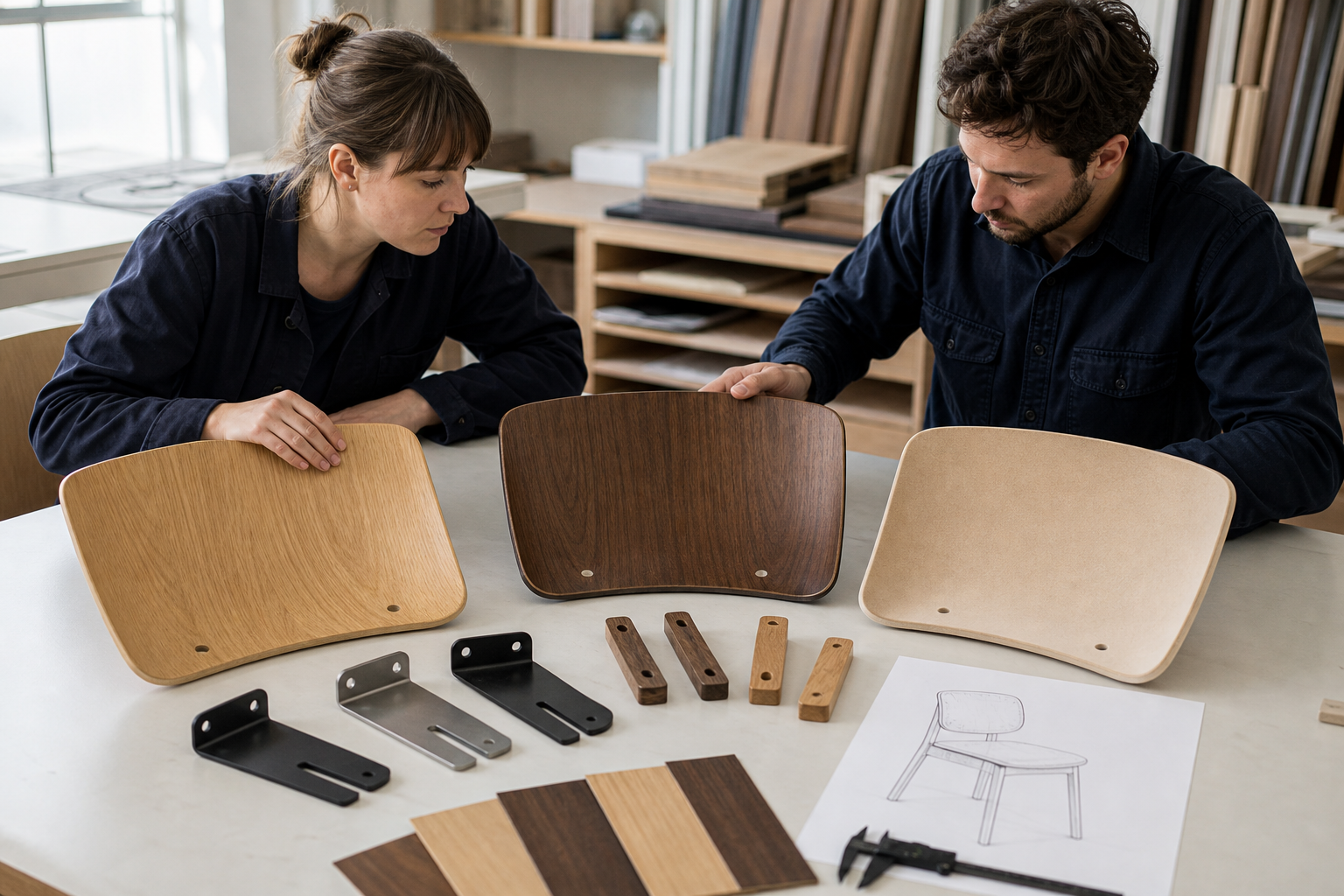
When demand is uncertain, a high minimum order can prevent a good design from reaching the market. Small-batch development gives brands a better sequence: approve the shell, test assembly, photograph the product, present it to buyers, collect feedback and then scale the strongest finish or frame combination.
DALI Wood can evaluate selected custom projects from around 100 pieces, depending on size, structure, mold requirement and finish. That starting point is useful for private-label collections, hotel and restaurant seating, regional retail tests, exhibition samples and new online furniture ranges.
Small batches still need production discipline. Every variation should use a clear revision, approved finish sample and mounting specification. A platform only reduces risk when the shared component is measured and documented consistently.
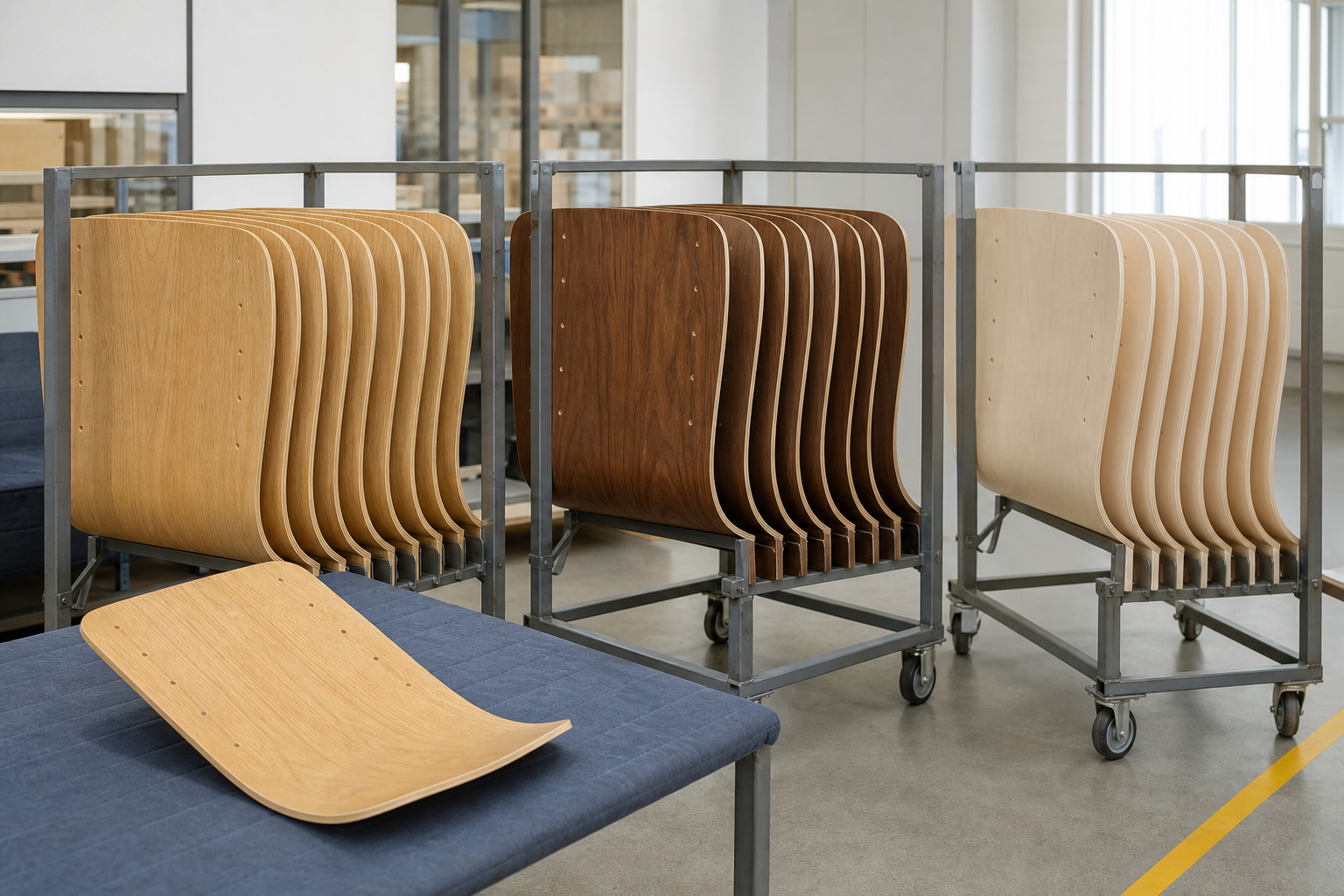
A curved plywood chair back or bent plywood chair seat must work as part of the complete chair. The supplier needs frame drawings, upholstery allowances, hardware information and the surfaces that matter most during assembly. Overall width and height are not enough for a three-dimensional component.
Useful controls include cross-section profiles, reference datums, edge paths, hole coordinates and a physical fit check. Veneer direction, ply construction, pressing conditions and stabilization influence the curve. CNC trimming and drilling then translate the molded form into an assembly-ready part.
For an office chair plywood shell, mechanism and upholstery interfaces may be critical. For a molded plywood dining chair, edge appearance, stacking and fast assembly may matter more. A lounge chair may prioritize deeper curvature and comfort. The material is related, but the engineering brief must match the application.
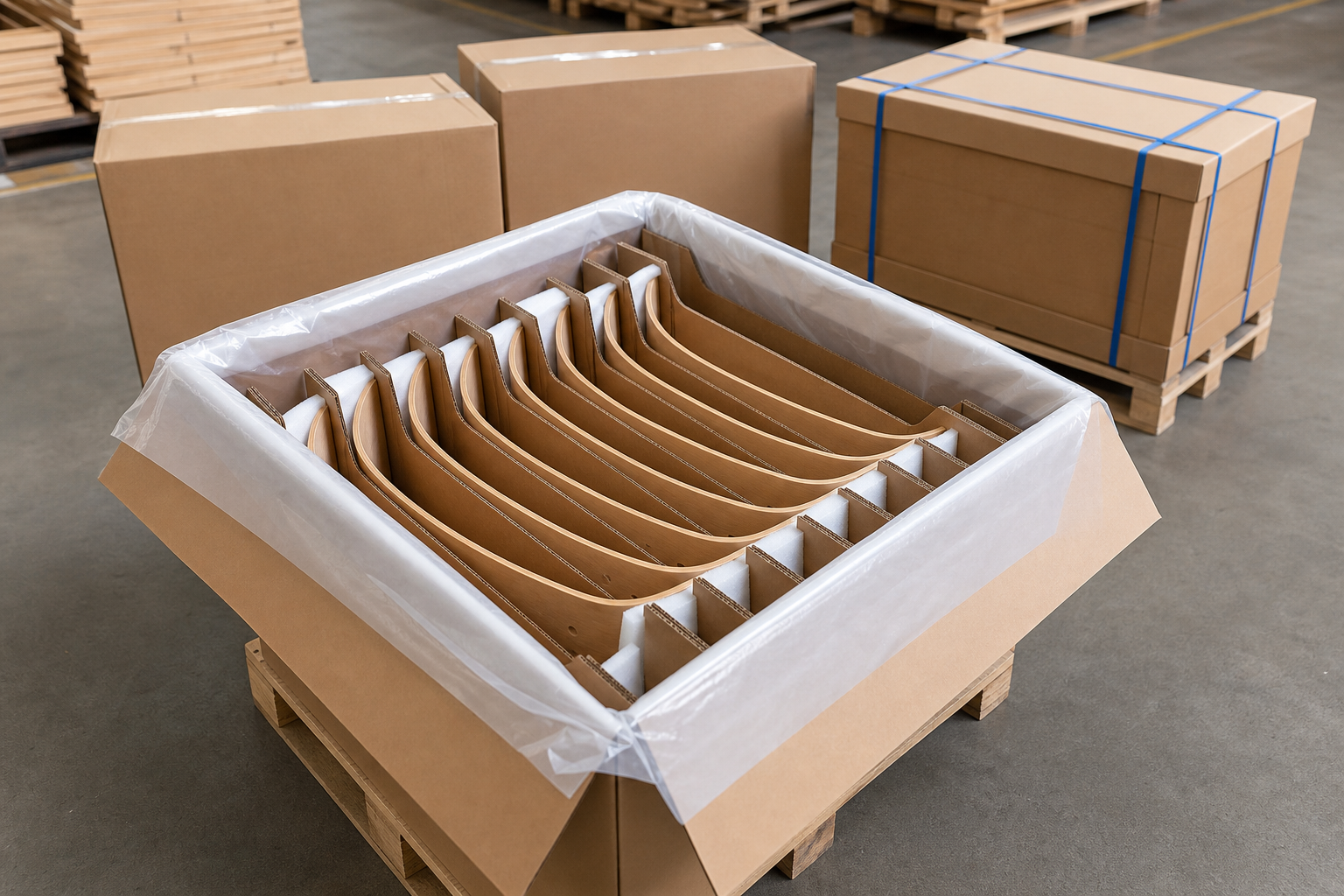
A component platform can reduce tooling and inventory complexity, but poor export packaging can return that risk during transport. Curved parts create contact points that flat boards do not. If they are nested without controlled spacing, one edge can mark the next surface or a stack can shift under vibration.
Export packing should match the approved geometry. Corrugated dividers, soft edge protection, moisture barriers and stable pallet dimensions help protect visible veneer and drilled interfaces. Buyers should also confirm carton quantity and unpacking sequence so the component moves efficiently into assembly.
For European supply chains, wood sourcing and traceability are becoming more important alongside design and price. The European Commission lists 30 December 2026 as the EUDR application date for large and medium operators, with a later date for most micro and small operators.
Furniture buyers therefore benefit from discussing wood species, material records, glue, surface treatment and export documents during development rather than after production. Certification and test documentation should be matched to the specific project and market; one certificate does not replace technical approval or buyer due diligence.
DALI Wood was founded in 2001 and has more than 25 years of experience in bent plywood, molded plywood and curved wood furniture components. The manufacturing system includes more than 3,000 molds and annual capacity of more than 4 million pieces, supporting lounge chairs, dining chairs, office chairs, swivel seating and other furniture structures.
Buyers can begin with a drawing, 3D file, photograph or physical sample. DALI can review the curve, thickness, veneer, edge, drilling, frame compatibility, mold plan and finish before sampling. Existing molds may shorten development, while new tooling can be evaluated for products that need a distinctive geometry.
If your next collection needs several chair looks without several unrelated supply chains, send DALI the target applications, drawings, frame details, finishes and expected quantity. The team can evaluate which components can share a mold or controlled geometry and prepare a quotation for sampling, small-batch development and repeat production.
This article uses Google News headlines and Google autocomplete results captured on 24 June 2026, including coverage from Furniture Today, Business of Home, Interior Daily and Big Furniture Group. Upcoming market context includes the Manchester Furniture Show and Las Vegas Market, together with the European Commission's EUDR information.
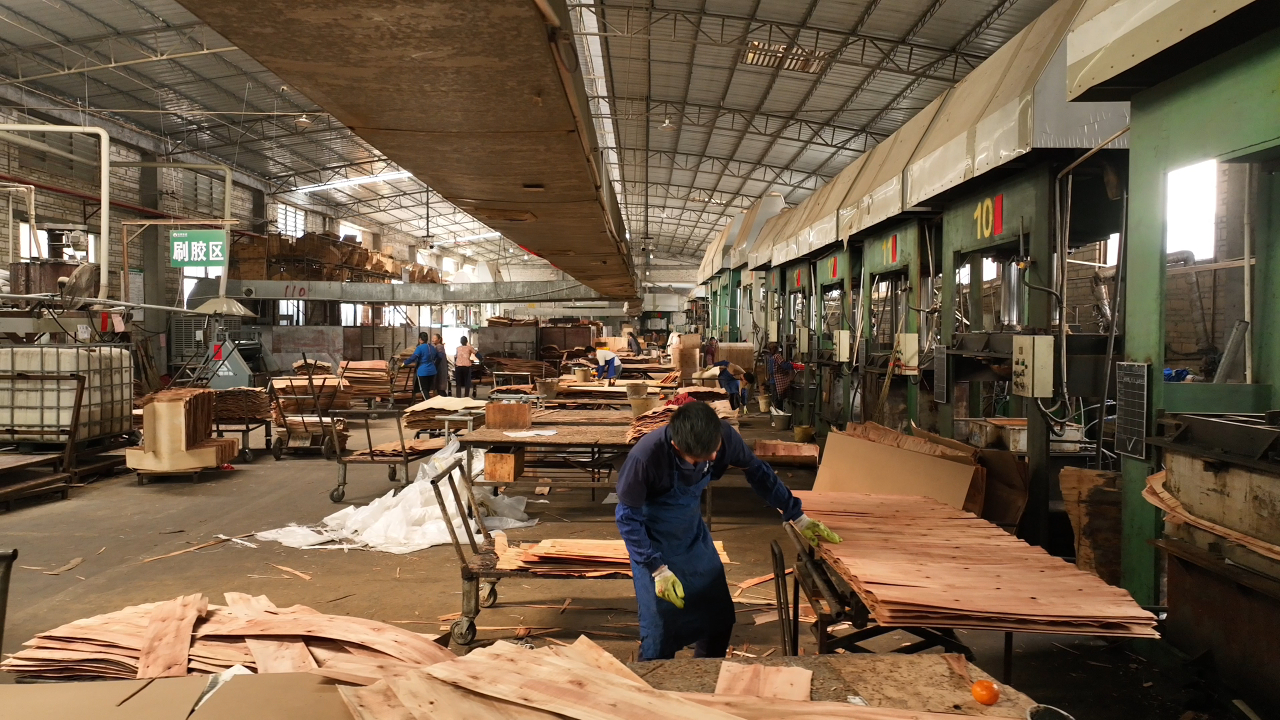
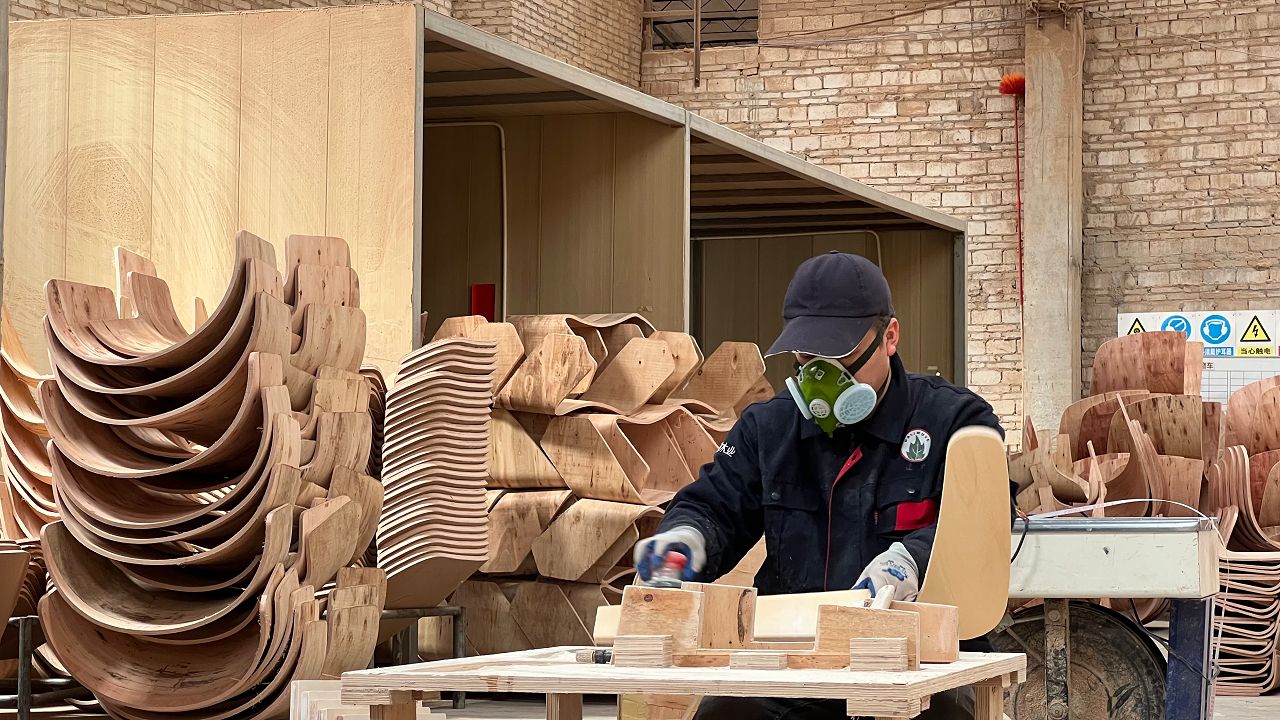
The final two photographs are real DALI Wood production images. They show veneer preparation and hot-press capacity, followed by curved plywood finishing and inspection work.