

 Jun 23, 2026
 dali plywood
 859
859
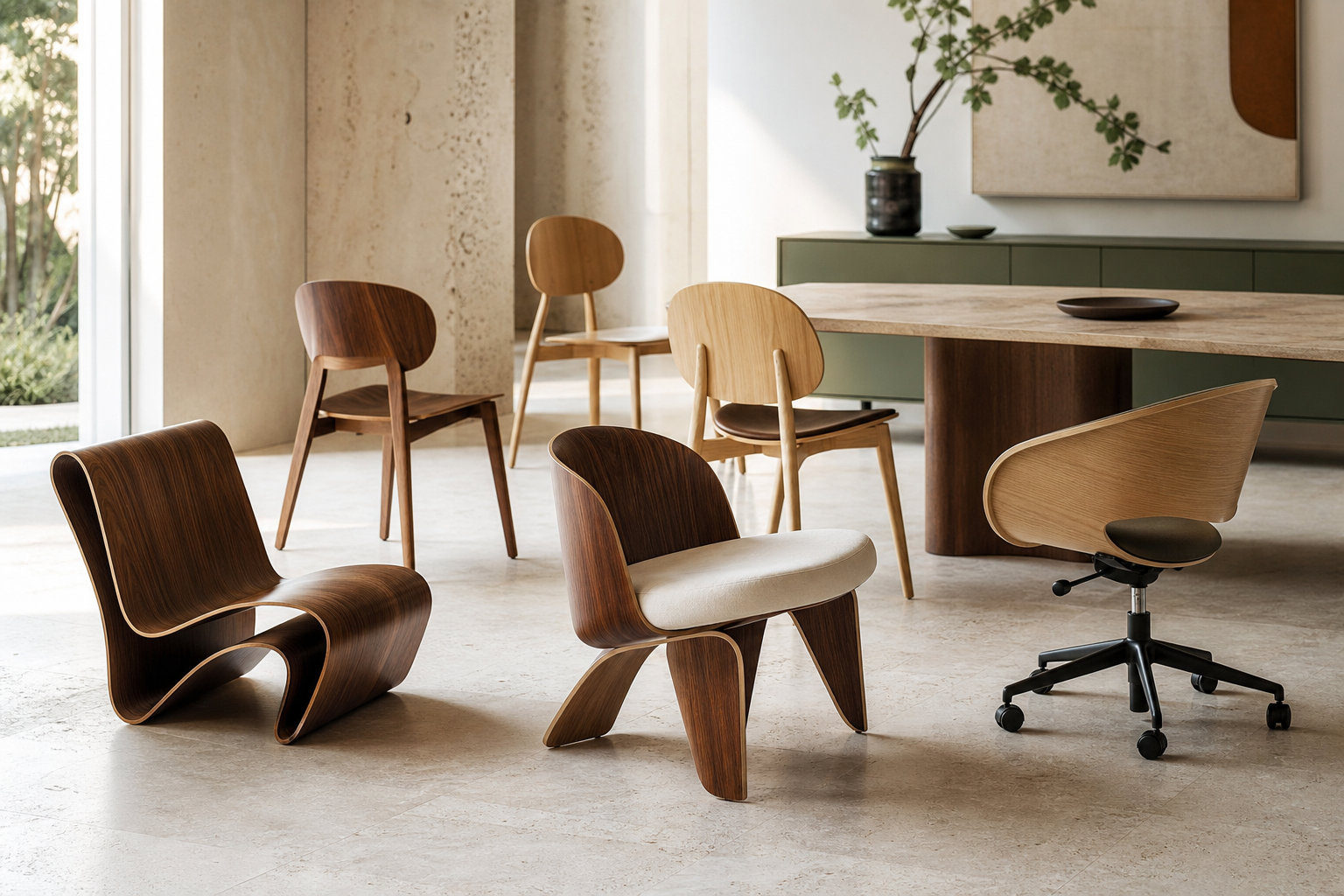
Furniture buyers entering the July 2026 order-writing season are facing an unusual combination of pressures. European demand remains selective. North American retailers want newness without uncontrolled inventory. Design coverage keeps elevating curved furniture, warm wood and quiet luxury. At the same time, wood traceability and documentation are moving closer to the center of supplier decisions.
These signals meet in one component category: curved plywood furniture. A molded plywood chair shell can give a collection the soft silhouette buyers are searching for, while also reducing part count, controlling weight and supporting repeatable production. For brands developing lounge chairs, dining chairs and office seating, the curve is no longer only an aesthetic choice. It is becoming a sourcing and manufacturing strategy.
Google results for the June-to-July furniture calendar point to an active buying window on both sides of the Atlantic. The Manchester Furniture Show is scheduled for 5-6 July, bringing UK retailers and suppliers into an early-month order cycle. In the United States, Las Vegas Market is scheduled for 26-30 July, positioning home furnishings and decor buyers for the second-half selling season.
The dates matter because they compress design comparison, supplier conversations and product decisions into a few weeks. A buyer who sees a sculptural chair in July may immediately ask whether the backrest can be widened, whether the shell can fit an existing metal frame, whether the veneer can be changed, and whether a trial order can arrive without the cost structure of a full launch.
That is where a standard catalog part often reaches its limit. The opportunity moves toward a bent plywood chair manufacturer that can discuss mold development, spring-back, edge design, drilling positions, upholstery interfaces and small-batch production as one connected project.

Current Google results for furniture trends 2026 repeatedly surface the same design language: curved furniture, sculptural curves, warm wood, rich texture, organic forms and quiet luxury furniture. Major retail and interiors pages describe curves as a mainstay rather than a short-lived novelty. The common thread is not decoration for its own sake. Buyers want products that feel calm, tactile and human.
For SEO and buyer intent, broad phrases such as “furniture supplier” are less useful than specific commercial searches. Terms such as molded plywood chair shell, custom plywood chair back, curved plywood lounge chair supplier, dining chair plywood supplier and office chair plywood components point to projects that already have a defined application.
This keyword cluster also explains why bent plywood fits the moment. Natural veneer delivers warmth and visible grain. Cross-laminated layers provide controlled strength. A press mold creates ergonomic geometry that a flat panel cannot. The result can look refined in a premium interior while remaining practical for factory assembly.
European furniture reporting describes a cautious market in which households are prioritizing value, longevity and experiences. For manufacturers and retailers, that makes differentiation more important: a new chair needs a recognizable silhouette, credible materials and a supply story that can survive closer scrutiny.
North American buyers are also balancing design appeal with inventory risk. A product may need to work across hospitality, residential and contract channels, or support several finishes from one structural platform. A versatile molded plywood shell can make that easier. One approved geometry may be paired with a metal base, solid-wood frame, swivel mechanism or upholstered cover, provided the interfaces are engineered correctly.
The commercial lesson is simple. European buyers may begin with material origin and documentation; US buyers may begin with launch timing, assortment flexibility and cost. Both arrive at the same supplier question: can the curved component be developed quickly, measured clearly and reproduced consistently?
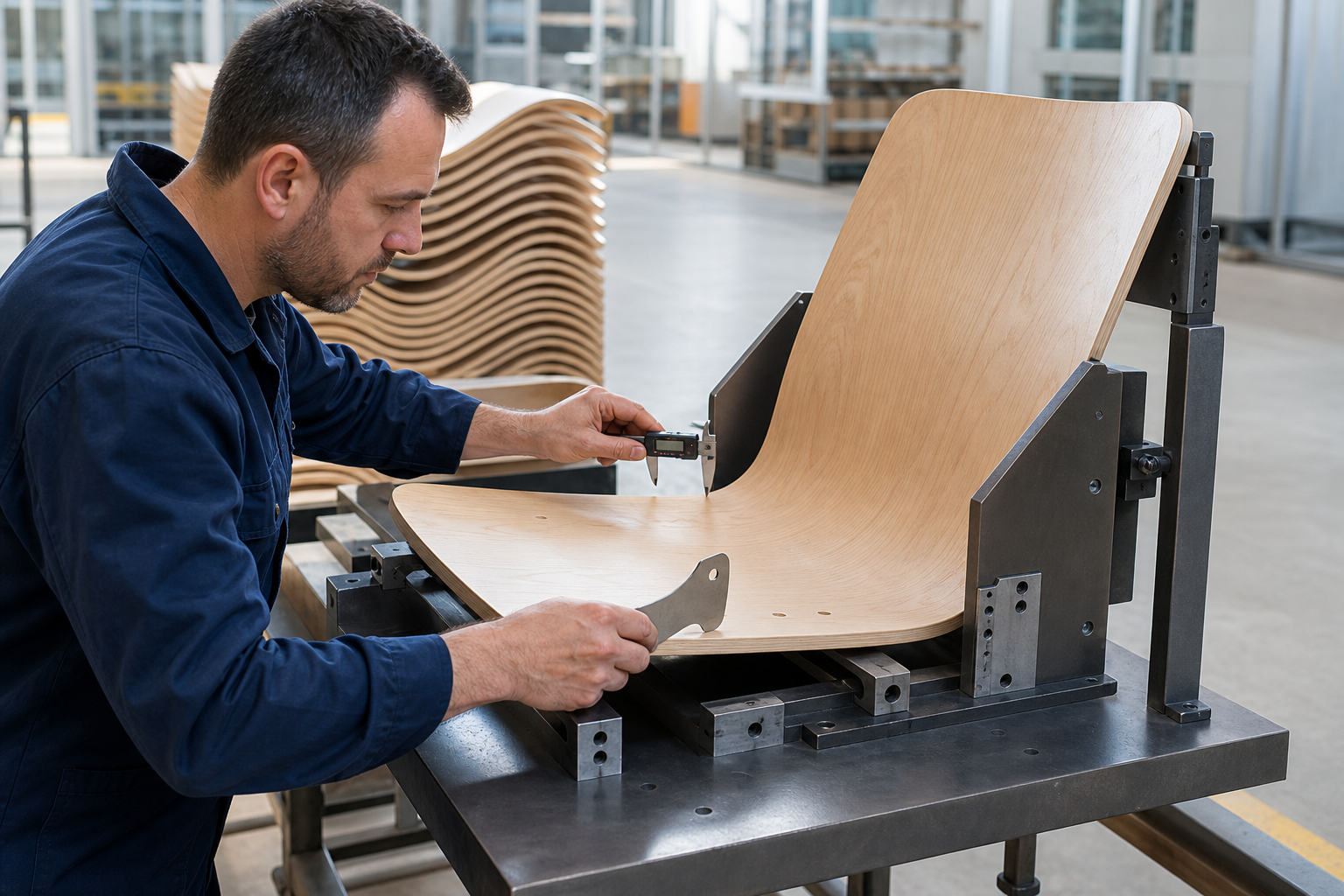
A chair shell that looks effortless is usually the result of tightly connected decisions. Veneer species, moisture condition, ply direction, adhesive, press temperature, mold geometry and stabilization time all influence the final profile. After pressing, CNC trimming and drilling must reference stable datums so holes and edges remain aligned with the frame.
Spring-back is especially important in a molded plywood chair shell. Two parts may share the same overall width and height but differ through the middle of the curve. Buyers should therefore approve profile sections, fixture checks and frame fit rather than relying only on a photograph or one signed sample.
Small-batch development is valuable at this stage. It allows a brand to test comfort, upholstery, hardware, finish and packaging before committing to a high-volume order. The most effective prototype is not a display object; it is a controlled reference that can be translated into production settings and inspection points.
The European Commission states that the EU Deforestation Regulation enters into application for large and medium operators on 30 December 2026, with a later date for micro and small operators. For wood-related supply chains, the practical preparation starts before the deadline. Buyers need to identify relevant materials, understand supplier documentation and connect purchase records with the products entering their market.
This does not mean that one certificate or one sample solves every compliance question. It means product development and sourcing documentation should no longer be separate conversations. Wood species, veneer source, glue requirement, surface finish, packing method and export records should be discussed while the part is being engineered.
For a furniture brand, that approach reduces late-stage surprises. For a component factory, it creates a clearer technical brief. For both sides, it makes a custom bent plywood project easier to scale across markets.
Trend language attracts attention, but manufacturing data decides whether a project moves forward. DALI Wood supports buyers with a production platform built around curved wood furniture components:
25 years of experience since the company was founded in 2001.
3,000+ molds covering lounge, dining, office and other furniture structures.
4 million+ pieces of annual production capacity across the manufacturing system.
Around 100 pieces as a possible starting point for selected custom projects, depending on size and structure.
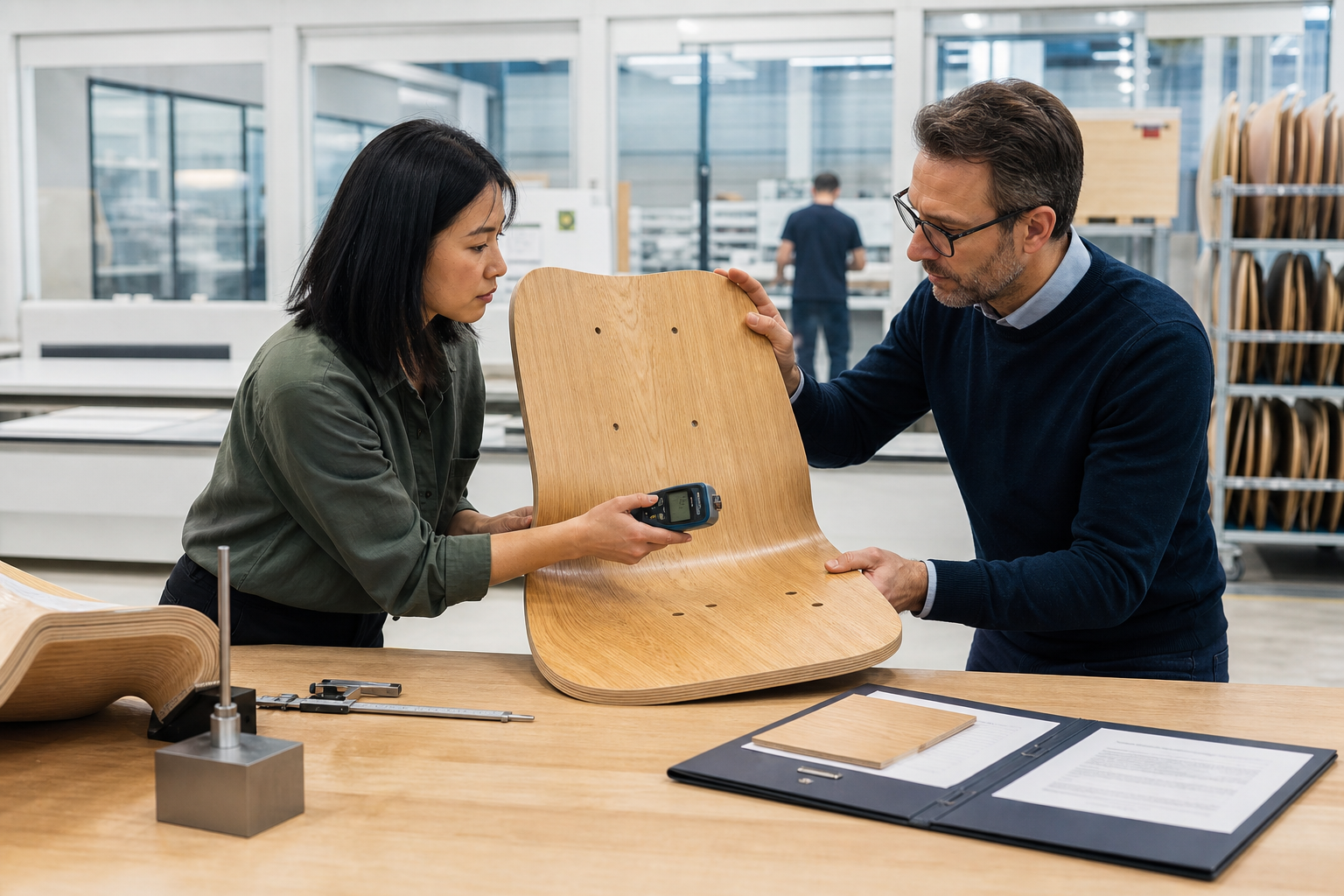
Those figures are useful because they address four buyer risks: technical learning, tooling time, scale-up capacity and trial-order flexibility. An existing mold may shorten development. A new mold can be evaluated when the shape needs to be unique. After sample approval, the same production system must maintain curve, thickness, machining and finish through repeat orders.
A practical development path starts with the complete chair, not only the plywood drawing. Buyers should share the intended market, frame, upholstery method, hardware, visible surfaces and target quantity. DALI can then review the 3D file, drawing, photograph or physical sample and discuss whether an existing mold can be adapted.
For a lounge chair, the priority may be deep curvature and comfort. For a dining chair, it may be lightness, stacking, edge appearance and fast assembly. For office seating, it may be hole accuracy, mechanism fit and a stable inner structure beneath upholstery. Each application uses the same material family but needs a different engineering conversation.
The strongest July 2026 product story is therefore not “curves are trending.” It is that curved plywood can connect a visible consumer trend with measurable factory advantages: fewer parts, natural material expression, repeatable geometry, custom development and a clearer route from prototype to production.
If your team is developing a curved lounge chair, dining chair back, molded plywood seat or office chair shell, send DALI Wood the drawing, dimensions, target finish, frame information and estimated quantity. The team can review mold options, sample requirements, drilling positions, veneer selection and production planning, then prepare a quotation sheet for OEM or ODM development.
This article uses current Google search results and public information from the Las Vegas Market schedule, World Furniture Online fair calendar, Lectra's 2026 upholstered furniture outlook, current furniture trend coverage, and the European Commission EUDR page.
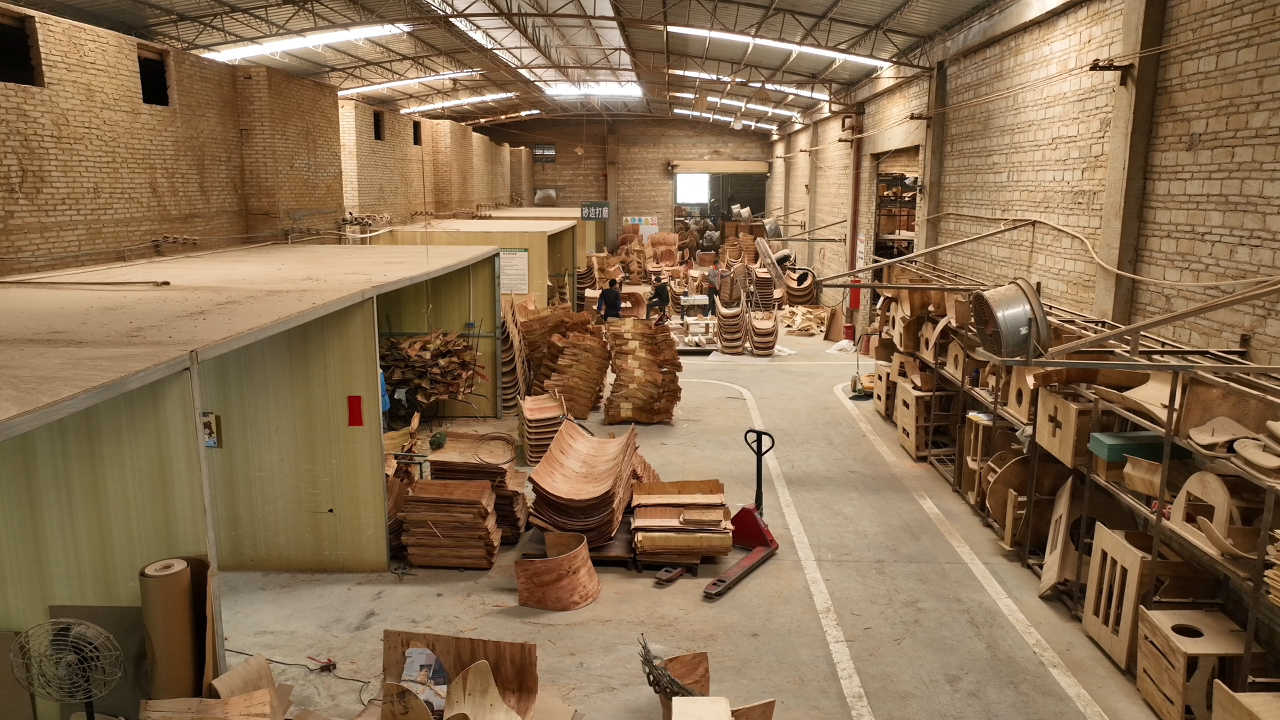
The two photographs below are real DALI Wood factory images. They show the curved plywood workshop and the Rongxian production base behind the development and capacity figures in this article.