


 Jun 18, 2026
 dali plywood
 385
385
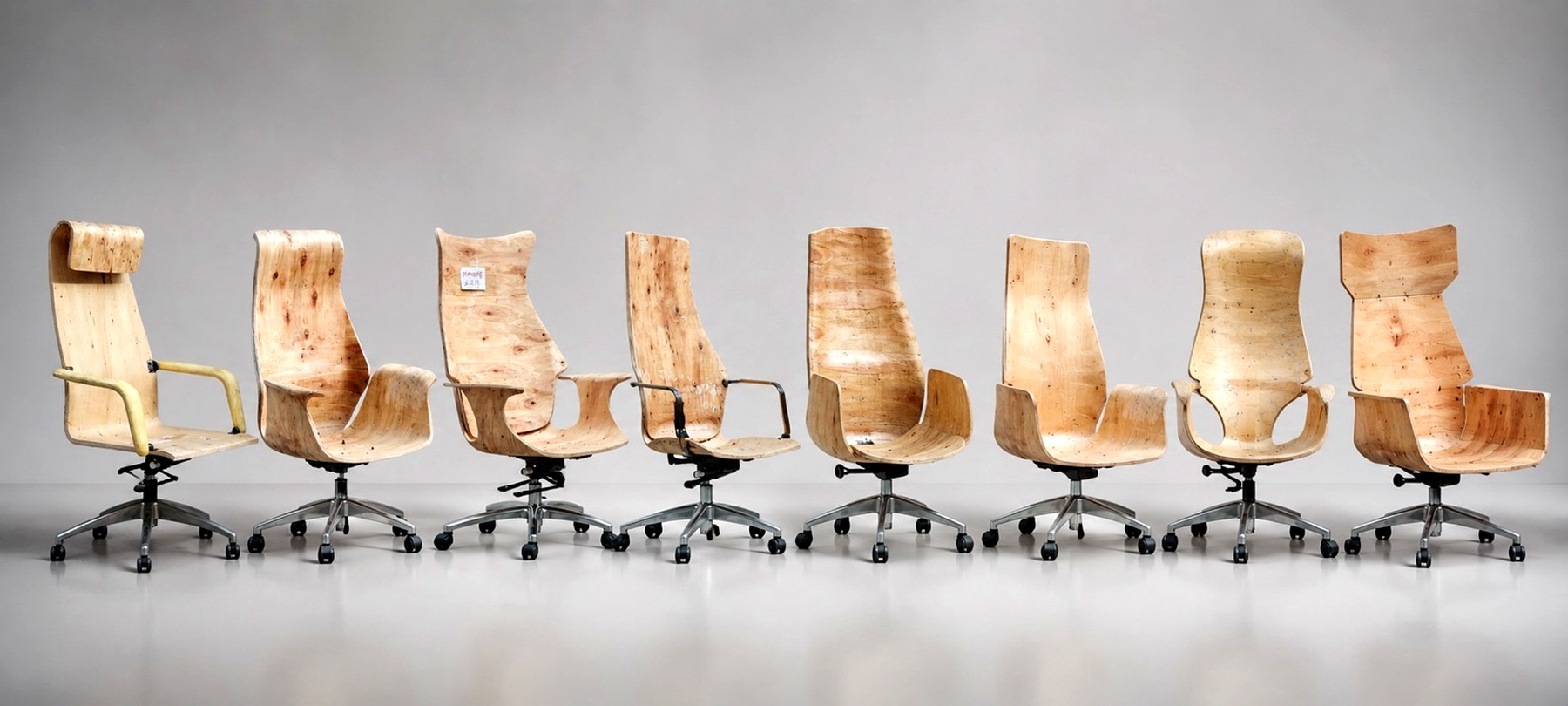
The office chair market is changing because workplaces are changing. Hybrid work, smaller corporate footprints and higher expectations for employee comfort are pushing furniture brands to make seating that feels less technical and more human.
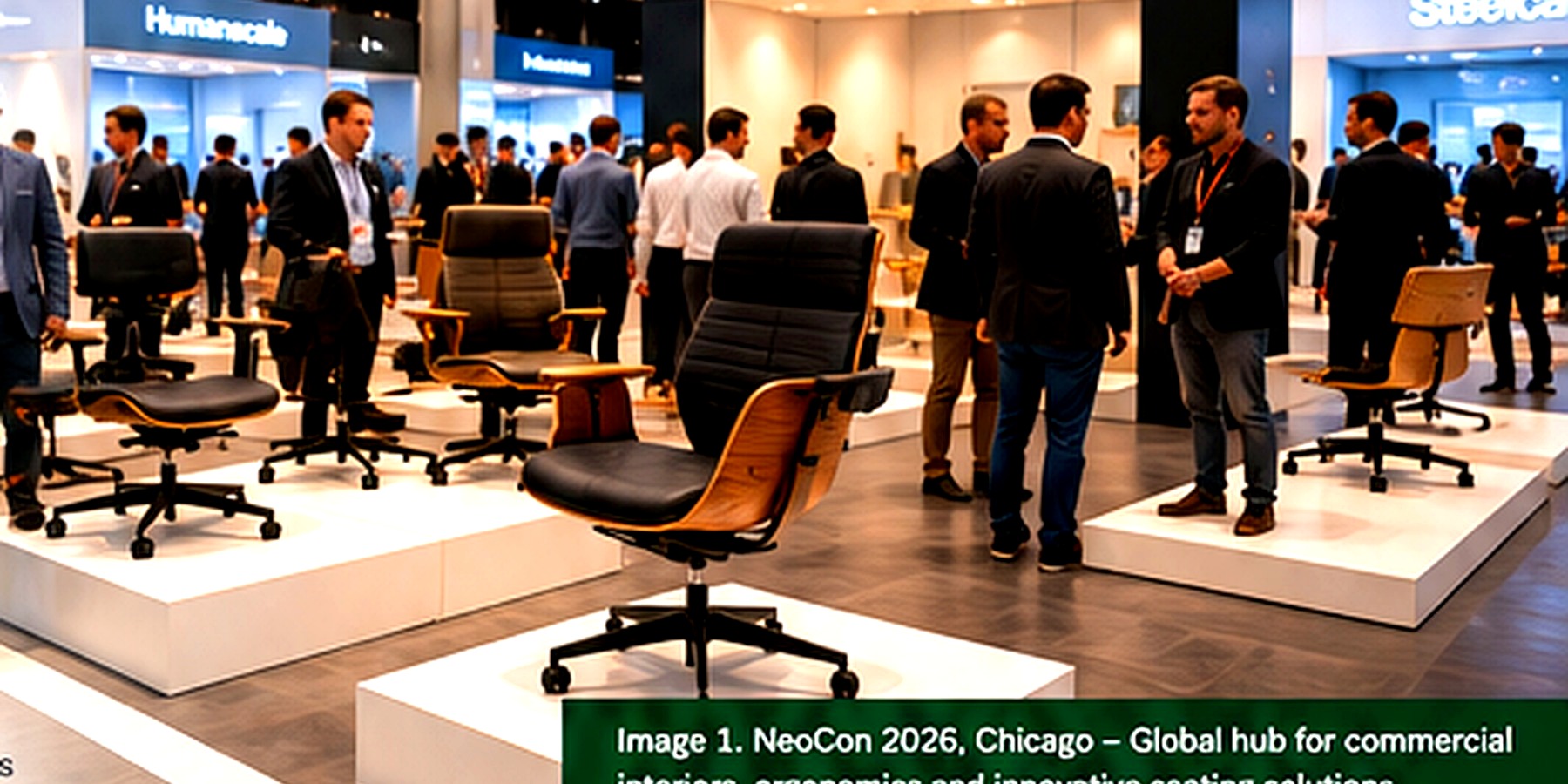
At NeoCon 2026 in Chicago, the commercial interiors industry again focused on the future of workspaces, with product innovation, material choices and human experience at the center of the conversation. For office chair manufacturers, this means one thing: the inner structure of the chair matters more than ever.
A good office chair is not only about mesh, foam, wheels or mechanisms. The back shell and seat foundation decide how the chair supports the body, how it looks from every angle, and how efficiently it can be produced at scale.
Bent plywood gives office chair designers a rare combination: curved form, stable strength, controlled thickness and natural wood texture. Compared with a flat board, a molded plywood back can follow the spine more naturally. Compared with some heavy solid wood parts, it can reduce weight while keeping structural stability.
For office chair brands, molded plywood can be used for backrests, seat shells, one-piece chair bodies, armrest structures, inner upholstered shells and visible wooden design parts. This makes it useful for both executive chairs and warmer, residential-style office seating.
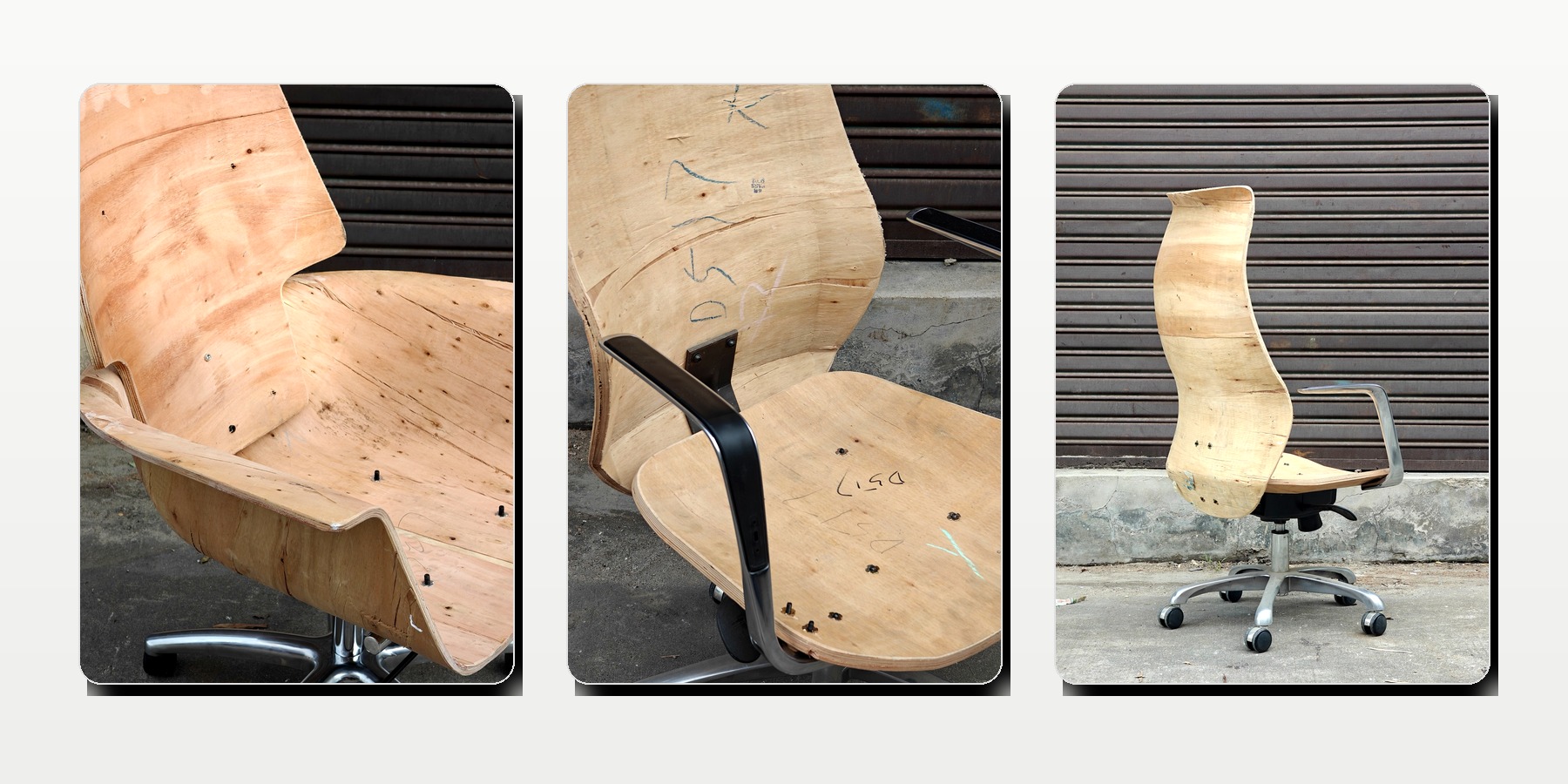
The detail photos in this article show the real product logic behind a chair shell: curved surfaces, hole positions, edge thickness, armrest connection points and ergonomic back angles. These details are what buyers care about when they move from design concept to mass production.
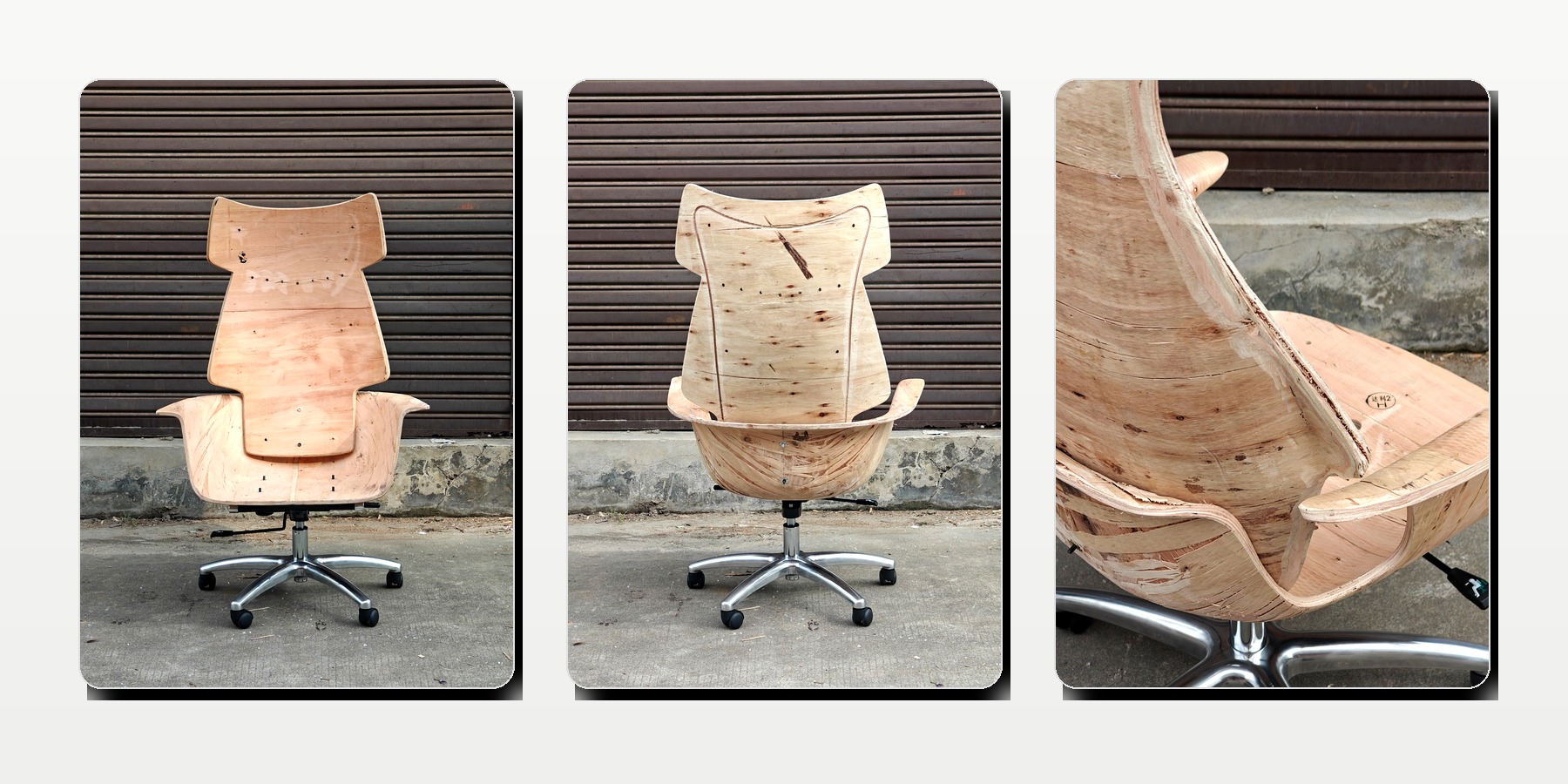
Many office chair factories have strong design ideas, but the first development step is often difficult. A new back shell may need a special curve. The seat may require precise hole positions for the mechanism. The armrest connection area may need extra strength. A small error can create spring-back, cracking, unstable assembly or inconsistent comfort.
This is why buyers often search for more than a material supplier. They need a partner who understands chair structure, mold development and repeatable production. They also need a practical starting point for new designs, especially when the first market test does not require a very large quantity.
DALI Wood helps customers develop custom bent plywood chair parts with a lower mold cost. In many cases, a new mold can be developed with only a few thousand RMB, depending on the structure and size. When a project reaches around one hundred sets or more, custom development can already become practical for trial production.
DALI Wood was founded in 2001 and has focused on bent plywood, molded plywood and curved wood components for 25 years. The company has developed into an integrated manufacturer covering R&D, production and sales for global furniture customers.
For office chair projects, DALI can support product development from drawings, 3D files or physical samples. The team can help confirm thickness, curve radius, veneer direction, hole position, structure, mold design and sample testing before moving into trial order and mass production.
The factory system includes more than 100 hot-press machines, 50 CNC automatic forming workstations and over 3,000 custom molds covering office chairs, dining chairs, lounge chairs, swivel chairs and other furniture structures. Annual capacity reaches about 4 million pieces, supporting both new product development and stable bulk orders.
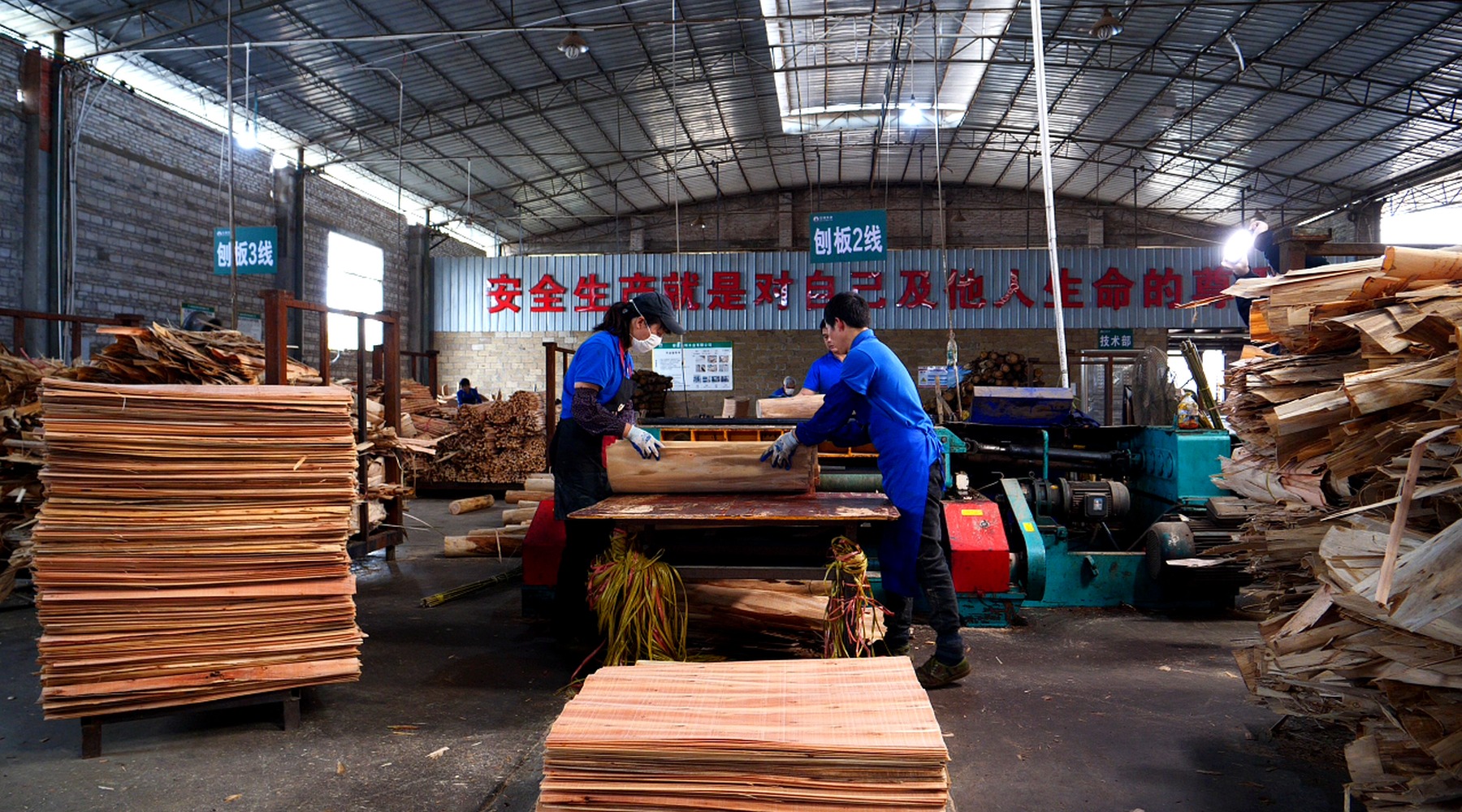
A single office chair model may require several plywood parts: a backrest, a seat panel, an inner support board, an armrest component or a decorative outer shell. When these parts are developed separately, the risk of mismatch increases. When they are developed as a system, the chair becomes easier to assemble and easier to scale.
This is where DALI’s mold library becomes valuable. With more than 3,000 existing molds, many new office chair designs can start from an existing structure, then adjust curve, width, thickness or edge form. This can shorten development time and reduce cost for overseas customers.
For buyers in Europe, the United States, India, Brazil, Kazakhstan and other furniture markets, this means faster sampling, easier customization and a more flexible alternative to high-cost local tooling.
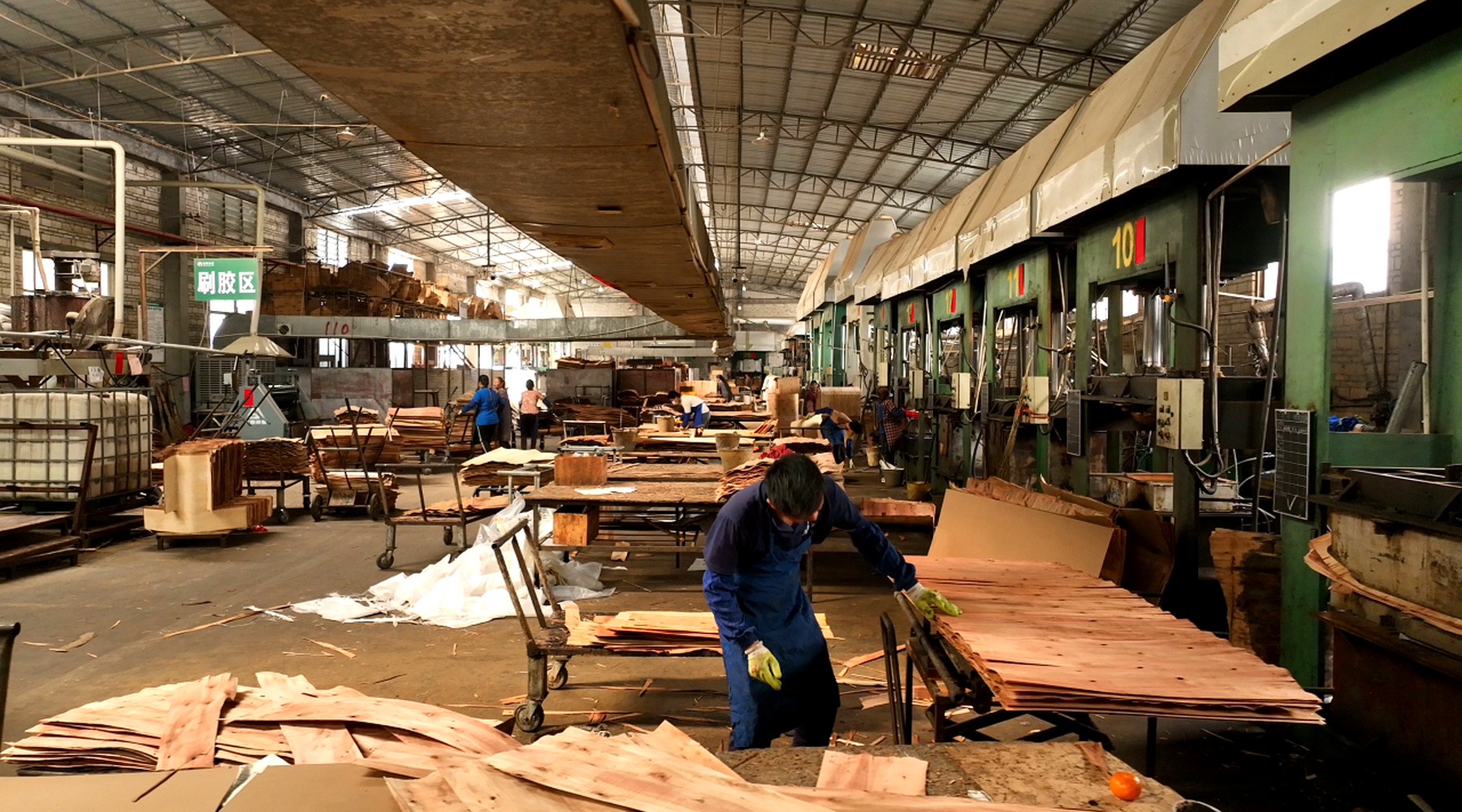
Office furniture buyers are also paying more attention to responsible materials and traceable supply chains. The EU Deforestation Regulation requires covered wood and wood-based products placed on, sold within or exported from the EU to be deforestation-free from 30 December 2026. This makes material documentation and supplier reliability more important for European customers.
DALI Wood supports export customers with certified material options and quality-control processes. The company has FSC, CE, SGS and BV-related certification support and long-term experience serving international furniture manufacturers.

For an office chair brand, the best supplier is not only the one who can make a standard part. The best supplier can help test ideas, reduce mold risk, control quality and keep delivery stable after the design is approved.
DALI Wood provides custom office chair bent plywood solutions for backs, seats, shells and structural components. Whether the project is an ergonomic executive chair, a wood-back task chair, a lounge-style office chair or an upholstered shell, DALI can help turn the design into a manufacturable product.
For customers who want to develop a new office chair, the process can start simply: send a drawing, 3D file or sample, confirm the structure, make the mold, test the sample, adjust the details and then move into production.
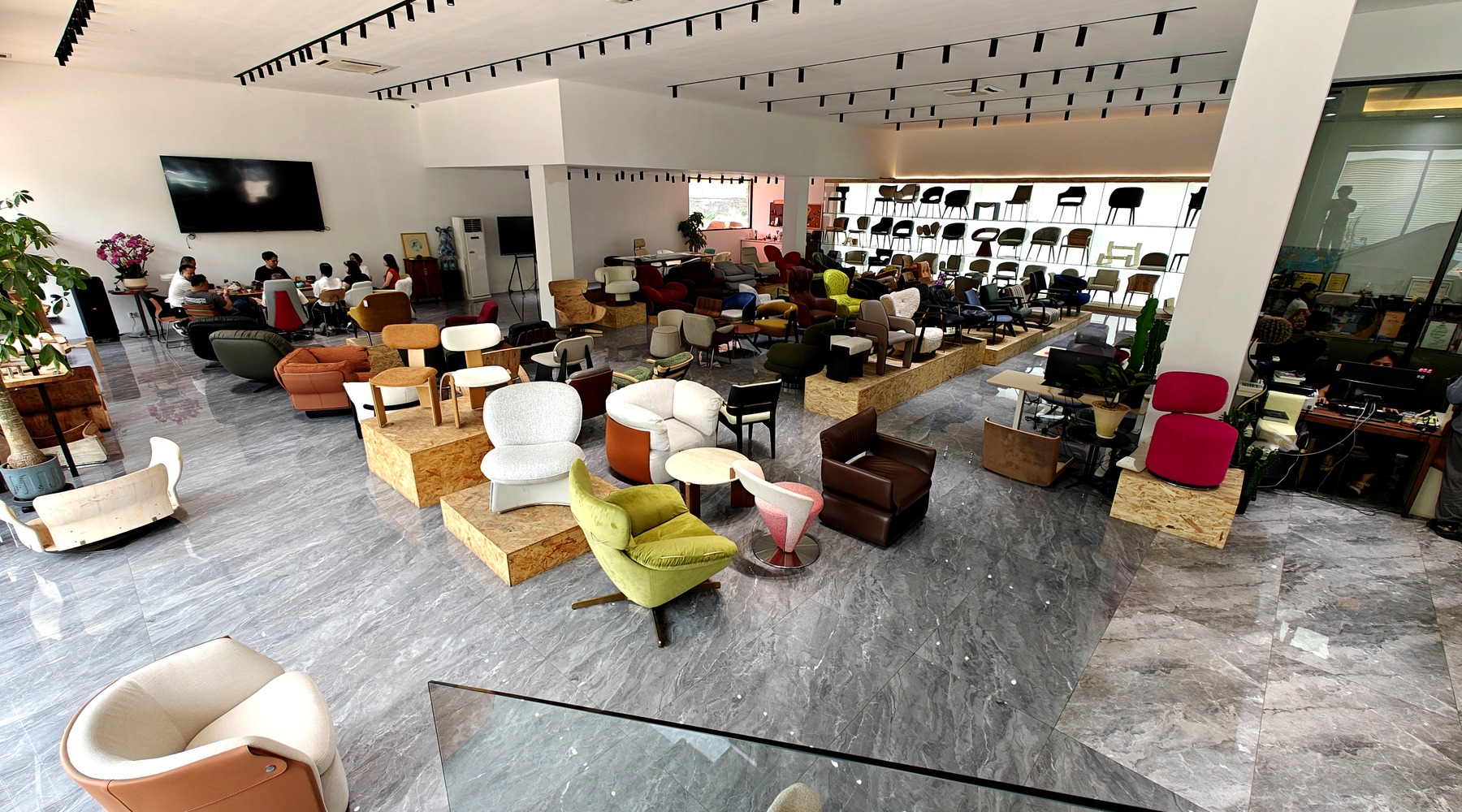
In 2026, office chair competition is not only about appearance. It is about comfort, durability, sustainability, supply stability and speed of development.
Bent plywood gives furniture brands a practical way to create warmer, more ergonomic and more distinctive office chairs. With lower mold cost, flexible trial development, strong production capacity and 25 years of curved plywood experience, DALI Wood can support customers from concept to mass production.
If you are developing office chair backs, molded plywood seats or custom chair shells, contact DALI Wood to discuss your next project.
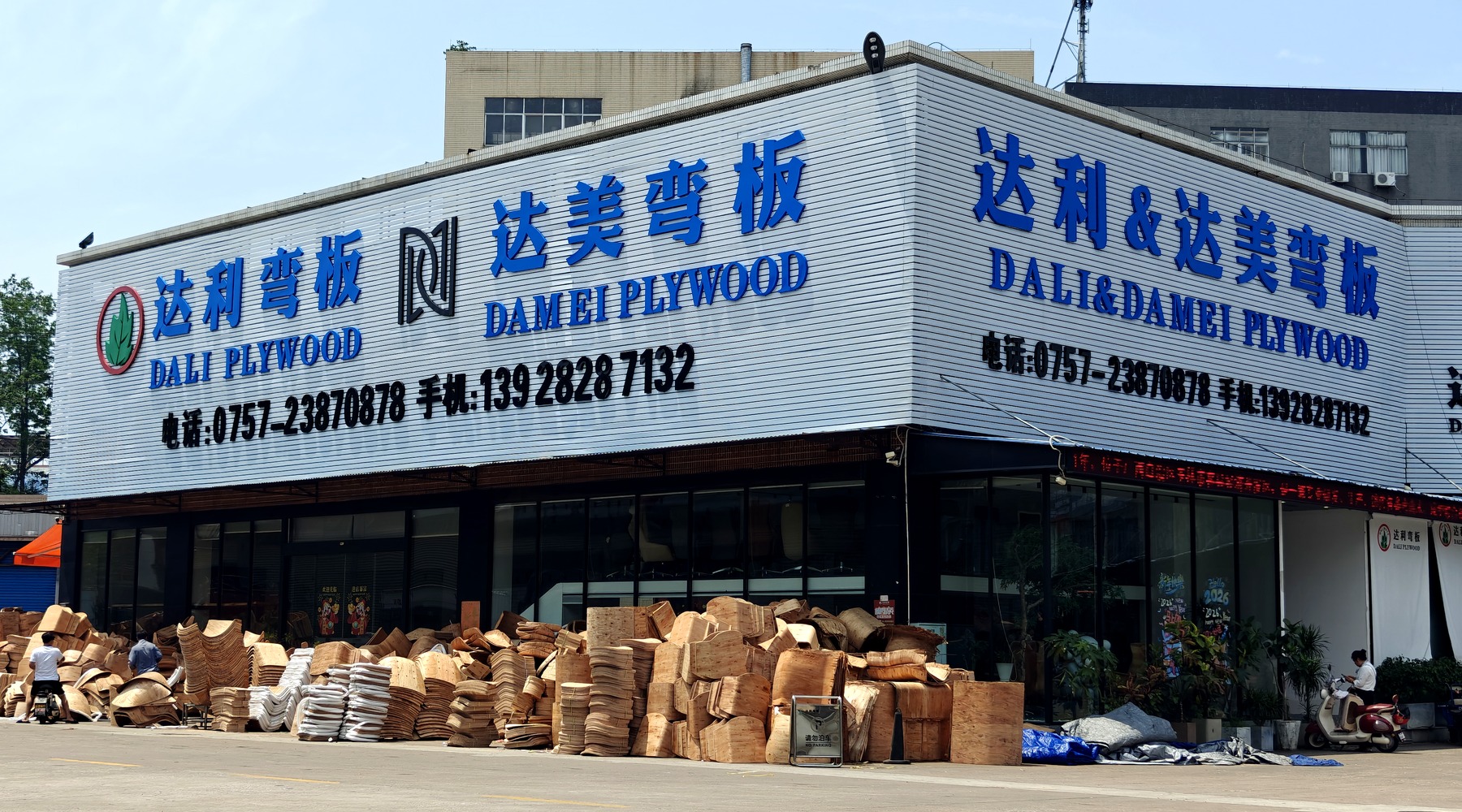
For brands comparing a new office chair platform, early supplier involvement can make the difference between a design that looks promising and a part that can be produced repeatedly. DALI Wood can review drawings, 3D files or physical samples, then discuss curve, thickness, veneer direction, hole positions, mold plan, sample timing and mass-production control before the project moves too far into tooling.
To begin, share the chair type, target market, expected quantity, surface requirement and any mechanism or upholstery details. The team can suggest whether an existing mold can be adapted or whether a new mold is the better route for your ergonomic and visual target.
This article references public market context from NeoCon 2026, office design trend reporting, ORGATEC TOKYO trend observations, European Commission EUDR guidance, and DALI Wood company information.