

 Dec 15, 2025
 Calvin Wong
 898
898
In the office furniture industry, the performance of a chair depends not only on its design or mechanism but also on the quality of the materials used beneath the surface. One of the most critical yet often overlooked components is office chair plywood.
For furniture brands, OEM manufacturers, and project buyers, choosing a reliable office chair plywood supplier can directly affect product durability, production efficiency, compliance standards, and long-term brand reputation.
This guide explains how to evaluate and select the right office chair plywood supplier, based on material quality, manufacturing capability, consistency, and partnership reliability.
Office chairs are designed for daily, long-term use, often under dynamic loads. The plywood used in chair seats and backs must withstand:
Repeated bending and pressure
Long hours of seated weight
Fastener stress from screws and brackets
Environmental changes such as humidity and temperature
Poor-quality plywood can lead to:
Cracking or splitting
Delamination
Loss of structural support
Increased warranty claims
A reliable supplier ensures material performance consistency, which is essential for large-scale production and international markets.
Before evaluating suppliers, buyers must clearly understand what office chair plywood requires.
High bending strength
Excellent screw-holding capacity
Stable shape under load
Resistance to delamination
Chair seat shells
Backrest panels
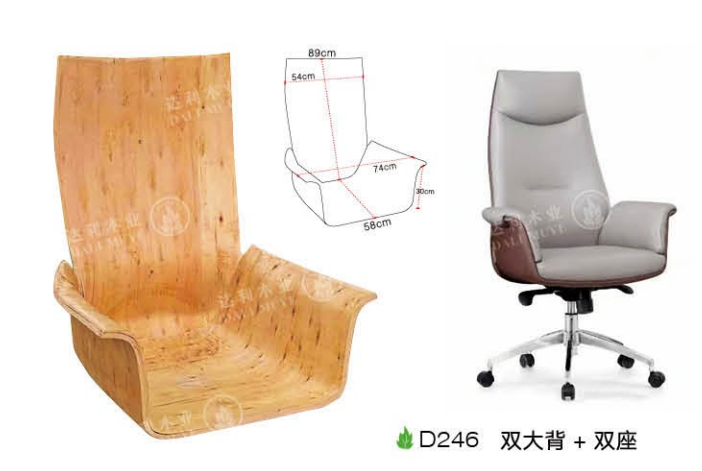
Molded ergonomic components
A professional supplier should understand these application-specific requirements and offer tailored plywood solutions, not generic panels.
A reliable supplier should be transparent about raw material choices.
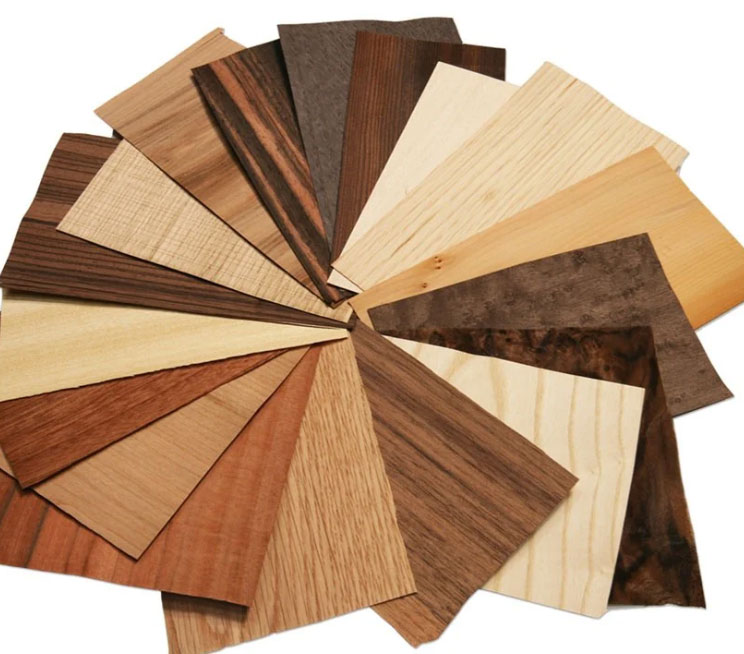
Birch – high strength, uniform grain, excellent for molded plywood
Maple – smooth surface, good density
Mixed hardwood cores – cost-effective with controlled performance
Ask suppliers:
What wood species are used in the core and face veneers?
Are veneers rotary-cut or sliced?
How is veneer moisture content controlled?
Material consistency is the foundation of reliable plywood.
Not all suppliers can produce molded plywood for office chairs.
Used for basic seat panels
Requires secondary shaping or cutting
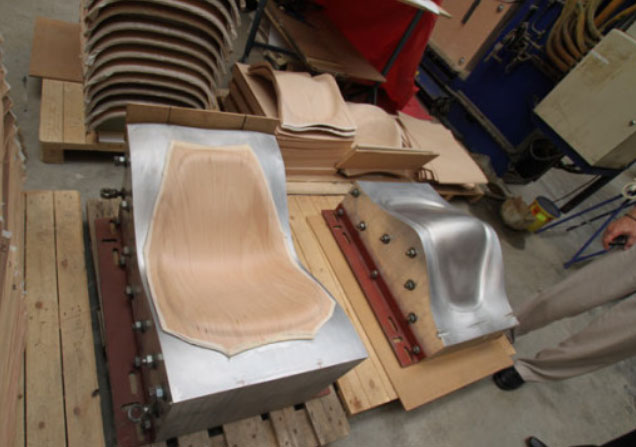
Formed under heat and pressure
Allows ergonomic curves
Reduces assembly complexity
A strong office chair plywood supplier should offer:
Molded plywood capability
Custom mold development
Stable curvature retention
This is especially important for ergonomic and task chairs.
A reliable supplier invests in process control, not just capacity.
Precision hot-press molding machines
Controlled glue application systems
Consistent pressing temperature and pressure
CNC trimming and sanding
Ask suppliers:
How do you control thickness tolerance?
What is your rejection or defect rate?
How do you prevent delamination?
Suppliers with standardized processes deliver repeatable quality, batch after batch.
Adhesives play a critical role in office chair plywood performance.
Adhesive type (phenolic, urea-formaldehyde, low-emission alternatives)
Formaldehyde emission level (E0, CARB P2, EN standards)
Long-term bond strength
For international markets, especially North America and Europe, compliance is non-negotiable.
A reliable supplier should:
Provide test reports
Understand destination market regulations
Offer low-emission plywood options
Professional suppliers test plywood not only visually but mechanically.
Bending strength tests
Internal bond strength
Screw-holding force
Thickness and density consistency
Ask:
Do you perform in-house testing?
Can you provide third-party lab reports?
Do you test per batch or per order?
Consistent testing reflects a supplier’s commitment to long-term partnerships, not short-term sales.
Office chair manufacturers rarely use standard plywood sizes.
A reliable supplier should support:
Custom thickness (e.g., 7mm, 9mm, 12mm)
Custom shapes and curvature
Veneer species selection
Surface finishing or pre-sanding
Customization capability indicates that the supplier understands OEM and ODM furniture manufacturing, not just raw material supply.
Capacity alone is not enough—stability matters more.
Monthly output capacity
Peak season lead time
Ability to scale for large orders
Inventory planning support
An experienced office chair plywood supplier can:
Forecast production schedules
Maintain consistent delivery timelines
Reduce supply chain risk
Unstable supply can disrupt entire furniture production lines.
Reliable suppliers act as technical partners, not just vendors.
Look for suppliers who:
Communicate clearly in technical terms
Respond quickly to quality issues
Offer material recommendations
Support prototype development
Good communication reduces costly misunderstandings and accelerates product development cycles.
The cheapest plywood is often the most expensive in the long run.
Low-quality office chair plywood can lead to:
Higher scrap rates
Assembly failures
Product recalls
Brand damage
A reliable supplier helps optimize:
Material usage
Yield rates
Overall production efficiency
The goal is value consistency, not just unit price.
✔ Clear material specifications
✔ Stable quality across batches
✔ Strong molded plywood capability
✔ International compliance knowledge
✔ Custom OEM support
✔ Transparent communication
These indicators matter more than marketing claims.
Office chair plywood is engineered plywood specifically designed for chair seats and backs, offering high strength, durability, and resistance to repeated load and stress.
Yes. Molded plywood allows ergonomic shaping, improved comfort, and better load distribution, making it ideal for modern office chairs.
Typical thickness ranges from 7 mm to 12 mm, depending on chair design and load requirements.
Birch is widely preferred due to its strength and uniform grain, though maple and mixed hardwood cores are also commonly used.
Request:
Material samples
Mechanical test reports
Small trial orders
A reliable supplier will support sampling and testing.
Yes. Professional suppliers can customize thickness, shape, veneer species, curvature, and surface finish to meet specific chair designs.
Choosing a reliable office chair plywood supplier is a strategic decision that impacts product quality, manufacturing efficiency, and brand reputation. Beyond price, buyers should focus on material consistency, manufacturing capability, compliance standards, and long-term partnership potential.
With the right supplier, office chair plywood becomes not just a structural component—but a foundation for durable, ergonomic, and competitive office seating products.