

 Dec 30, 2025
 Calvin Wong
 1740
1740
In today’s highly competitive furniture market, customization is no longer a luxury—it is a necessity. Brands, designers, and distributors are increasingly looking for custom dining chair plywood solutions that combine unique design, reliable quality, flexible MOQs, and scalable OEM manufacturing.
Plywood has become one of the most preferred materials for dining chair production due to its strength, versatility, and design freedom. When paired with professional OEM capabilities, custom dining chair plywood allows brands to stand out in both residential and commercial markets.
This article provides a complete overview of custom dining chair plywood, focusing on design options, minimum order quantities (MOQ), and OEM solutions, helping buyers understand how to turn concepts into finished products efficiently.
Custom dining chair plywood refers to plywood chair components or complete chairs that are manufactured according to specific client requirements, rather than standard off-the-shelf designs.
Customization can include:
Chair shape and structure
Plywood thickness and layering
Veneer species and surface finish
Upholstery integration
Hardware and assembly methods
Branding and packaging
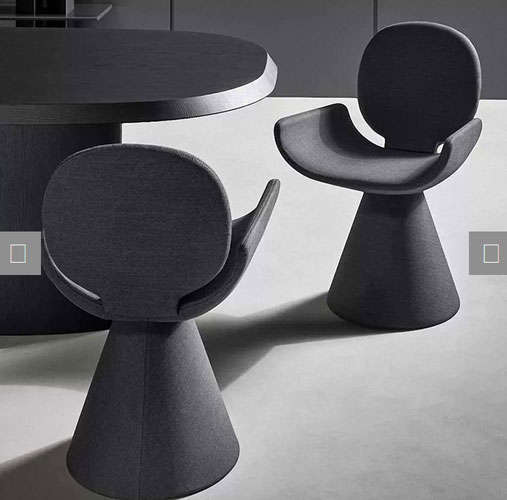
Unlike mass-produced chairs, custom plywood dining chairs are developed through close collaboration between the buyer and the manufacturer, ensuring the final product matches the brand’s identity and market positioning.
Plywood is especially suitable for customization because of its engineered structure and processing flexibility.
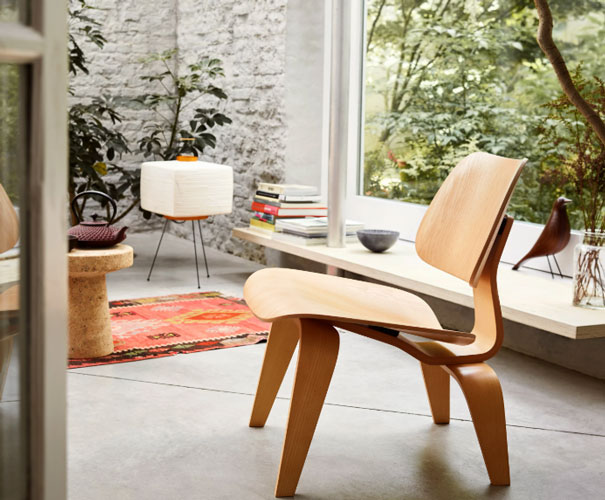
Molded and bent plywood allows:
Ergonomic curves
Seamless seat-and-back shells
Complex geometries not achievable with solid wood
This makes plywood ideal for modern, minimalist, and designer dining chairs.
The cross-laminated structure of plywood:
Prevents warping and cracking
Provides consistent strength across large batches
Performs better than solid wood in varying climates
This is particularly important for export markets.
Custom dining chair plywood offers:
Lower material waste
Faster production once molds are made
Predictable quality and pricing
For OEM buyers, this balance of customization and scalability is a key advantage.
OEM manufacturers can customize:
One-piece molded plywood shells
Separate seat and back panels
Hybrid designs with plywood + solid wood frames
Plywood shells with metal legs
Each structure affects aesthetics, comfort, cost, and assembly complexity.
Typical dining chair plywood thickness ranges from 9 mm to 15 mm, but custom configurations are common.
Factors influencing thickness:
Load-bearing requirements
Chair size and shape
Whether upholstery is added
Target market standards (residential vs commercial)
Manufacturers may adjust the number of veneer layers rather than using thicker individual veneers to maintain flexibility and strength.
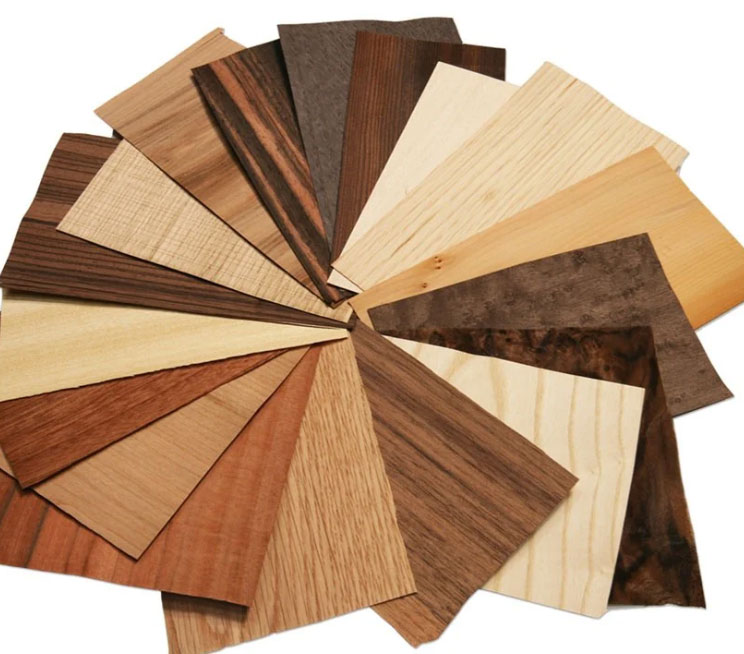
Custom dining chair plywood can use various veneer combinations:
Core veneers (structure-focused):
Poplar
Birch
Eucalyptus
Face veneers (appearance-focused):
Oak
Walnut
Ash
Beech
Custom-matched veneers
Face veneers define the chair’s visual identity and are often chosen to align with the brand’s design language.
For molded plywood chairs, customization includes:
Curvature depth
Edge profile
Seat ergonomics
Backrest angle and height
Custom metal molds are developed based on drawings or 3D files, making molded plywood one of the most distinctive OEM options.
Common finishes for custom dining chair plywood include:
Natural clear lacquer
Wood stain (custom color matching available)
Painted finishes (matte, satin, high-gloss)
UV coating for durability
Oil-based finishes for premium feel
Finishing choice affects not only appearance but also scratch resistance and maintenance.
Edges can be:
Exposed plywood layers (modern industrial style)
Veneer-wrapped for a solid wood look
Rounded or chamfered for comfort
Edge detailing is often a subtle but important design differentiator.
Custom dining chair plywood can be supplied:
As a bare plywood shell
With seat padding only
Fully upholstered (seat and back)
Upholstery options include:
Fabric
PU leather
Genuine leather
Manufacturers can also adjust foam density and thickness to meet comfort expectations in different markets.
MOQ varies depending on the level of customization:
Standard plywood chairs with minor changes: 100–200 pcs
New finishes or veneer changes: 200–300 pcs
Fully custom molded plywood designs: 300–500 pcs
The main cost driver behind MOQ is tooling and mold development.
For molded plywood chairs:
Custom molds are required
Mold costs are usually paid upfront or amortized into unit price
Ownership and reuse terms can be negotiated
Once molds are made, unit cost decreases significantly with higher volumes.
Many OEM manufacturers offer:
Lower initial MOQ for pilot orders
Scaled pricing for repeat orders
Flexible arrangements for long-term partners
This makes custom dining chair plywood accessible even to growing brands.
Professional OEM suppliers provide:
Design feasibility evaluation
Material recommendations
Cost optimization suggestions
Buyers can submit sketches, CAD drawings, or reference images.
Before mass production:
Physical samples are produced
Structural and comfort tests are conducted
Finishes and colors are confirmed
Sampling ensures the final dining chair plywood meets expectations.
OEM production includes:
Standardized manufacturing processes
In-process inspections
Load-bearing and durability testing
Consistent quality is critical for brand reputation and market compliance.
OEM solutions often extend beyond manufacturing:
Custom logos or labels
Private-label packaging
Instruction manuals
Export-ready cartons
This allows buyers to focus on sales and marketing while the factory handles production.
Custom dining chair plywood must meet international standards, such as:
EN standards (EU)
BIFMA or ANSI standards (US commercial use)
CARB / TSCA Title VI emission requirements
Experienced OEM manufacturers understand these regulations and design products accordingly.
Custom plywood dining chairs are widely used in:
Residential dining rooms
Restaurants and cafés
Hotels and hospitality projects
Co-working and commercial spaces
Different applications require different durability and design priorities, which customization makes possible.
When sourcing custom dining chair plywood, buyers should evaluate:
Experience with plywood chair manufacturing
Molded plywood capabilities
Quality control systems
Communication and design support
MOQ and lead time flexibility
A reliable OEM partner is not just a supplier, but a long-term collaborator.
Yes. Most OEM manufacturers accept custom designs based on drawings, 3D files, or reference samples. Design feasibility and cost will be evaluated before sampling.
Typical lead times are:
Sample: 2–4 weeks
Mass production: 30–60 days
Lead time depends on design complexity and order quantity.
Molded plywood often provides better structural integrity for chair shells due to its curved form and layered construction, making it ideal for dining chairs.
Yes. FSC-certified veneers, low-emission adhesives, and eco-friendly finishes can be used to meet EU and US regulations.
Not necessarily. While mold costs apply, custom plywood often offers better cost stability, less waste, and lower long-term production costs compared to solid wood.
Yes. Experienced OEM suppliers can optimize:
Veneer combinations
Thickness and structure
Assembly methods
to achieve the best balance between cost and performance.
Custom dining chair plywood offers an ideal solution for brands seeking design differentiation, reliable quality, and scalable production. Through flexible design options, manageable MOQs, and comprehensive OEM services, plywood dining chairs can be tailored to meet diverse market demands without compromising efficiency or durability.
By working with an experienced OEM manufacturer, buyers can transform creative concepts into high-quality dining chairs that perform well in both residential and commercial environments.